

Hybrid Quantum-Classical AI for Industrial Defect Classification in Welding Images
arXiv:2603.28995v1 Announce Type: new Abstract: Hybrid quantum-classical machine learning offers a promising direction for advancing automated quality control in industrial settings. In this study, we investigate two hybrid quantum-classical approaches for classifying defects in aluminium TIG welding images and benchmarking their performance against a conventional deep learning model. A convolutional neural network is used to extract compact and informative feature vectors from weld images, effectively reducing the higher-dimensional pixel space to a lower-dimensional feature space. Our first quantum approach encodes these features into quantum states using a parameterized quantum feature map composed of rotation and entangling gates. We compute a quantum kernel matrix from the inner produ
View PDF HTML (experimental)
Abstract:Hybrid quantum-classical machine learning offers a promising direction for advancing automated quality control in industrial settings. In this study, we investigate two hybrid quantum-classical approaches for classifying defects in aluminium TIG welding images and benchmarking their performance against a conventional deep learning model. A convolutional neural network is used to extract compact and informative feature vectors from weld images, effectively reducing the higher-dimensional pixel space to a lower-dimensional feature space. Our first quantum approach encodes these features into quantum states using a parameterized quantum feature map composed of rotation and entangling gates. We compute a quantum kernel matrix from the inner products of these states, defining a linear system in a higher-dimensional Hilbert space corresponding to the support vector machine (SVM) optimization problem and solving it using a Variational Quantum Linear Solver (VQLS). We also examine the effect of the quantum kernel condition number on classification performance. In our second method, we apply angle encoding to the extracted features in a variational quantum circuit and use a classical optimizer for model training. Both quantum models are tested on binary and multiclass classification tasks and the performance is compared with the classical CNN model. Our results show that while the CNN model demonstrates robust performance, hybrid quantum-classical models perform competitively. This highlights the potential of hybrid quantum-classical approaches for near-term real-world applications in industrial defect detection and quality assurance.
Subjects:
Computer Vision and Pattern Recognition (cs.CV); Image and Video Processing (eess.IV); Quantum Physics (quant-ph)
Cite as: arXiv:2603.28995 [cs.CV]
(or arXiv:2603.28995v1 [cs.CV] for this version)
https://doi.org/10.48550/arXiv.2603.28995
arXiv-issued DOI via DataCite (pending registration)
Submission history
From: Akshaya Srinivasan [view email] [v1] Mon, 30 Mar 2026 20:48:51 UTC (6,764 KB)
Sign in to highlight and annotate this article

Conversation starters
Daily AI Digest
Get the top 5 AI stories delivered to your inbox every morning.
More about
modelneural networkbenchmark
FinancialContent - Hardison Co. Announces Project20x White-Label Platform, Creating a Universal AI Engine for Healthcare, Government, and Social Services - FinancialContent
FinancialContent - Hardison Co. Announces Project20x White-Label Platform, Creating a Universal AI Engine for Healthcare, Government, and Social Services FinancialContent

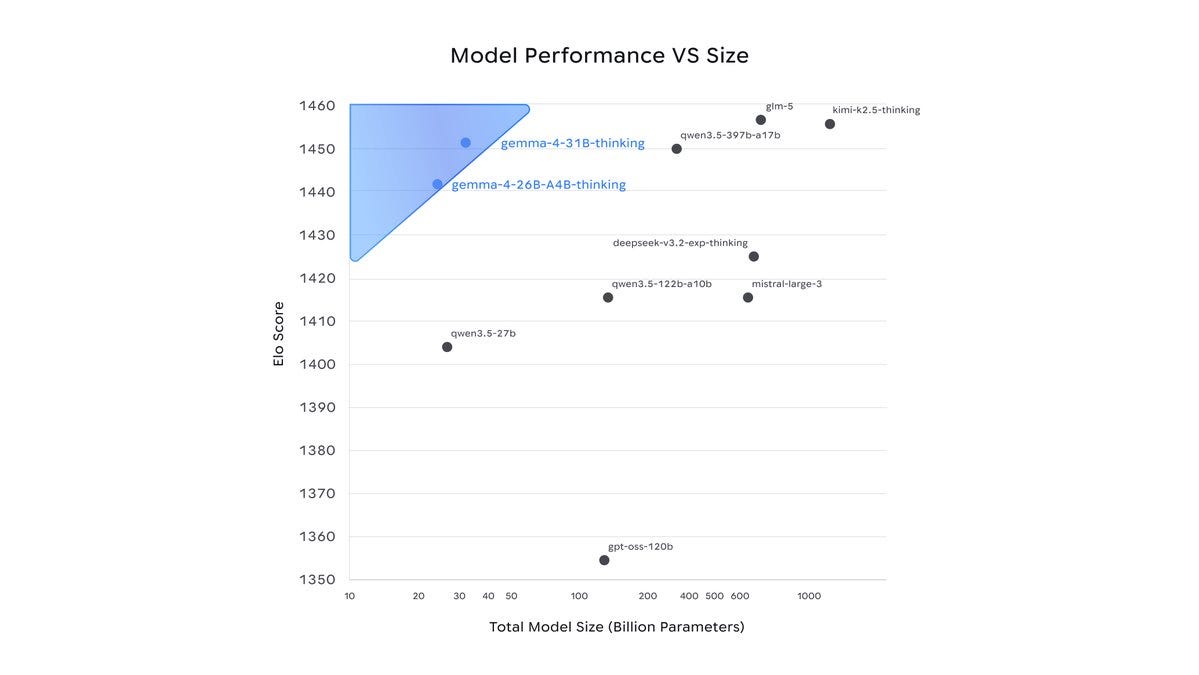
Google open sources Gemma 4 AI models that outperform models 20x their size | The models work with near-zero latency | Inshorts - inshorts.com
Google open sources Gemma 4 AI models that outperform models 20x their size | The models work with near-zero latency | Inshorts inshorts.com

Knowledge Map
Connected Articles — Knowledge Graph
This article is connected to other articles through shared AI topics and tags.
More in Models

Q&A with Simon Willison on the November release of GPT-5.1 and Opus 4.5 as the inflection point for coding, exhaustion due to managing coding agents, and more (Lenny Rachitsky/Lenny s Newsletter)
Lenny Rachitsky / Lenny's Newsletter : Q&A with Simon Willison on the November release of GPT-5.1 and Opus 4.5 as the inflection point for coding, exhaustion due to managing coding agents, and more Simon Willison is a prolific independent software developer, a blogger, and one of the most visible and trusted voices on the impact AI is having on builders.
Google open sources Gemma 4 AI models that outperform models 20x their size | The models work with near-zero latency | Inshorts - inshorts.com
Google open sources Gemma 4 AI models that outperform models 20x their size | The models work with near-zero latency | Inshorts inshorts.com
Discussion
Sign in to join the discussion
No comments yet — be the first to share your thoughts!