

HoloTrauma 3X Triadic AI Co reasoning for robot assisted emergency maxillofacial reconstruction
npj Digital Medicine, Published online: 04 April 2026; doi:10.1038/s41746-026-02573-x HoloTrauma 3X Triadic AI Co reasoning for robot assisted emergency maxillofacial reconstruction
References
- Joachim, D. J. & Miloro, M. The evolution of virtual surgical planning in craniomaxillofacial surgery: A comprehensive review. J. Oral. Maxillofac. Surg. 83, 294–306 (2025).
Google Scholar
- Karnatz, N. et al. Development and application of digital maxillofacial surgery system based on mixed reality technology. Front. Surg. 8, 719985 (2022).
Google Scholar
- Miragall, M. F. et al. Face the future—artificial intelligence in oral and maxillofacial surgery. J. Clin. Med. 12, 6843 (2023).
Google Scholar
- Chen, Z. et al. A meta-analysis and systematic review comparing the effectiveness of traditional and virtual surgical planning for orthognathic surgery: Based on randomized clinical trials. J. Oral. Maxillofac. Surg. 79, 471.e1–471.e9 (2021).
Google Scholar
- Vyas, K., Gibreel, W. & Mardini, S. Virtual surgical planning (vsp) in craniomaxillofacial reconstruction. Facial Plast. Surg. Clin. North Am. 30, 239–252 (2022).
Google Scholar
- Lin, H.-H. & Lo, L.-J. Three-dimensional computer-assisted surgical simulation and intraoperative navigation in orthognathic surgery: A literature review. J. Formos. Med. Assoc. 114, 300–307 (2015).
Google Scholar
- Motamedian, S. R., Khojasteh, A. & Sadeghi, M. Application of artificial intelligence in orthognathic surgery: A scoping review. J. Stomatol., Oral. Maxillofac. Surg. 126, 101234 (2025).
Google Scholar
- Hua, J., Aziz, S. & Shum, J. W. Virtual surgical planning in oral and maxillofacial surgery. Oral. Maxillofac. Surg. Clin. North Am. 31, 519–530 (2019).
Google Scholar
- Keyser, B., Afzal, Z. & Warburton, G. Computer-assisted planning and intraoperative navigation in the management of temporomandibular joint ankylosis. Atlas Oral. Maxillofac. Surg. Clin. North Am. 28, 111–120 (2020).
Google Scholar
- Khadka, A. et al. Changes in upper airway after mandibular setback surgery in obstructive sleep apnea patients and non-obstructive sleep apnea patients: A systematic review. Int. J. Oral. Maxillofac. Surg. 40, 1135–1142 (2011).
Google Scholar
- Wilkat, M. et al. Enhancing surgical occlusion setting in orthognathic surgery planning using mixed reality technology: A comparative study. Clin. Oral. Investig. 28, 547 (2024).
Google Scholar
- Tian, S. et al. Deep learning in medical image analysis for craniofacial deformity: A review. Bioengineering 10, 1268 (2023).
Google Scholar
- Swennen, G. R. J., Mollemans, W. & Schutyser, F. Three-dimensional treatment planning of orthognathic surgery in the era of virtual imaging. J. Oral. Maxillofac. Surg. 67, 2080–2092 (2009).
Google Scholar
- Hsu, S. S.-S. et al. Accuracy of a computer-aided surgical simulation protocol for orthognathic surgery: A prospective multicenter study. J. Oral. Maxillofac. Surg. 71, 128–142 (2013).
Google Scholar
- Gateno, J. et al. Clinical feasibility of computer-aided surgical simulation (cass) in the treatment of complex cranio-maxillofacial deformities. J. Oral. Maxillofac. Surg. 79, 1103–1120 (2021).
Google Scholar
- Simon, B. D., Ozyoruk, K. B., Gelikman, D. G., Harmon, S. A. & Türkbey, B. The future of multimodal artificial intelligence models for integrating imaging and clinical metadata: A narrative review. Diagnostic Interventional Radiol. 31, 303–312 (2025).
Google Scholar
- Lee, J. O. et al. Multimodal generative ai for interpreting 3d medical images and videos. npj Digital Med. 8, 273 (2025).
Google Scholar
- Liu, H., Li, C., Wu, Q. & Lee, Y. J. Visual instruction tuning. In Advances in Neural Information Processing Systems (NeurIPS), 36 (2023). 2304.08485.
- Zhang, S., Xu, Y. & Usuyama, N. Vision-language models in medical imaging: A survey. IEEE Rev. Biomed. Eng. 17, 234–257 (2024).
Google Scholar
- Acosta, J. N., Falcone, G. J., Rajpurkar, P. & Topol, E. J. Multimodal biomedical ai. Nat. Med. 28, 1773–1784 (2022).
Google Scholar
- Achiam, J. et al. Gpt-4 technical report. arXiv preprint arXiv:2303.08774. 2303.08774 (2023).
- Tu, T. et al. Towards generalist biomedical ai. NEJM AI 1, AIoa2300138 (2024).
Google Scholar
- Moor, M., Banerjee, O. & Abad, Z. S. H. Foundation models for generalist medical artificial intelligence. Nature 616, 259–265 (2023).
Google Scholar
- Li, B., Wang, R. & Wang, G. Llava-med: Training a large language-and-vision assistant for biomedicine. Nat. Commun. 15, 1735 (2024).
Google Scholar
- Singhal, K. et al. Large language models encode clinical knowledge. Nature 620, 172–180 (2023).
Google Scholar
- Liu, H., Li, C., Li, Y. & Lee, Y. J. Improved baselines with visualinstruction tuning. In Proceedings of the IEEE/CVF Conference on Computer Vision and Pattern Recognition (CVPR), 26296–26306 (2024).
- Zhao, W. X., Zhou, K. & Li, J. A survey of large language models. arXiv preprint arXiv:2303.18223 (2023).
- Wang, S., Zhao, Z. & Ouyang, X. Large language models for healthcare: A comprehensive benchmark. npj Digital Med. 7, 45 (2024).
Google Scholar
- Brown, T. B. et al. Language models are few-shot learners. Adv. Neural Inf. Process. Syst. 33, 1877–1901 (2020).
Google Scholar
- Kitaguchi, D., Takeshita, N., Hasegawa, H. & Ito, M. Artificial intelligence-based computer vision in surgery: Recent advances and future perspectives. Ann. Gastroenterological Surg. 6, 29–36 (2022).
Google Scholar
- Mascagni, P. et al. Artificial intelligence for surgical safety: Automatic assessment of the critical view of safety in laparoscopic cholecystectomy using deep learning. Ann. Surg. 275, 955–961 (2022).
Google Scholar
- Xu, B. et al. Multimodal machine learning in image-based and clinical biomedicine: Survey and prospects. Int. J. Computer Vis. 132, 3753–3786 (2024).
Google Scholar
- Haidegger, T. Robot-assisted minimally invasive surgery—surgical robotics in the data age. Proc. IEEE 110, 835–864 (2022).
Google Scholar
- Aung, Y. M., Al-Jumaily, A. & Ong, S. K. Robotic system for orthognathic surgery: Concept and design. Int. J. Computer Assist. Radiol. Surg. 11, 2169–2177 (2016).
Google Scholar
- Fuchs, A. et al. Robotic-assisted surgery in oral and maxillofacial surgery: A review. Clin. Oral. Investig. 28, 60 (2024).
Google Scholar
- Moglia, A., Georgiou, K., Georgiou, E., Satava, R. M. & Cuschieri, A. A systematic review on artificial intelligence in robot-assisted surgery. Int. J. Surg. 95, 106151 (2021).
Google Scholar
- Fiorini, P., Goldberg, K. Y., Liu, Y. & Taylor, R. H. Concepts and trends in autonomy for robot-assisted surgery. Proc. IEEE 110, 993–1011 (2022).
Google Scholar
- Datta, S. et al. Reinforcement learning in surgery. Surgery 170, 329–332 (2021).
Google Scholar
- Qi, C. R., Yi, L., Su, H. & Guibas, L. J. Pointnet++: Deep hierarchical feature learning on point sets in a metric space. Adv. Neural Inf. Process. Syst. 30, 5099–5108 (2017).
Google Scholar
- He, K., Zhang, X., Ren, S. & Sun, J. Deep residual learning for image recognition. In Proceedings of the IEEE Conference on Computer Vision and Pattern Recognition (CVPR), 770–778 (IEEE, 2016).
- Radford, A. et al. Learning transferable visual models from natural language supervision. In Proceedings of the 38th International Conference on Machine Learning (ICML), 139, 8748–8763 (PMLR, 2021).
- Efron, B., Tibshirani, R. J. An Introduction to the Bootstrap. Chapman and Hall/CRC: New York, 1994.
Google Scholar
- Austin, P. C. An introduction to propensity score methods for reducing the effects of confounding in observational studies. Multivar. Behav. Res. 46, 399–424 (2011).
Google Scholar
- On, S. W., Cho, S. W., Park, S. Y., Jung, Y. S. & Kim, H. M. Advancements in computer-assisted orthognathic surgery: A comprehensive review and clinical application in south korea. J. Dent. 146, 105061 (2024).
Google Scholar
- Tang, Y. et al. Self-supervised pre-training of Swin Transformers for 3d medical image analysis. In Proceedings of the IEEE/CVF Conference on Computer Vision and Pattern Recognition (CVPR), 20730–20740 (IEEE, 2022).
- Nori, H. et al. Can generalist foundation models outcompete special-purpose tuning? case study in medicine. arXiv preprint arXiv:2311.16452 (2023).
- Bai, W. et al. M3d-medical: A multi-modal 3d medical image analysis framework with large language models. arXiv preprint arXiv:2404.15537 (2024).
- Kiyasseh, D. et al. A vision transformer for decoding surgeon activity from surgical videos. Nat. Biomed. Eng. 7, 780–796 (2023).
Google Scholar
- Dosovitskiy, A., Beyer, L. & Kolesnikov, A. An image is worth 16x16 words: Transformers for image recognition at scale. International Conference on Learning Representations (2021).
- Liao, S., Ma, L., Lu, F. & Tian, Y. Deep learning-based automated cephalometric landmark detection for orthognathic surgery planning. Int. J. Computer Assist. Radiol. Surg. 17, 371–380 (2022).
Google Scholar
- Hatamizadeh, A., Tang, Y. & Nath, V. Unetr: Transformers for 3d medical image segmentation. Proceedings of the IEEE/CVF Winter Conference on Applications of Computer Vision 574–584 (2022).
- Gu, Y. et al. Domain-specific language model pretraining for biomedical natural language processing. ACM Trans. Comput. Healthc. 3, 1–23 (2022).
Google Scholar
- Karaman, S. & Frazzoli, E. Sampling-based algorithms for optimal motion planning. Int. J. Robot. Res. 30, 846–894 (2011).
Google Scholar
Download references
Sign in to highlight and annotate this article

Conversation starters
Daily AI Digest
Get the top 5 AI stories delivered to your inbox every morning.
More about
reasoningpublished
Differentiable Symbolic Planning: A Neural Architecture for Constraint Reasoning with Learned Feasibility
arXiv:2604.02350v1 Announce Type: new Abstract: Neural networks excel at pattern recognition but struggle with constraint reasoning -- determining whether configurations satisfy logical or physical constraints. We introduce Differentiable Symbolic Planning (DSP), a neural architecture that performs discrete symbolic reasoning while remaining fully differentiable. DSP maintains a feasibility channel (phi) that tracks constraint satisfaction evidence at each node, aggregates this into a global feasibility signal (Phi) through learned rule-weighted combination, and uses sparsemax attention to achieve exact-zero discrete rule selection. We integrate DSP into a Universal Cognitive Kernel (UCK) that combines graph attention with iterative constraint propagation. Evaluated on three constraint rea

LumiVideo: An Intelligent Agentic System for Video Color Grading
arXiv:2604.02409v1 Announce Type: new Abstract: Video color grading is a critical post-production process that transforms flat, log-encoded raw footage into emotionally resonant cinematic visuals. Existing automated methods act as static, black-box executors that directly output edited pixels, lacking both interpretability and the iterative control required by professionals. We introduce LumiVideo, an agentic system that mimics the cognitive workflow of professional colorists through four stages: Perception, Reasoning, Execution, and Reflection. Given only raw log video, LumiVideo autonomously produces a cinematic base grade by analyzing the scene's physical lighting and semantic content. Its Reasoning engine synergizes an LLM's internalized cinematic knowledge with a Retrieval-Augmented G
Knowledge Map
Connected Articles — Knowledge Graph
This article is connected to other articles through shared AI topics and tags.
More in Frontier Research
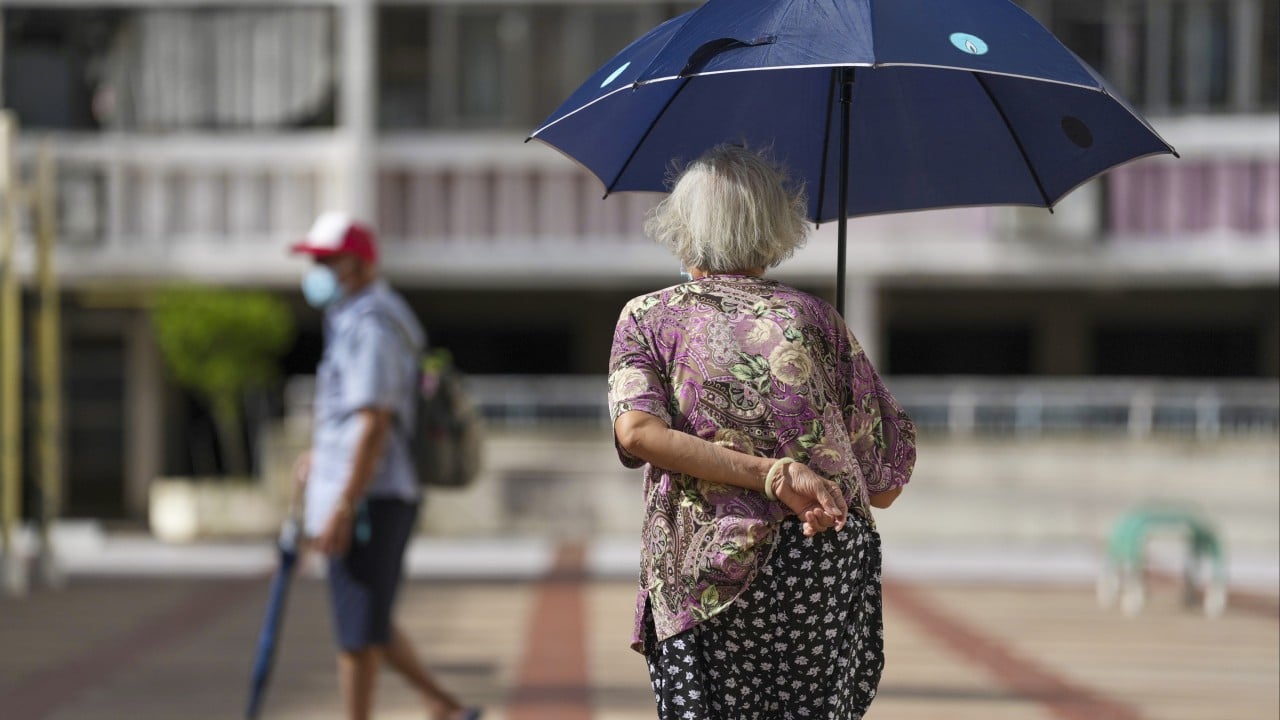
Housing authorities expand use of smart technologies to support elderly
Hong Kong’s housing authorities will expand the use of smart technologies, such as door sensors, in-home fall detectors and stair climbers, to enhance safety and convenience for elderly residents at public estates as the city’s population ages. Michael Hong Wing-kit, deputy director of housing overseeing estate management, said a pilot scheme to install sensors, which track door activity and send alerts, in public flats with elderly occupants would be expanded to include Tung Wui Estate in Wong...


Discussion
Sign in to join the discussion
No comments yet — be the first to share your thoughts!