

Automatic Image-Level Morphological Trait Annotation for Organismal Images
Sparse autoencoders trained on foundation-model features produce monosemantic neurons that enable scalable extraction of morphological traits from biological images through a modular annotation pipeline. (1 upvotes on HuggingFace)
Published on Apr 2
Authors:
,
,
,
Abstract
Sparse autoencoders trained on foundation-model features produce monosemantic neurons that enable scalable extraction of morphological traits from biological images through a modular annotation pipeline.
AI-generated summary
Morphological traits are physical characteristics of biological organisms that provide vital clues on how organisms interact with their environment. Yet extracting these traits remains a slow, expert-driven process, limiting their use in large-scale ecological studies. A major bottleneck is the absence of high-quality datasets linking biological images to trait-level annotations. In this work, we demonstrate that sparse autoencoders trained on foundation-model features yield monosemantic, spatially grounded neurons that consistently activate on meaningful morphological parts. Leveraging this property, we introduce a trait annotation pipeline that localizes salient regions and uses vision-language prompting to generate interpretable trait descriptions. Using this approach, we construct Bioscan-Traits, a dataset of 80K trait annotations spanning 19K insect images from BIOSCAN-5M. Human evaluation confirms the biological plausibility of the generated morphological descriptions. We assess design sensitivity through a comprehensive ablation study, systematically varying key design choices and measuring their impact on the quality of the resulting trait descriptions. By annotating traits with a modular pipeline rather than prohibitively expensive manual efforts, we offer a scalable way to inject biologically meaningful supervision into foundation models, enable large-scale morphological analyses, and bridge the gap between ecological relevance and machine-learning practicality.
View arXiv page View PDF GitHub Add to collection
Get this paper in your agent:
hf papers read 2604.01619
Don't have the latest CLI?
curl -LsSf https://hf.co/cli/install.sh | bash
Models citing this paper 0
No model linking this paper
Cite arxiv.org/abs/2604.01619 in a model README.md to link it from this page.
Datasets citing this paper 0
No dataset linking this paper
Cite arxiv.org/abs/2604.01619 in a dataset README.md to link it from this page.
Spaces citing this paper 0
No Space linking this paper
Cite arxiv.org/abs/2604.01619 in a Space README.md to link it from this page.
Collections including this paper 0
No Collection including this paper
Add this paper to a collection to link it from this page.
Sign in to highlight and annotate this article

Conversation starters
Daily AI Digest
Get the top 5 AI stories delivered to your inbox every morning.
More about
researchpaperarxiv
Research across 1,372 participants and 9K+ trials details "cognitive surrender", where most subjects had minimal AI skepticism and accepted faulty AI reasoning (Kyle Orland/Ars Technica)
Kyle Orland / Ars Technica : Research across 1,372 participants and 9K+ trials details cognitive surrender , where most subjects had minimal AI skepticism and accepted faulty AI reasoning When it comes to large language model-powered tools, there are generally two broad categories of users.
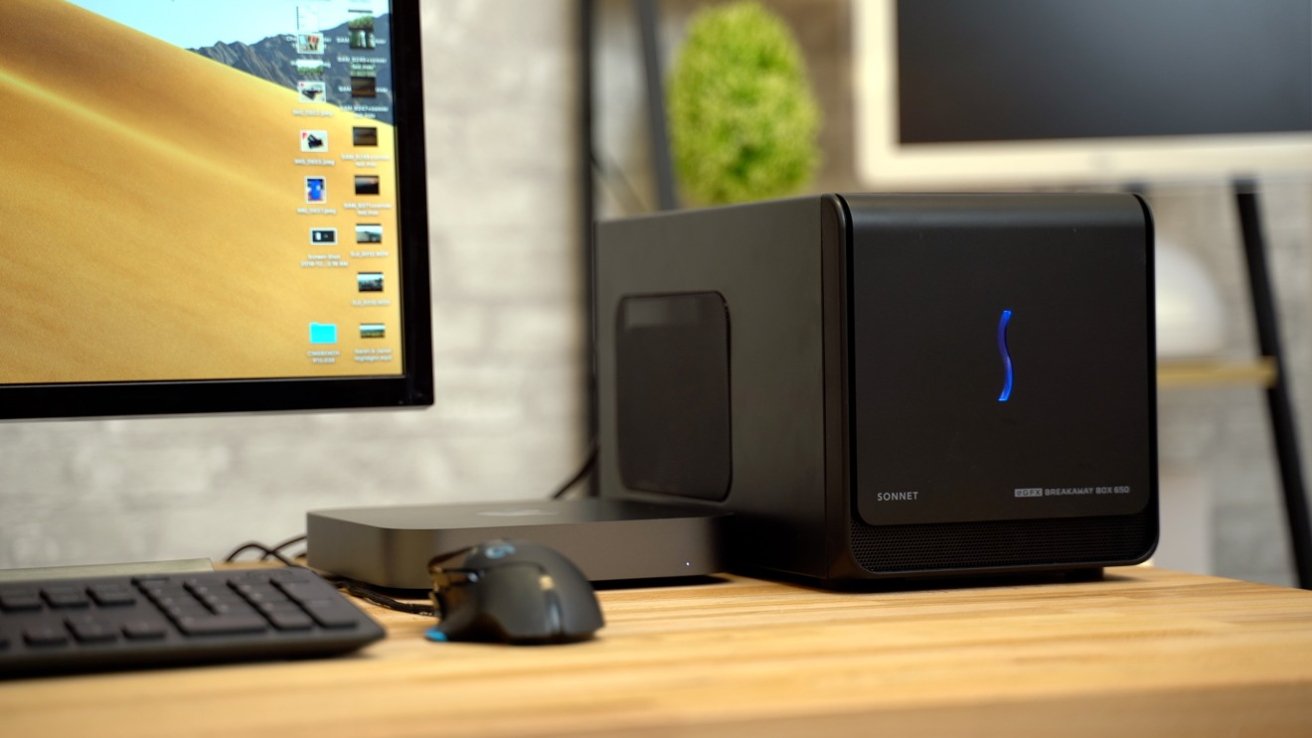
Apple reportedly signed a 3rd-party driver, by Tiny Corp, for AMD or Nvidia eGPUs for Apple Silicon Macs; it s meant for AI research, not accelerating graphics (AppleInsider)
AppleInsider : Apple reportedly signed a 3rd-party driver, by Tiny Corp, for AMD or Nvidia eGPUs for Apple Silicon Macs; it's meant for AI research, not accelerating graphics Apple has signed a driver for AMD or Nvidia eGPUs connected to Apple Silicon but there are some big caveats, and it won't improve your graphics.

Knowledge Map
Connected Articles — Knowledge Graph
This article is connected to other articles through shared AI topics and tags.
More in Research Papers
![[D] KDD Review Discussion](https://d2xsxph8kpxj0f.cloudfront.net/310419663032563854/konzwo8nGf8Z4uZsMefwMr/default-img-wave-pattern-4YWNKzoeu65vYpqRKWMiWf.webp)
[D] KDD Review Discussion
KDD 2026 (Feb Cycle) reviews will release today (4-April AoE), This thread is open to discuss about reviews and importantly celebrate successful reviews. Let us all remember that review system is noisy and we all suffer from it and this doesn't define our research impact. Let's all prioritise reviews which enhance our papers. Feel free to discuss your experiences submitted by /u/BomsDrag [link] [comments]

The CEO Building the Most Powerful AI on Earth Just Admitted It Will Destroy Half Your Industry.
January 26, 2026. Dario Amodei published a 20,000-word essay warning that AI will displace 50% of entry-level white-collar jobs in 1–5… Continue reading on Towards AI »

New Rowhammer attack can grant kernel-level control on Nvidia workstation GPUs
A study from researchers at UNC Chapel Hill and Georgia Tech shows that GDDR6-based Rowhammer attacks can grant kernel-level access to Linux systems equipped with GPUs based on Nvidia's Ampere and Ada Lovelace architectures. The vulnerability appears significantly more severe than what was outlined in a paper last year. Read Entire Article
Discussion
Sign in to join the discussion
No comments yet — be the first to share your thoughts!