
From Kindergarten to Career Change: How CMU Designs Education for a Lifetime
<p> <img loading="lazy" src="https://www.cmu.edu/news/sites/default/files/styles/listings_desktop_1x_/public/2026-01/250516B_Surprise_EM_053.jpg.webp?itok=Ipq3jUzk" width="900" height="508" alt="Sharon Carver with students"> </p> CMU’s learning initiatives are shaped by research on how people learn, rather than by any single discipline. That approach shows up in K–12 classrooms, college courses, and workforce training programs, where learning science and AI are used to support evolving educational needs.
Children from Carnegie Mellon’s Children’s School, a lab school that has operated for more than fifty years on campus.
January 29, 2026
Media Inquiries
Name
University Communications and Marketing, Media Relations
Carnegie Mellon University’s approach to learning doesn’t start or end with a traditional degree, and it doesn’t just apply to students enrolled at its Pittsburgh campus. Instead, it’s built on a simple but urgent idea: Education is a lifelong process and it must evolve quickly.
Rooted in decades of research in learning science and artificial intelligence, CMU connects to K-12 classrooms, community colleges, universities and workforce development programs through a mix of high-tech tools, evidence-based courses and a surprising amount of creativity.
Creative ways to approach young learners
Supporting lifelong learning means engaging students long before they set foot on a college campus. But some preschoolers do — at CMU, that work begins on campus itself, through the university’s Children’s School(opens in new window), which for decades has served as both an early childhood program and a living laboratory for research on how young children learn. For young children, when creativity is high but confidence in technical subjects is fragile, stepping outside traditional teaching methods can be important.
To introduce concepts like artificial intelligence, teaching might begin with something soft, like the 3-foot-tall, brightly colored plush neuron a team of researchers created to help young learners understand how AI systems make decisions, long before they are ready for equations or programming.
Dave Touretzky
“Everyone, even middle schoolers, needs to know a little about these building blocks of artificial intelligence,” said Dave Touretzky(opens in new window), a research professor in CMU’s Computer Science Department. “But these young learners haven’t even studied algebra yet — so how can we help them understand the computational abilities of these complex networks?”
Touretzky is the founder and chair of AI4K12(opens in new window), an initiative to develop guidelines and resources for teaching AI to students in kindergarten through grade 12, and one of many CMU faculty members contributing to education initiatives beyond the university’s walls, with a focus on reducing the fear and mystique that can later become barriers in math, computing and technology-intensive fields.
As learners progress, CMU’s K-12 efforts scale with them. Since 2018, CMU has offered CS Academy(opens in new window) which teaches Python to middle and high schoolers using interactive animations.
The program ensures that world-class computer science education is accessible to any classroom, regardless of a school's budget.
Megan Kearns
High schoolers can also get involved with special events like picoCTF(opens in new window), a cybersecurity capture the flag competition created and run by CMU’s CyLab Security and Privacy Institute(opens in new window). The program seeks to help bring principles of cybersecurity to educators and students and is now the largest high school hacking competition in the world.
"There is no standardized cybersecurity education in the United States, so there is a need for this contact. Our national security is kind of dependent on the fact that people get interested in cybersecurity," said Megan Kearns(opens in new window), a special projects administrator for CyLab.
Together, these efforts reflect a consistent strategy: introduce complex ideas early, design instruction around how students actually learn and remove unnecessary barriers before they become make-or-break moments.
Removing barriers in early college coursework
As students move into college, CMU’s research helps them tackle “gateway” courses like calculus that can determine whether a student stays enrolled in a course.
Marsha Lovett
CMU's newest effort, Learnvia,(opens in new window) is a nonprofit collaborative to help students succeed in these high-stakes subjects. Learnvia provides free, smart course materials to teachers at dozens of colleges and universities, ranging from community colleges to large public institutions.
This is a rare opportunity to scale an approach that is both rigorous and practical," said Marsha Lovett(opens in new window), vice provost for teaching and learning innovation at CMU and a Learnvia board member. "Learnvia reflects a deliberate, research-driven model of learning engineering — one that emphasizes continuous improvement and close collaboration with educators."
This builds on 20 years of work through the Open Learning Initiative(opens in new window) (OLI). Instead of using a standard digital textbook, OLI tools give students instant feedback while they work. They also show teachers exactly where a class is struggling, so the instructor can respond to the students' needs in real-time.
Norman Bier
“Our goal is to make student and faculty success the norm, not the exception,” said Norman Bier, executive director of OLI and the Simon Initiative(opens in new window). “Decades of research show that combining great teaching, effective courseware, and continuous learning research leads to meaningful improvements in student outcomes.”
The Simon Initiative, which applies learning science to improve education through research, data and innovations like OLI and other projects, is named for Herbert A. Simon, a Nobel Prize and Turing Award–winning scientist who argued that improving education would require converting teaching from a solo activity into a community-based research effort. Central to that work is an approach CMU calls learning engineering, which uses data, learning research and carefully designed technology to study how people learn and to iteratively improve instruction.
Bridging learning and the modern workplace
The need for adaptable learning doesn’t end at graduation. As technologies evolve and job requirements shift, growing numbers of adults are returning to education to reskill, upskill or change careers. CMU’s workforce-focused initiatives apply the same learning science principles used in K-12 and college settings, adapted to the realities of adult learners and employer needs.
One example is Sail()(opens in new window), a learning platform operated by the Technology for Effective and Efficient Learning (TEEL) lab in partnership with community colleges. Sail() uses project-based learning to immerse students in real-world tasks like budgeting for cloud computing or managing software systems. Instant, automated feedback allows students to see progress quickly, correct misconceptions earlier and build the confidence they need to stay in tech programs rather than dropping out.
These approaches are especially important in fields where demand for skilled workers outpaces the number of traditional degree holders. By designing instruction around authentic tasks and carefully studying how learners respond, CMU researchers can iteratively refine courses to better support success at scale.
Majd Sakr
"Every time a human being is learning, we should be studying something about them," said teaching professor Majd Sakr(opens in new window), a project lead from the TEEL lab.
Similar principles guide the Carnegie Mellon Robotics Academy’s(opens in new window) workforce programs, including a six-week intensive course designed to help U.S. Navy sailors prepare for AI-enabled systems. Sailors are trained not just to use one specific drone or vehicle, but to master the underlying "systems thinking" that governs all robotics. Using the same pedagogical approach used to teach younger students, participants progress from building simple circuits to troubleshooting AI-assisted systems on land, air and water.
Teaching and learning that keeps growing
Taken together, these unique approaches to teaching and learning reflect an approach to education grounded in learning science, supported by technology and applied across different ages, institutions and career stages. CMU’s learning engineering initiatives adapt with learners, whether they involve early exposure to STEM, redesigned college courses or workforce training programs.
— Related Content —
Carnegie Mellon News
https://www.cmu.edu/news/stories/archives/2026/january/from-kindergarten-to-career-change-how-cmu-designs-education-for-a-lifetimeSign in to highlight and annotate this article

Conversation starters
Daily AI Digest
Get the top 5 AI stories delivered to your inbox every morning.
More about
trainingresearch
Meta's new structured prompting technique makes LLMs significantly better at code review — boosting accuracy to 93% in some cases
Deploying AI agents for repository-scale tasks like bug detection, patch verification, and code review requires overcoming significant technical hurdles. One major bottleneck: the need to set up dynamic execution sandboxes for every repository, which are expensive and computationally heavy. Using large language model (LLM) reasoning instead of executing the code is rising in popularity to bypass this overhead, yet it frequently leads to unsupported guesses and hallucinations. To improve execution-free reasoning, researchers at Meta introduce " semi-formal reasoning ," a structured prompting technique. This method requires the AI agent to fill out a logical certificate by explicitly stating premises, tracing concrete execution paths, and deriving formal conclusions before providing an answe

North Korean hackers implicated in major supply chain attack
<p>Suspected <a href="https://www.axios.com/world/north-korea" target="_blank">North Korean hackers</a> are believed to be behind an ongoing compromise of the widely used open-source package Axios, which is downloaded millions of times per week, researchers at Google said Tuesday.</p><p><strong>Why it matters:</strong> Hackers briefly turned a widely trusted developer tool into a vehicle for credential-stealing malware that could give attackers ongoing access to infected systems.</p><hr><ul><li>Axios, a widely used JavaScript library for making HTTP requests, is not affiliated with Axios Media.</li></ul><p><strong>Driving the news</strong>: Researchers at Google linked the activity to a North Korean group tracked as <a href="https://cloud.google.com/blog/topics/threat-intelligence/unc1069-

The Great Claude Code Leak of 2026: Accident, Incompetence, or the Best PR Stunt in AI History?
<p><strong>TL;DR:</strong> On March 31, 2026, Anthropic accidentally shipped the <em>entire source code</em> of Claude Code to the public npm registry via a single misconfigured debug file. 512,000 lines. 1,906 TypeScript files. 44 hidden feature flags. A Tamagotchi pet. And one very uncomfortable question: was it really an accident?</p> <h2> 1. What Actually Happened </h2> <h3> The Root Cause: One Missing Line in <code>.npmignore</code> </h3> <p>This is both the most embarrassing and most instructive part of the story. Let me walk through the technical chain of events.</p> <p>When you publish a JavaScript/TypeScript package to npm, your build toolchain (Webpack, esbuild, Bun, etc.) optionally generates <strong>source map files</strong>, which have a <code>.map</code> extension. Their enti
Knowledge Map
Connected Articles — Knowledge Graph
This article is connected to other articles through shared AI topics and tags.
More in Models
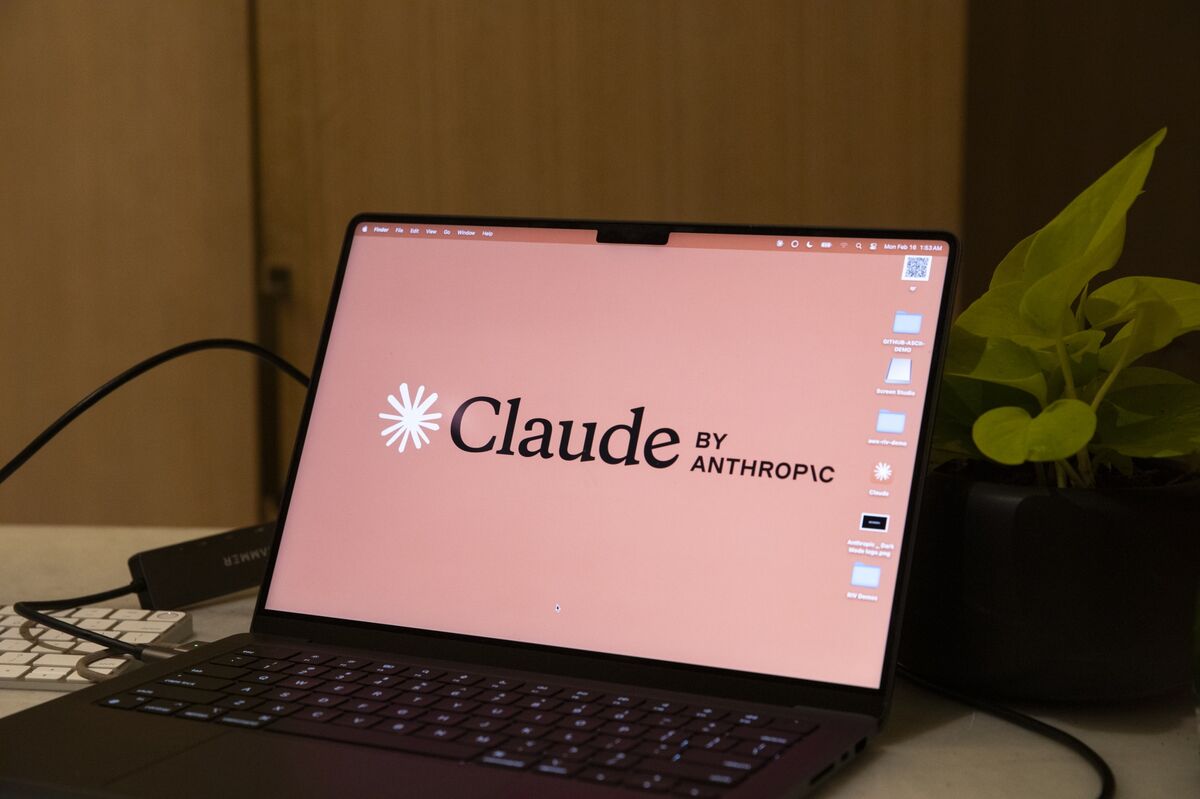
Anthropic Accidentally Releases Source Code for Claude AI Agent
Anthropic PBC inadvertently released source code for its popular Claude AI agent, raising questions about its operational security and sending developers on a search for clues about the startup’s plans.
Meta's new structured prompting technique makes LLMs significantly better at code review — boosting accuracy to 93% in some cases
Deploying AI agents for repository-scale tasks like bug detection, patch verification, and code review requires overcoming significant technical hurdles. One major bottleneck: the need to set up dynamic execution sandboxes for every repository, which are expensive and computationally heavy. Using large language model (LLM) reasoning instead of executing the code is rising in popularity to bypass this overhead, yet it frequently leads to unsupported guesses and hallucinations. To improve execution-free reasoning, researchers at Meta introduce " semi-formal reasoning ," a structured prompting technique. This method requires the AI agent to fill out a logical certificate by explicitly stating premises, tracing concrete execution paths, and deriving formal conclusions before providing an answe
AI 週報:2026/3/27–4/1 Anthropic 一週三震、Arm 首顆自研晶片、Oracle 裁三萬人押注 AI
<blockquote> <p><strong>本週一句話摘要:</strong> Anthropic 成為全場焦點——但聚光燈有一半來自意外。</p> </blockquote> <h2> 一、最重要事件:Anthropic 的三重震盪 </h2> <p>本週沒有一家公司比 Anthropic 更頻繁登上頭條——但三次曝光中有兩次並非計畫內。</p> <h3> 1. IPO 計畫曝光(3/27) </h3> <p>Bloomberg 報導,Anthropic 正考慮<strong>最快十月掛牌上市</strong>,募資規模可能超過 <strong>600 億美元</strong>。消息指出公司已與 Goldman Sachs、JPMorgan、Morgan Stanley 進行初步接洽。</p> <p>背景脈絡:</p> <div class="table-wrapper-paragraph"><table> <thead> <tr> <th>指標</th> <th>數字</th> </tr> </thead> <tbody> <tr> <td>二月融資輪估值</td> <td>3,800 億美元</td> </tr> <tr> <td>付費訂閱成長</td> <td>2026 年以來翻倍以上</td> </tr> <tr> <td>企業客戶首次採購勝率</td> <td>約 70%(vs. OpenAI)</td> </tr> <tr> <td>每日新增免費用戶</td> <td>超過 100 萬人</td> </tr> </tbody> </table></div> <p>這不只是一場 IPO——這是 AI 產業從「誰的模型更強」轉向「誰先成為上市公司」的訊號。Anthropic 與 OpenAI 同時在準備 2026 年上市,資本市場正在為 AI 雙雄的對決定價。
1-bit llms on device?!
<!-- SC_OFF --><div class="md"><p>everyone's talking about the claude code stuff (rightfully so) but <a href="https://github.com/PrismML-Eng/Bonsai-demo/blob/main/1-bit-bonsai-8b-whitepaper.pdf">this paper</a> came out today, and the claims are pretty wild:</p> <ul> <li>1-bit 8b param model that fits in 1.15 gb of memory ...</li> <li>competitive with llama3 8B and other full-precision 8B models on benchmarks</li> <li>runs at 440 tok/s on a 4090, 136 tok/s on an M4 Pro</li> <li>they got it running on an iphone at ~40 tok/s</li> <li>4-5x more energy efficient</li> </ul> <p>also it's up on <a href="https://huggingface.co/prism-ml/Bonsai-8B-gguf">hugging face</a>! i haven't played around with it yet, but curious to know what people think about this one. caltech spinout from a famous professor
Discussion
Sign in to join the discussion
No comments yet — be the first to share your thoughts!