
Extrapolated Markov Chain Oversampling Method for Imbalanced Text Classification
Text classification is the task of automatically assigning text documents correct labels from a predefined set of categories. In real-life (text) classification tasks, observations and misclassification costs are often unevenly distributed between the classes - known as the problem of imbalanced data. Synthetic oversampling is a popular approach to imbalanced classification. The idea is to generate synthetic observations in the minority class to balance the classes in the training set. Many general-purpose oversampling methods can be applied to text data; however, imbalanced text data poses a number of distinctive difficulties that stem from the unique nature of text compared to other domains. One such factor is that when the sample size of text increases, the sample vocabulary (i.e., feat
Aleksi Avela, Pauliina Ilmonen; 27(18):1−28, 2026.
Abstract
Text classification is the task of automatically assigning text documents correct labels from a predefined set of categories. In real-life (text) classification tasks, observations and misclassification costs are often unevenly distributed between the classes - known as the problem of imbalanced data. Synthetic oversampling is a popular approach to imbalanced classification. The idea is to generate synthetic observations in the minority class to balance the classes in the training set. Many general-purpose oversampling methods can be applied to text data; however, imbalanced text data poses a number of distinctive difficulties that stem from the unique nature of text compared to other domains. One such factor is that when the sample size of text increases, the sample vocabulary (i.e., feature space) is likely to grow as well. We introduce a novel Markov chain based text oversampling method. The transition probabilities are estimated from the minority class but also partly from the majority class, thus allowing the minority feature space to expand in oversampling. We evaluate our approach against prominent oversampling methods and show that our approach is able to produce highly competitive results against the other methods in several real data examples, especially when the imbalance is severe.
[abs][pdf][bib] [code]
Sign in to highlight and annotate this article

Conversation starters
Daily AI Digest
Get the top 5 AI stories delivered to your inbox every morning.
More about
trainingfeature
Nvidia launches enterprise AI agent platform with Adobe, Salesforce, SAP among 17 adopters at GTC 2026
Jensen Huang walked onto the GTC stage Monday wearing his trademark leather jacket and carrying, as it turned out, the blueprints for a new kind of industry dominance. The Nvidia CEO unveiled the Agent Toolkit , an open-source platform for building autonomous AI agents, and then rattled off the names of the companies that will use it: Adobe , Salesforce , SAP , ServiceNow , Siemens , CrowdStrike , Atlassian , Cadence , Synopsys , IQVIA , Palantir , Box , Cohesity , Dassault Systèmes , Red Hat , Cisco and Amdocs . Seventeen enterprise software companies, touching virtually every industry and every Fortune 500 corporation, all agreeing to build their next generation of AI products on a shared foundation that Nvidia designed, Nvidia optimizes and Nvidia maintains. The toolkit provides the mod

Karpathy shares 'LLM Knowledge Base' architecture that bypasses RAG with an evolving markdown library maintained by AI
AI vibe coders have yet another reason to thank Andrej Karpathy , the coiner of the term. The former Director of AI at Tesla and co-founder of OpenAI, now running his own independent AI project, recently posted on X describing a "LLM Knowledge Bases" approach he's using to manage various topics of research interest. By building a persistent, LLM-maintained record of his projects, Karpathy is solving the core frustration of "stateless" AI development: the dreaded context-limit reset. As anyone who has vibe coded can attest, hitting a usage limit or ending a session often feels like a lobotomy for your project. You’re forced to spend valuable tokens (and time) reconstructing context for the AI, hoping it "remembers" the architectural nuances you just established. Karpathy proposes somet
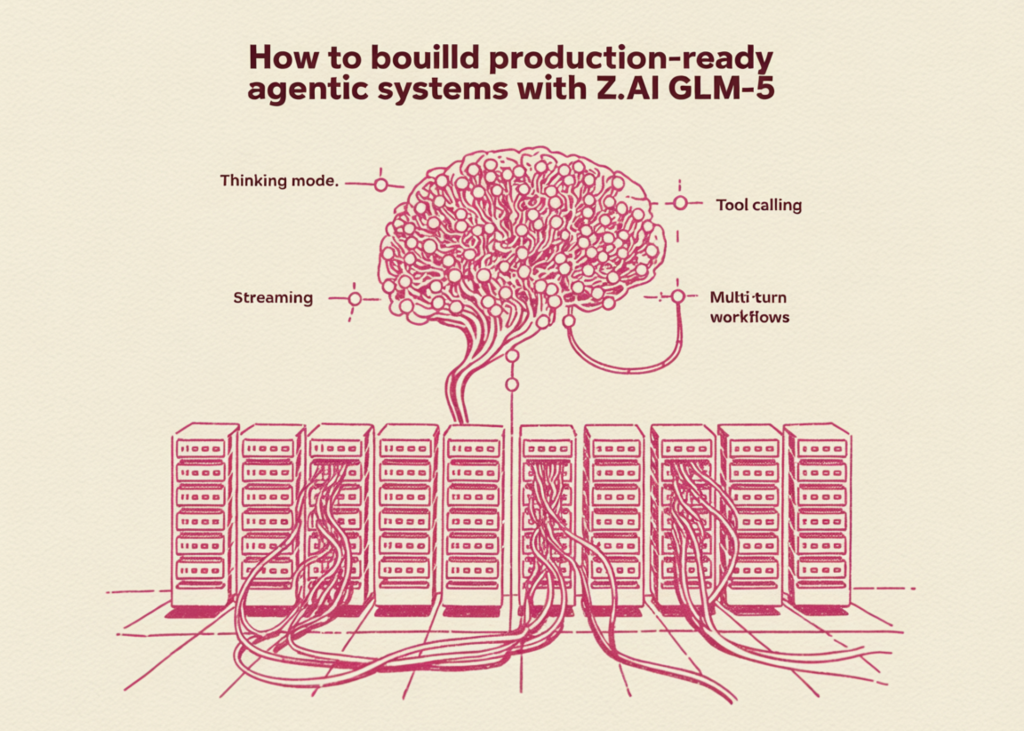
How to Build Production-Ready Agentic Systems with Z.AI GLM-5 Using Thinking Mode, Tool Calling, Streaming, and Multi-Turn Workflows
In this tutorial, we explore the full capabilities of Z.AI’s GLM-5 model and build a complete understanding of how to use it for real-world, agentic applications. We start from the fundamentals by setting up the environment using the Z.AI SDK and its OpenAI-compatible interface, and then progressively move on to advanced features such as streaming [ ] The post How to Build Production-Ready Agentic Systems with Z.AI GLM-5 Using Thinking Mode, Tool Calling, Streaming, and Multi-Turn Workflows appeared first on MarkTechPost .
Knowledge Map
Connected Articles — Knowledge Graph
This article is connected to other articles through shared AI topics and tags.
More in Products
Nvidia launches enterprise AI agent platform with Adobe, Salesforce, SAP among 17 adopters at GTC 2026
Jensen Huang walked onto the GTC stage Monday wearing his trademark leather jacket and carrying, as it turned out, the blueprints for a new kind of industry dominance. The Nvidia CEO unveiled the Agent Toolkit , an open-source platform for building autonomous AI agents, and then rattled off the names of the companies that will use it: Adobe , Salesforce , SAP , ServiceNow , Siemens , CrowdStrike , Atlassian , Cadence , Synopsys , IQVIA , Palantir , Box , Cohesity , Dassault Systèmes , Red Hat , Cisco and Amdocs . Seventeen enterprise software companies, touching virtually every industry and every Fortune 500 corporation, all agreeing to build their next generation of AI products on a shared foundation that Nvidia designed, Nvidia optimizes and Nvidia maintains. The toolkit provides the mod
Karpathy shares 'LLM Knowledge Base' architecture that bypasses RAG with an evolving markdown library maintained by AI
AI vibe coders have yet another reason to thank Andrej Karpathy , the coiner of the term. The former Director of AI at Tesla and co-founder of OpenAI, now running his own independent AI project, recently posted on X describing a "LLM Knowledge Bases" approach he's using to manage various topics of research interest. By building a persistent, LLM-maintained record of his projects, Karpathy is solving the core frustration of "stateless" AI development: the dreaded context-limit reset. As anyone who has vibe coded can attest, hitting a usage limit or ending a session often feels like a lobotomy for your project. You’re forced to spend valuable tokens (and time) reconstructing context for the AI, hoping it "remembers" the architectural nuances you just established. Karpathy proposes somet
Discussion
Sign in to join the discussion
No comments yet — be the first to share your thoughts!