

Explaining the Reputational Risks of AI-Mediated Communication: Messages labeled as AI-assisted are viewed as less diagnostic of the sender's moral character
arXiv:2509.09645v2 Announce Type: replace Abstract: When someone sends us a thoughtful message, we naturally form judgments about their character. But what happens when that message carries a label indicating it was written with the help of AI? This paper investigates how the appearance of AI assistance affects our perceptions of message senders. Adding nuance to previous research, through two studies (N=399) featuring vignette scenarios, we find that AI-assistance labels don't necessarily make people view senders negatively. Rather, they dampen the strength of character signals in communication. We show that when someone sends a warmth-signalling message (like thanking or apologizing) without AI help, people more strongly categorize the sender as warm. At the same time, when someone sends
View PDF HTML (experimental)
Abstract:When someone sends us a thoughtful message, we naturally form judgments about their character. But what happens when that message carries a label indicating it was written with the help of AI? This paper investigates how the appearance of AI assistance affects our perceptions of message senders. Adding nuance to previous research, through two studies (N=399) featuring vignette scenarios, we find that AI-assistance labels don't necessarily make people view senders negatively. Rather, they dampen the strength of character signals in communication. We show that when someone sends a warmth-signalling message (like thanking or apologizing) without AI help, people more strongly categorize the sender as warm. At the same time, when someone sends a coldness-signalling message (like bragging or blaming) without assistance, people more confidently categorize them as cold. Interestingly, AI labels weaken both these associations: An AI-assisted apology makes the sender appear less warm than if they had written it themselves, and an AI-assisted blame makes the sender appear less cold than if they had composed it independently. This supports our signal diagnosticity explanation: messages labeled as AI-assisted are viewed as less diagnostic than messages which seem unassisted. We discuss how our findings shed light on the causal origins of previously reported observations in AI-Mediated Communication.
Comments: Proceedings of the Eighth AAAI/ACM Conference on AI, Ethics, and Society (AIES 2025)
Subjects:
Human-Computer Interaction (cs.HC); Computers and Society (cs.CY); Emerging Technologies (cs.ET)
Cite as: arXiv:2509.09645 [cs.HC]
(or arXiv:2509.09645v2 [cs.HC] for this version)
https://doi.org/10.48550/arXiv.2509.09645
arXiv-issued DOI via DataCite
Related DOI:
https://doi.org/10.1609/aies.v8i2.36641
DOI(s) linking to related resources
Submission history
From: Pranav Khadpe [view email] [v1] Thu, 11 Sep 2025 17:35:32 UTC (489 KB) [v2] Tue, 31 Mar 2026 20:10:03 UTC (619 KB)
Sign in to highlight and annotate this article

Conversation starters
Daily AI Digest
Get the top 5 AI stories delivered to your inbox every morning.
More about
announcereportpaper
AI Data Centers Aren’t the Problem—Outdated Policy Frameworks Are, New Report Finds
WASHINGTON—Concerns about the rapid growth of artificial intelligence (AI) data centers are widely misdiagnosed, leading to ineffective policy responses, according to a new report from the Center for Data Innovation.
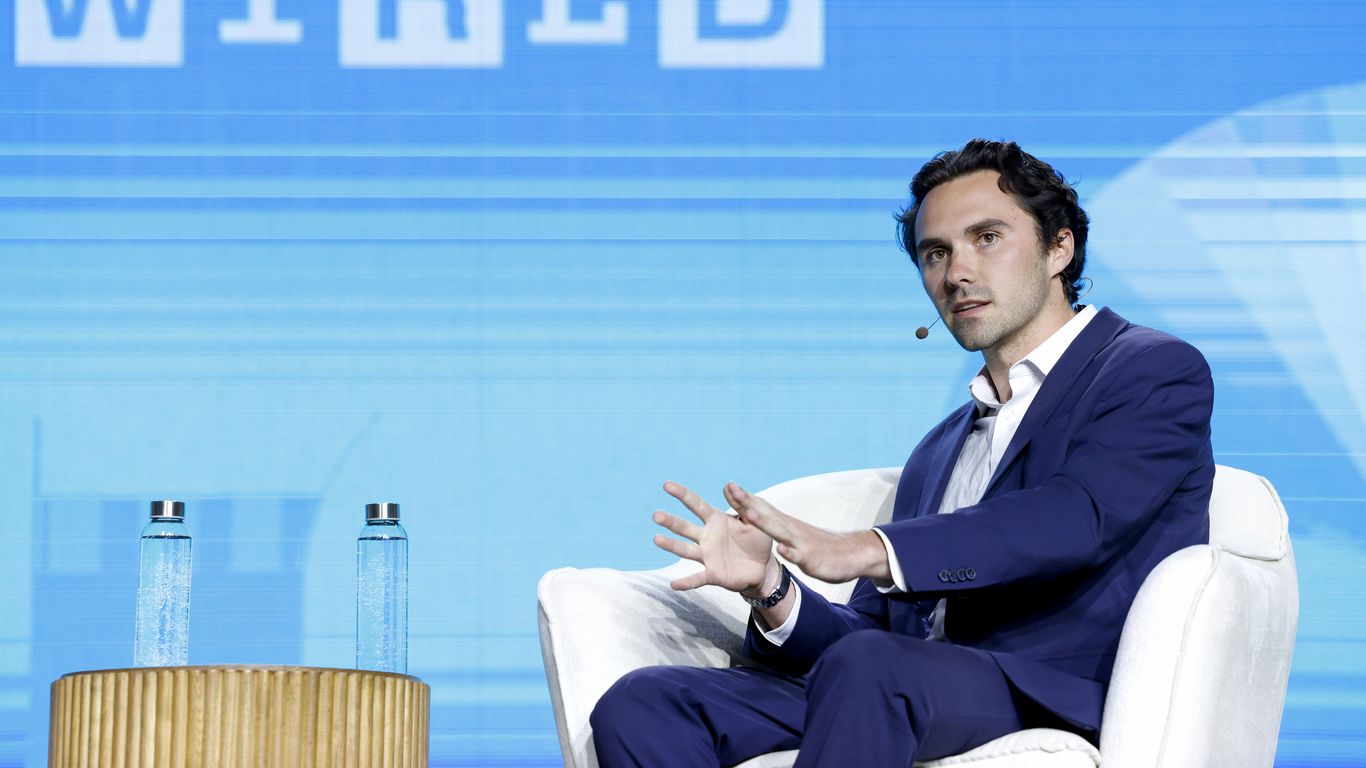
David Hogg's PAC leaves some Dem campaigns fuming
Leaders We Deserve, the PAC founded by David Hogg to elect young progressives in Democratic primaries, is leaving some of the campaigns it endorsed griping about alleged broken promises. Why it matters: Multiple campaigns backed by Hogg's PAC fumed after primary losses that the group dangled hopes of financial commitments that never materialized. First it was Irene Shin: The Washington Post reported last July that Leaders We Deserve backed off a commitment to spend $400,000 on the 38-year-old Virginia state delegate's behalf in a U.S. House special election that was won by now-Rep. James Walkinshaw (D-Va.). Now sources close to the campaign of Robert Peters , a 40-year-old Illinois state senator who finished a distant third in the primary to succeed Rep. Robin Kelly (D-Ill.), are telling a

Launch HN: Freestyle – Sandboxes for Coding Agents
We’re Ben and Jacob, cofounders of Freestyle ( https://freestyle.sh ). We’re building a cloud for Coding Agents. For the first generation of agents it looked like workflows with minimal tools. 2 years ago we published a package to let AI work in SQL, at that time GPT-4 could write simple scripts. Soon after the first AI App Builders started using AI to make whole websites; we supported that with a serverless deploy system. But the current generation is going much further, instead of minimal tools and basic serverless apps AI can utilize the full power of a computer (“sandbox”). We’re building sandboxes that are interchangeable with EC2s from your agents perspective, with bonus features: 1. We’ve figured out how to fork a sandbox horizontally without more than a 400ms pause in it. That's no
Knowledge Map
Connected Articles — Knowledge Graph
This article is connected to other articles through shared AI topics and tags.
More in Research Papers


VLMs Need Words: Vision Language Models Ignore Visual Detail In Favor of Semantic Anchors
Vision Language Models struggle with fine-grained visual perception tasks due to their language-centric training approach, performing poorly on unnamed visual entities despite having relevant information in their representations. (1 upvotes on HuggingFace)

Discussion
Sign in to join the discussion
No comments yet — be the first to share your thoughts!