

Decision-Centric Design for LLM Systems
arXiv:2604.00414v1 Announce Type: new Abstract: LLM systems must make control decisions in addition to generating outputs: whether to answer, clarify, retrieve, call tools, repair, or escalate. In many current architectures, these decisions remain implicit within generation, entangling assessment and action in a single model call and making failures hard to inspect, constrain, or repair. We propose a decision-centric framework that separates decision-relevant signals from the policy that maps them to actions, turning control into an explicit and inspectable layer of the system. This separation supports attribution of failures to signal estimation, decision policy, or execution, and enables modular improvement of each component. It unifies familiar single-step settings such as routing and a
View PDF HTML (experimental)
Abstract:LLM systems must make control decisions in addition to generating outputs: whether to answer, clarify, retrieve, call tools, repair, or escalate. In many current architectures, these decisions remain implicit within generation, entangling assessment and action in a single model call and making failures hard to inspect, constrain, or repair. We propose a decision-centric framework that separates decision-relevant signals from the policy that maps them to actions, turning control into an explicit and inspectable layer of the system. This separation supports attribution of failures to signal estimation, decision policy, or execution, and enables modular improvement of each component. It unifies familiar single-step settings such as routing and adaptive inference, and extends naturally to sequential settings in which actions alter the information available before acting. Across three controlled experiments, the framework reduces futile actions, improves task success, and reveals interpretable failure modes. More broadly, it offers a general architectural principle for building more reliable, controllable, and diagnosable LLM systems.
Subjects:
Artificial Intelligence (cs.AI); Machine Learning (cs.LG)
Cite as: arXiv:2604.00414 [cs.AI]
(or arXiv:2604.00414v1 [cs.AI] for this version)
https://doi.org/10.48550/arXiv.2604.00414
arXiv-issued DOI via DataCite (pending registration)
Submission history
From: Wei Sun [view email] [v1] Wed, 1 Apr 2026 02:57:23 UTC (54 KB)
Sign in to highlight and annotate this article

Conversation starters
Daily AI Digest
Get the top 5 AI stories delivered to your inbox every morning.
More about
modelannounceavailable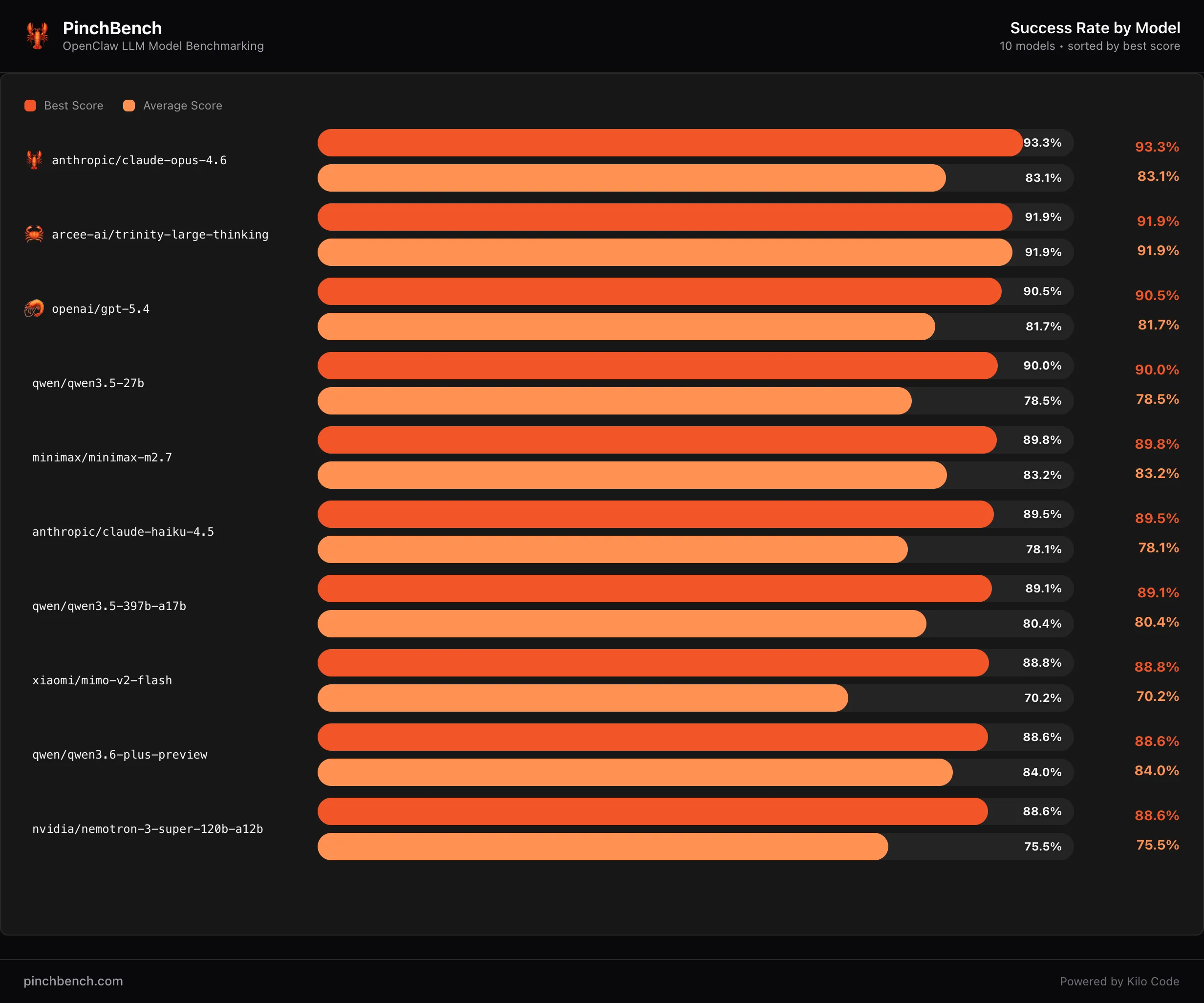
Arcee AI Releases Trinity Large Thinking: An Apache 2.0 Open Reasoning Model for Long-Horizon Agents and Tool Use
The landscape of open-source artificial intelligence has shifted from purely generative models toward systems capable of complex, multi-step reasoning. While proprietary reasoning models have dominated the conversation, Arcee AI has released Trinity Large Thinking. This release is an open-weight reasoning model distributed under the Apache 2.0 license, positioning it as a transparent alternative for developers [ ] The post Arcee AI Releases Trinity Large Thinking: An Apache 2.0 Open Reasoning Model for Long-Horizon Agents and Tool Use appeared first on MarkTechPost .

Migrating from Ralph Loops to duckflux
If you've been running coding agent tasks inside Ralph Loops , you already understand the core insight: iteration beats perfection. You've seen what happens when you hand a well-written prompt to an AI agent and let it grind until the job is done. This guide shows how to take that same philosophy and express it as a declarative, reproducible workflow in duckflux. You gain structure, observability, and composability without giving up the power of iterative automation. What are Ralph Loops? Ralph Wiggum is an iterative AI development methodology built on a deceptively simple idea: feed a prompt to a coding agent in a loop until the task is complete. Named after the Simpsons character (who stumbles forward until he accidentally succeeds), the technique treats failures as data points and bets
Knowledge Map
Connected Articles — Knowledge Graph
This article is connected to other articles through shared AI topics and tags.
More in Models

Migrating from Ralph Loops to duckflux
If you've been running coding agent tasks inside Ralph Loops , you already understand the core insight: iteration beats perfection. You've seen what happens when you hand a well-written prompt to an AI agent and let it grind until the job is done. This guide shows how to take that same philosophy and express it as a declarative, reproducible workflow in duckflux. You gain structure, observability, and composability without giving up the power of iterative automation. What are Ralph Loops? Ralph Wiggum is an iterative AI development methodology built on a deceptively simple idea: feed a prompt to a coding agent in a loop until the task is complete. Named after the Simpsons character (who stumbles forward until he accidentally succeeds), the technique treats failures as data points and bets

Я уволил отдел и нанял одного AI-агента
Когда я сказал, что уволю весь отдел, многие подумали, что это шутка. Но через месяц я оказался одним из первых в Киеве, кто доверил бизнес одному AI-агенту. Секрет оказался прост - автоматизация бизнеса с помощью AI. Отдел из пяти человек занимался обработкой заявок, отвечал клиентам, составлял отчёты и следил за воронкой продаж. На бумаге всё выглядело хорошо, но на практике работа была полна дублирования, ошибок и задержек. Человеческий фактор и 8-часовой рабочий день против 24/7 работы AI - разница была очевидна. Как только стоимость ошибок превысила зарплаты, стало ясно, что пора что-то менять. Я собрал автоматизация бизнеса с помощью AI-промпты в PDF. Забери бесплатно в Telegram (в закрепе): https://t.me/yevheniirozov Я собрал AI-агента на базе GPT-4 и Claude API, интегрировал его с
Discussion
Sign in to join the discussion
No comments yet — be the first to share your thoughts!