

Automating Your Urban Farm with AI: From Guesswork to Precision
For the small-scale market gardener, planning is a high-stakes puzzle. You're juggling succession schedules, yield forecasts, and market demand, all while the weather keeps changing the rules. It's exhausting, and a miscalculation can mean lost income or wasted harvest. The Core Principle: A Dynamic Feedback Loop The key to effective AI automation is moving from a static plan to a dynamic feedback loop . Your system should continuously compare your plan against real-world data—weather, crop performance, and sales—and automatically adjust forecasts and trigger actions. This turns your historical farm data from a simple record into a predictive engine. Your Central Tool: The Digital Crop Library At the heart of this is your Digital Crop Library . This isn't just a list of seeds; it's a livin
For the small-scale market gardener, planning is a high-stakes puzzle. You're juggling succession schedules, yield forecasts, and market demand, all while the weather keeps changing the rules. It's exhausting, and a miscalculation can mean lost income or wasted harvest.
The Core Principle: A Dynamic Feedback Loop
The key to effective AI automation is moving from a static plan to a dynamic feedback loop. Your system should continuously compare your plan against real-world data—weather, crop performance, and sales—and automatically adjust forecasts and trigger actions. This turns your historical farm data from a simple record into a predictive engine.
Your Central Tool: The Digital Crop Library
At the heart of this is your Digital Crop Library. This isn't just a list of seeds; it's a living database where you log farm-specific metrics like Actual Days to Maturity (DTM), harvest window duration, and yield per square foot for every variety. This library becomes the baseline that your AI tools use to generate accurate, personalized forecasts.
Mini-Scenario: Your system knows your farm's actual DTM for 'Dragon's Tongue' kale is 58 days from transplant. When a two-week spring cold snap delays planting, it automatically pushes your first harvest forecast and recalculates all subsequent successions, sending you an updated schedule.
Implementation: Three Steps to Start
-
Establish Your Baselines. Commit to logging critical data for every crop succession: actual planting/harvest dates, total yield, and sales. Define key temperature thresholds for your crops and establish rules for operational delays (like rain). This builds your authoritative Digital Crop Library.
-
Define Your Demand Calendar. Build a weekly target yield schedule by channel. Input your CSA share requirements (e.g., 4 lbs of tomatoes per member for 6 weeks) and historical farmers' market sales data. This becomes the "required yield" target your system works towards.
-
Program Proactive Alerts. Set your system to flag deviations. This includes yield forecasts that miss demand targets by more than 20%, and risk alerts for extreme weather. For example, program an alert to harvest leafy greens before a forecasted heavy rain event.
Key Takeaways
By implementing a dynamic, data-fed system, you transform planning from reactive guesswork into proactive management. You leverage your own historical performance to forecast more accurately, align production tightly with sales channels, and let automated alerts shield you from predictable risks. Start by solidifying your data foundations—the automation you build on top will be infinitely more powerful.
Dev.to AI
https://dev.to/ken_deng_ai/automating-your-urban-farm-with-ai-from-guesswork-to-precision-58diSign in to highlight and annotate this article

Conversation starters
Daily AI Digest
Get the top 5 AI stories delivered to your inbox every morning.
More about
updateproductmarket
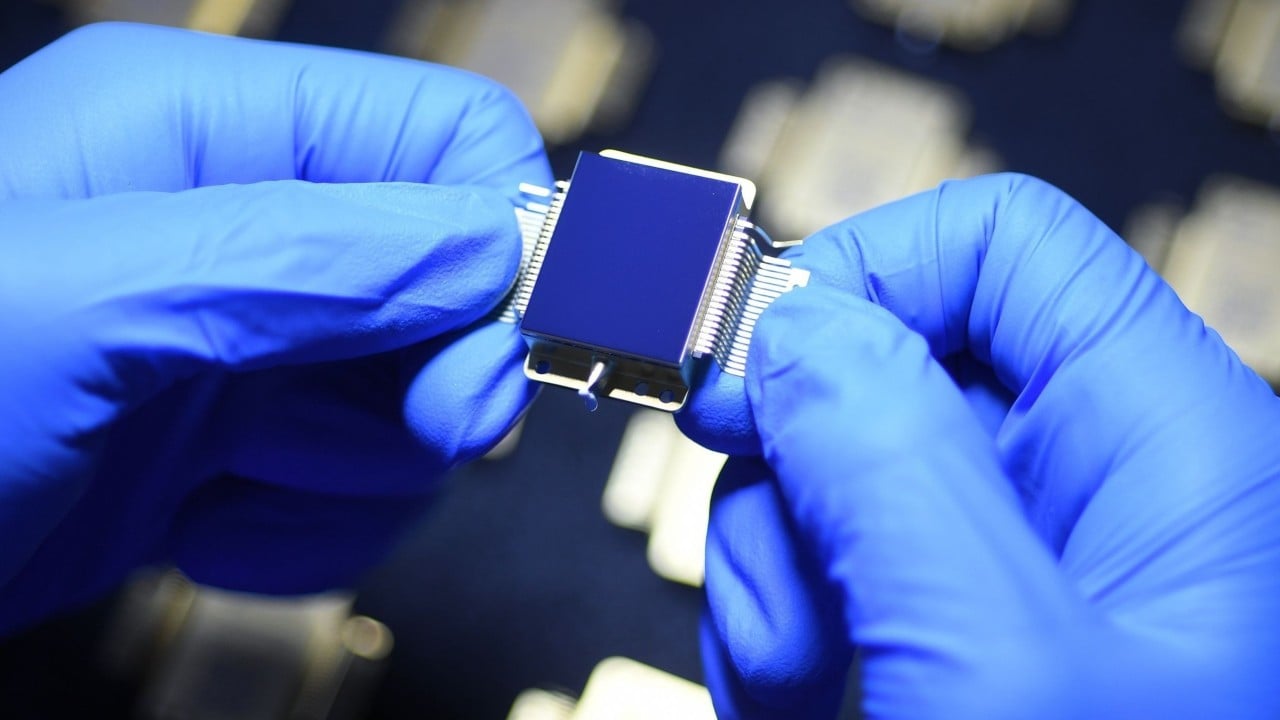
China cuts cost of military-grade infrared chips to as little as a few dozen USD
A research team at a Chinese university has developed a new way to make high-end infrared chips that could slash their cost dramatically and improve the performance of smartphone cameras and self-driving cars. The key breakthrough was finding a way to make the chips using conventional manufacturing techniques, rather than the exotic, costly materials that were relied on before. Mass production is set to begin by the end of the year, according to a press release from Xidian University. The chips...

Gemma-4 E4B model's vision seems to be surprisingly poor
The E4B model is performing very poorly in my tests and since no one seems to be talking about it that I had to unlurk myself and post this. Its performing badly even compared to qwen3.5-4b. Can someone confirm or dis...uh...firm (?) My test suite has roughly 100 vision related tasks: single-turn with no tools, only an input image and prompt, but with definitive answers (not all of them are VQA though). Most of these tasks are upstream from any kind of agentic use case. To give a sense: there are tests where the inputs are screenshots from which certain text information has to be extracted, others are images on which the model has to perform some inference (for example: geoguessing on travel images, calculating total cost of a grocery list given an image of the relevant supermarket display
Knowledge Map
Connected Articles — Knowledge Graph
This article is connected to other articles through shared AI topics and tags.
More in Products

Tech companies are cutting jobs and betting on AI. The payoff is far from guaranteed
AI experts say we’re living in an experiment that may fundamentally change the model of work Sign up for the Breaking News US email to get newsletter alerts in your inbox Hundreds of thousands of tech workers are facing a harsh reality. Their well-paying jobs are no longer safe. Now that artificial intelligence (AI) is here, their futures don’t look as bright as they did a decade ago. As US tech companies have ramped up investments in AI, they’ve slashed a staggering number of jobs. Microsoft cut 15,000 workers last year . Amazon laid off 30,000 employees in the last six months. Financial-services company Block eliminated more than 4,000 people, or 40% of its workforce, in February. Meta laid off more than 1,000 in the last six months, and, according to a Reuters report, may cut 20% of all

How AI Is Transforming Cybersecurity and Compliance — A Deep Dive into PCI DSS
The intersection of artificial intelligence and cybersecurity is no longer a future concept — it is the present reality shaping how organizations defend their data, detect threats, and demonstrate regulatory compliance. As cyber threats grow in sophistication and volume, traditional rule-based security tools are struggling to keep pace. AI is filling that gap with speed, precision, and adaptability that human analysts alone cannot match. Nowhere is this transformation more consequential than in the world of payment security and compliance. The Payment Card Industry Data Security Standard (PCI DSS) — the global framework governing how organizations handle cardholder data — has long been a compliance burden for businesses of all sizes. AI is now fundamentally changing how companies achieve,

Resume Skills Section: Best Layout + Examples (2026)
Your skills section is the most-scanned part of your resume after your name and current title. ATS systems use it for keyword matching. Recruiters use it as a 2-second compatibility check. If it's poorly organized, buried at the bottom, or filled with the wrong skills, both audiences move on. Where to Place Your Skills Section Situation Best Placement Why Technical role (SWE, DevOps, data) Below name, above experience Recruiters check your stack before reading bullets Non-technical role (PM, marketing, ops) Below experience Experience and results matter more Career changer Below name, above experience Establishes relevant skills before unrelated job titles New grad / intern Below education, above projects Education sets context, skills show what you can do The rule: place skills where they
Securing Plex on Synology NAS with Post-Quantum Cryptography via Cloudflare Tunnel
Introduction Securing remote access to a Plex media server hosted on a Synology NAS device presents a critical challenge, particularly in the face of advancing quantum computing capabilities. Traditional encryption algorithms, such as RSA and Elliptic Curve Cryptography (ECC), rely on the computational infeasibility of tasks like integer factorization and discrete logarithm problems. Quantum computers, leveraging Shor’s algorithm, can solve these problems exponentially faster, rendering traditional encryption obsolete. This vulnerability is not a speculative future concern but an imminent threat, especially for internet-exposed services like Plex. Without post-quantum cryptography (PQC), Plex servers—and the sensitive data stored on Synology NAS devices—are susceptible to quantum-enabled d
Discussion
Sign in to join the discussion
No comments yet — be the first to share your thoughts!