

Detecting Complex Money Laundering Patterns with Incremental and Distributed Graph Modeling
arXiv:2604.01315v1 Announce Type: new Abstract: Money launderers take advantage of limitations in existing detection approaches by hiding their financial footprints in a deceitful manner. They manage this by replicating transaction patterns that the monitoring systems cannot easily distinguish. As a result, criminally gained assets are pushed into legitimate financial channels without drawing attention. Algorithms developed to monitor money flows often struggle with scale and complexity. The difficulty of identifying such activities is further intensified by the (persistent) inability of curre — Haseeb Tariq, Alen Kaja, Marwan Hassani
View PDF HTML (experimental)
Abstract:Money launderers take advantage of limitations in existing detection approaches by hiding their financial footprints in a deceitful manner. They manage this by replicating transaction patterns that the monitoring systems cannot easily distinguish. As a result, criminally gained assets are pushed into legitimate financial channels without drawing attention. Algorithms developed to monitor money flows often struggle with scale and complexity. The difficulty of identifying such activities is further intensified by the (persistent) inability of current solutions to control the excessive number of false positive signals produced by rigid, risk-based rules systems. We propose a framework called ReDiRect (REduce, DIstribute, and RECTify), specifically designed to overcome these challenges. The primary contribution of our work is a novel framing of this problem in an unsupervised setting; where a large transaction graph is fuzzily partitioned into smaller, manageable components to enable fast processing in a distributed manner. In addition, we define a refined evaluation metric that better captures the effectiveness of exposed money laundering patterns. Through comprehensive experimentation, we demonstrate that our framework achieves superior performance compared to existing and state-of-the-art techniques, particularly in terms of efficiency and real-world applicability. For validation, we used the real (open source) Libra dataset and the recently released synthetic datasets by IBM Watson. Our code and datasets are available at this https URL.
Subjects:
Machine Learning (cs.LG)
Cite as: arXiv:2604.01315 [cs.LG]
(or arXiv:2604.01315v1 [cs.LG] for this version)
https://doi.org/10.48550/arXiv.2604.01315
arXiv-issued DOI via DataCite (pending registration)
Submission history
From: Haseeb Tariq [view email] [v1] Wed, 1 Apr 2026 18:40:58 UTC (1,322 KB)
Sign in to highlight and annotate this article

Conversation starters
Daily AI Digest
Get the top 5 AI stories delivered to your inbox every morning.
More about
researchpaperarxiv
Looking for Help on Building a Cheap/Budget Dedicated AI System
I’ve been getting into the whole AI field over the course of the year and I’ve strictly said to NEVER use cloud based AI (Or under VERY strict and specific circumstances). For example, i was using Opencode’s cloud servers, but only because it was through their own community maintained infrastructure/servers and also it was about as secure as it gets when it comes to cloud AI. But anything else is a hard NO. I’ve been using my main machine (Specs on user) and so far it’s been pretty good. Depending on the model, I can run 30-40B models at about 25-35 tok/s, which for me is completely usable, anything under or close to 10 tok/s is pretty unusable for me. But anyways, that has been great for me, but I’m slowly running into VRAM and GPU limitations, so I think it’s time to get some dedicated h
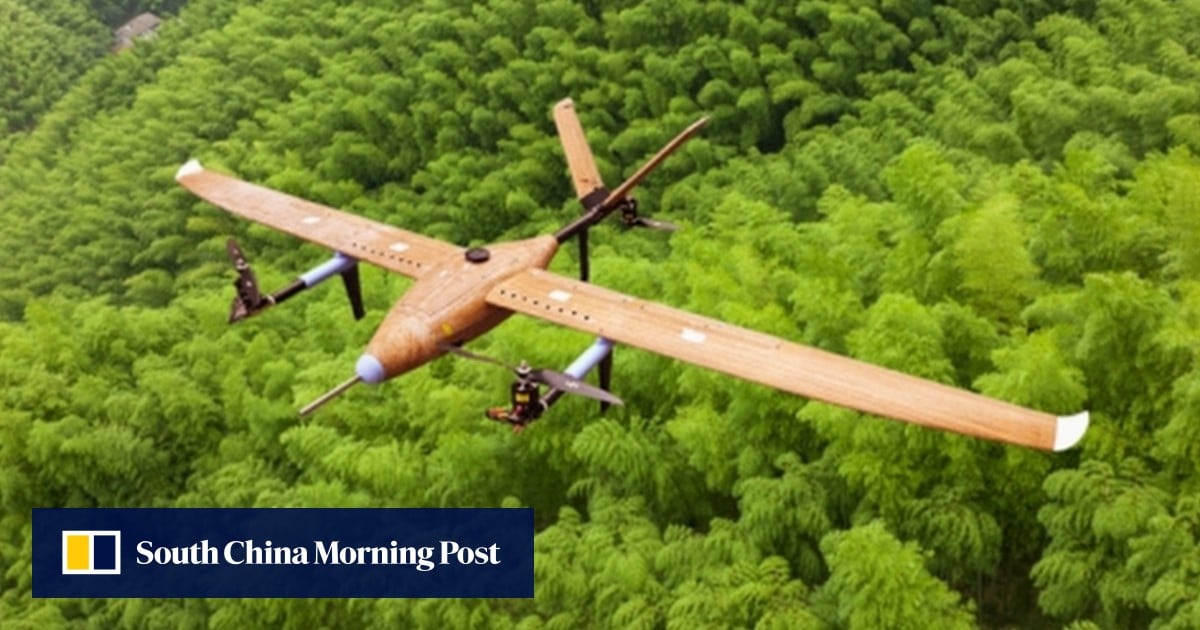
China team releases world’s first bamboo drone flight control software – for free
A team of researchers in China has unveiled what they describe as the world’s first open-source flight control system designed specifically for bamboo-frame drones, offering a potential breakthrough in the push for low-cost, eco-friendly unmanned aerial vehicles (UAVs). The system, developed by researchers at Northwestern Polytechnical University’s school of civil aviation, aims to solve a long-standing bottleneck in sustainable drone design: integrating non-traditional materials such as bamboo...
Knowledge Map
Connected Articles — Knowledge Graph
This article is connected to other articles through shared AI topics and tags.
More in Research Papers
![Thoughts on AI and Research [pdf]](https://d2xsxph8kpxj0f.cloudfront.net/310419663032563854/konzwo8nGf8Z4uZsMefwMr/default-img-robot-hand-JvPW6jsLFTCtkgtb97Kys5.webp)

Request for arXiv cs.AI Endorsement – Life-Aligned AI Framework
Hi everyone, I’m preparing to submit a paper to arXiv (cs.AI, with cross-lists to q-bio.PE and physics.soc-ph) and am currently awaiting endorsement from a qualified author. Posting here in case anyone in this community can help or knows someone who can. Title: Life-Aligned AI: A Framework for Grounding Artificial Intelligence in the Empirical Conditions of Flourishing Here’s the main idea: Current alignment approaches work backwards — rules imposed in advance by minds that the systems they constrain may eventually exceed. This paper proposes a different starting point: training AI on living systems — the only adaptive framework continuously pressure-tested across four billion years under conditions of genuine consequence — and letting the operating principles emerge from genuine reasoning

Discussion
Sign in to join the discussion
No comments yet — be the first to share your thoughts!