

SOLE-R1: Video-Language Reasoning as the Sole Reward for On-Robot Reinforcement Learning
arXiv:2603.28730v1 Announce Type: cross Abstract: Vision-language models (VLMs) have shown impressive capabilities across diverse tasks, motivating efforts to leverage these models to supervise robot learning. However, when used as evaluators in reinforcement learning (RL), today's strongest models often fail under partial observability and distribution shift, enabling policies to exploit perceptual errors rather than solve the task. To address this limitation, we introduce SOLE-R1 (Self-Observing LEarner), a video-language reasoning model explicitly designed to serve as the sole reward signal — Philip Schroeder, Thomas Weng, Karl Schmeckpeper, Eric Rosen, Stephen Hart, Ondrej Biza
View PDF
Abstract:Vision-language models (VLMs) have shown impressive capabilities across diverse tasks, motivating efforts to leverage these models to supervise robot learning. However, when used as evaluators in reinforcement learning (RL), today's strongest models often fail under partial observability and distribution shift, enabling policies to exploit perceptual errors rather than solve the task. To address this limitation, we introduce SOLE-R1 (Self-Observing LEarner), a video-language reasoning model explicitly designed to serve as the sole reward signal for online RL. Given only raw video observations and a natural-language goal, SOLE-R1 performs per-timestep spatiotemporal chain-of-thought (CoT) reasoning and produces dense estimates of task progress that can be used directly as rewards. To train SOLE-R1, we develop a large-scale video trajectory and reasoning synthesis pipeline that generates temporally grounded CoT traces aligned with continuous progress supervision. This data is combined with foundational spatial and multi-frame temporal reasoning, and used to train the model with a hybrid framework that couples supervised fine-tuning with RL from verifiable rewards. Across four different simulation environments and a real-robot setting, SOLE-R1 enables zero-shot online RL from random initialization: robots learn previously unseen manipulation tasks without ground-truth rewards, success indicators, demonstrations, or task-specific tuning. SOLE-R1 succeeds on 24 unseen tasks and substantially outperforms strong vision-language rewarders, including GPT-5 and Gemini-3-Pro, while exhibiting markedly greater robustness to reward hacking.
Subjects:
Robotics (cs.RO); Computation and Language (cs.CL); Computer Vision and Pattern Recognition (cs.CV)
Cite as: arXiv:2603.28730 [cs.RO]
(or arXiv:2603.28730v1 [cs.RO] for this version)
https://doi.org/10.48550/arXiv.2603.28730
arXiv-issued DOI via DataCite (pending registration)
Submission history
From: Philip Schroeder [view email] [v1] Mon, 30 Mar 2026 17:46:31 UTC (11,976 KB)
Sign in to highlight and annotate this article

Conversation starters
Daily AI Digest
Get the top 5 AI stories delivered to your inbox every morning.
More about
researchpaperarxiv
Research across 1,372 participants and 9K+ trials details "cognitive surrender", where most subjects had minimal AI skepticism and accepted faulty AI reasoning (Kyle Orland/Ars Technica)
Kyle Orland / Ars Technica : Research across 1,372 participants and 9K+ trials details cognitive surrender , where most subjects had minimal AI skepticism and accepted faulty AI reasoning When it comes to large language model-powered tools, there are generally two broad categories of users.
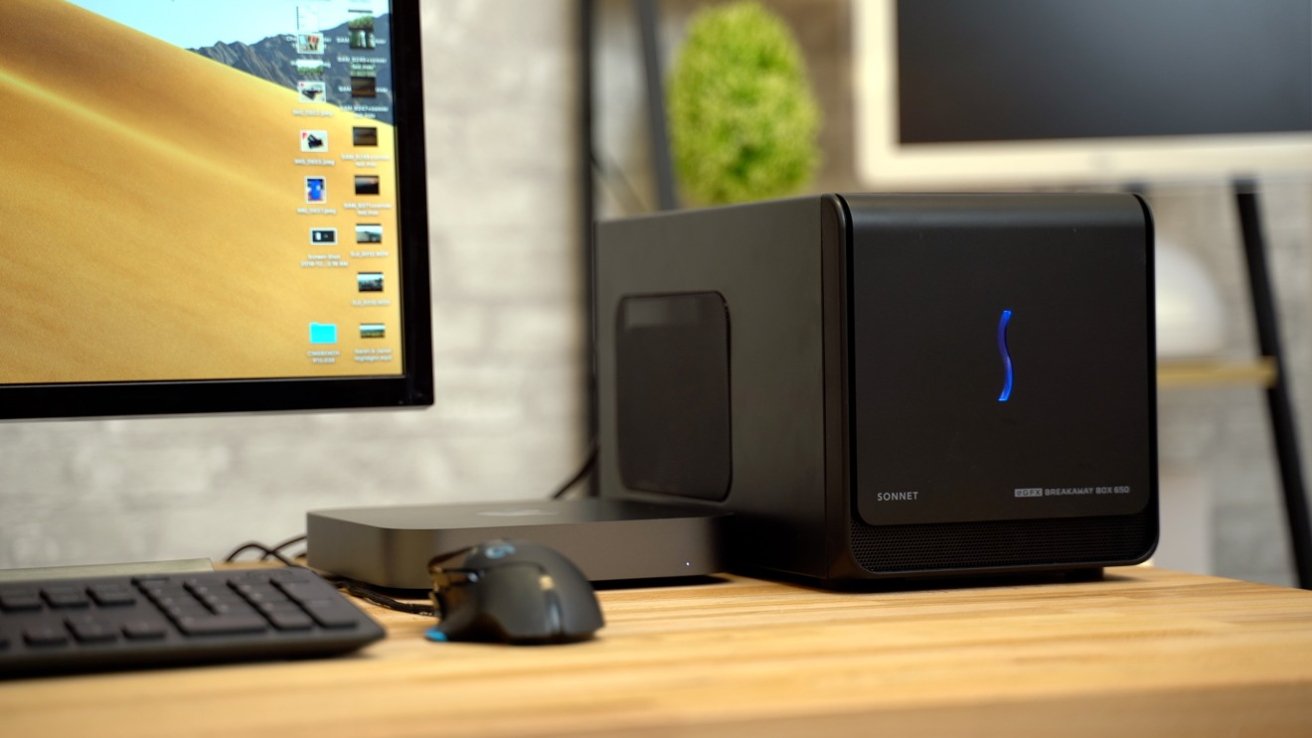
Apple reportedly signed a 3rd-party driver, by Tiny Corp, for AMD or Nvidia eGPUs for Apple Silicon Macs; it s meant for AI research, not accelerating graphics (AppleInsider)
AppleInsider : Apple reportedly signed a 3rd-party driver, by Tiny Corp, for AMD or Nvidia eGPUs for Apple Silicon Macs; it's meant for AI research, not accelerating graphics Apple has signed a driver for AMD or Nvidia eGPUs connected to Apple Silicon but there are some big caveats, and it won't improve your graphics.

Knowledge Map
Connected Articles — Knowledge Graph
This article is connected to other articles through shared AI topics and tags.
More in Research Papers
![[D] KDD Review Discussion](https://d2xsxph8kpxj0f.cloudfront.net/310419663032563854/konzwo8nGf8Z4uZsMefwMr/default-img-wave-pattern-4YWNKzoeu65vYpqRKWMiWf.webp)
[D] KDD Review Discussion
KDD 2026 (Feb Cycle) reviews will release today (4-April AoE), This thread is open to discuss about reviews and importantly celebrate successful reviews. Let us all remember that review system is noisy and we all suffer from it and this doesn't define our research impact. Let's all prioritise reviews which enhance our papers. Feel free to discuss your experiences submitted by /u/BomsDrag [link] [comments]

The CEO Building the Most Powerful AI on Earth Just Admitted It Will Destroy Half Your Industry.
January 26, 2026. Dario Amodei published a 20,000-word essay warning that AI will displace 50% of entry-level white-collar jobs in 1–5… Continue reading on Towards AI »

New Rowhammer attack can grant kernel-level control on Nvidia workstation GPUs
A study from researchers at UNC Chapel Hill and Georgia Tech shows that GDDR6-based Rowhammer attacks can grant kernel-level access to Linux systems equipped with GPUs based on Nvidia's Ampere and Ada Lovelace architectures. The vulnerability appears significantly more severe than what was outlined in a paper last year. Read Entire Article
Discussion
Sign in to join the discussion
No comments yet — be the first to share your thoughts!