
Entropic Claim Resolution: Uncertainty-Driven Evidence Selection for RAG
arXiv:2603.28444v1 Announce Type: new Abstract: Current Retrieval-Augmented Generation (RAG) systems predominantly rely on relevance-based dense retrieval, sequentially fetching documents to maximize semantic similarity with the query. However, in knowledge-intensive and real-world scenarios characterized by conflicting evidence or fundamental query ambiguity, relevance alone is insufficient for resolving epistemic uncertainty. We introduce Entropic Claim Resolution (ECR), a novel inference-time algorithm that reframes RAG reasoning as entropy minimization over competing semantic answer hypoth — Davide Di Gioia
View PDF HTML (experimental)
Abstract:Current Retrieval-Augmented Generation (RAG) systems predominantly rely on relevance-based dense retrieval, sequentially fetching documents to maximize semantic similarity with the query. However, in knowledge-intensive and real-world scenarios characterized by conflicting evidence or fundamental query ambiguity, relevance alone is insufficient for resolving epistemic uncertainty. We introduce Entropic Claim Resolution (ECR), a novel inference-time algorithm that reframes RAG reasoning as entropy minimization over competing semantic answer hypotheses. Unlike action-driven agentic frameworks (e.g., ReAct) or fixed-pipeline RAG architectures, ECR sequentially selects atomic evidence claims by maximizing Expected Entropy Reduction (EER), a decision-theoretic criterion for the value of information. The process dynamically terminates when the system reaches a mathematically defined state of epistemic sufficiency (H <= epsilon, subject to epistemic coherence). We integrate ECR into a production-grade multi-strategy retrieval pipeline (CSGR++) and analyze its theoretical properties. Our framework provides a rigorous foundation for uncertainty-aware evidence selection, shifting the paradigm from retrieving what is most relevant to retrieving what is most discriminative.
Comments: Preprint
Subjects:
Artificial Intelligence (cs.AI); Computation and Language (cs.CL)
Cite as: arXiv:2603.28444 [cs.AI]
(or arXiv:2603.28444v1 [cs.AI] for this version)
https://doi.org/10.48550/arXiv.2603.28444
arXiv-issued DOI via DataCite (pending registration)
Submission history
From: Davide Di Gioia [view email] [v1] Mon, 30 Mar 2026 13:49:03 UTC (26 KB)
Sign in to highlight and annotate this article

Conversation starters
Daily AI Digest
Get the top 5 AI stories delivered to your inbox every morning.
More about
researchpaperarxiv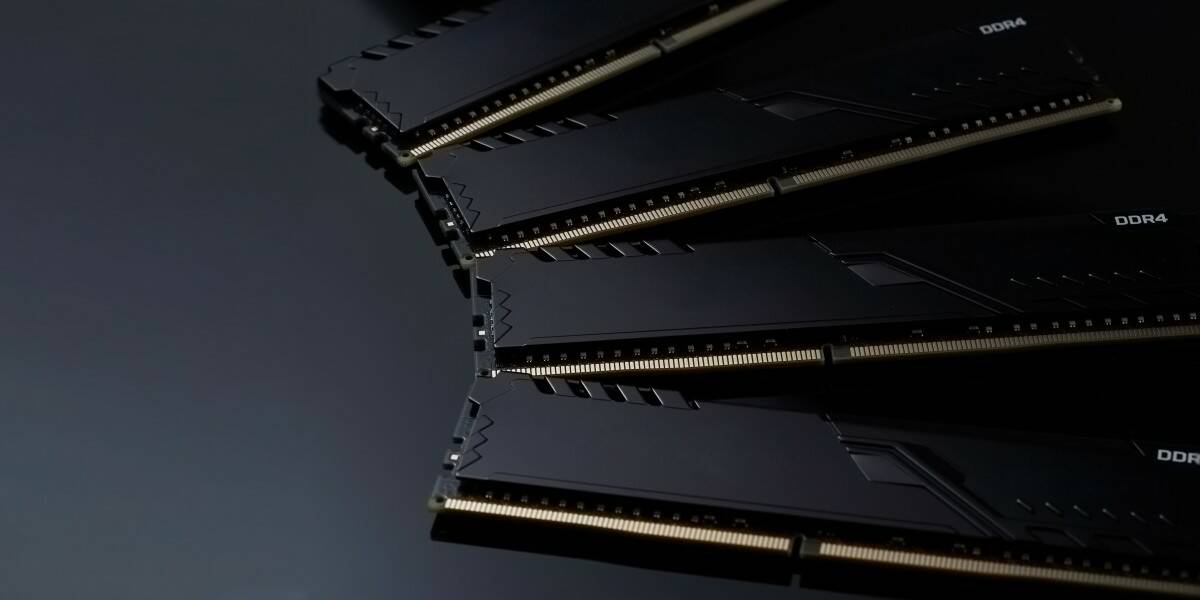
Google's TurboQuant saves memory, but won't save us from DRAM-pricing hell
<h4>Chocolate Factory’s compression tech clears the way to cheaper AI inference, not more affordable memory</h4> <p>When Google unveiled <a target="_blank" rel="nofollow" href="https://research.google/blog/turboquant-redefining-ai-efficiency-with-extreme-compression/">TurboQuant</a>, an AI data compression technology that promises to slash the amount of memory required to serve models, many hoped it would help with a memory shortage that has seen prices triple since last year. Not so much.…</p>

Illinois Tech computer science researcher honored by IEEE Chicago Section - EurekAlert!
<a href="https://news.google.com/rss/articles/CBMiXEFVX3lxTE13OVpWMEk1Z3hlMkR2bHNBQ2dkazFwb3VqN3hCa29GWGJvSVlPa00zd2xUakRmYXFqQmc5OWU0eGl4a21FMDAwWUN2Q3p0M3FrbXBkNV8zN0cxaG1s?oc=5" target="_blank">Illinois Tech computer science researcher honored by IEEE Chicago Section</a> <font color="#6f6f6f">EurekAlert!</font>

My Journey to becoming a Quantum Engineer
<p>I have procrastinated on documenting this process for the longest time. But I think i am ready now (maybe). <br> Coming from a front end engineering background, I am fascinated by the work being done by the quantum engineers at IBM. I am not that great with maths and statistics but I believe anything can be learned with tons of practice and consistency. I want to use this platform to hold myself accountable (that is if i don't give up half way and delete all my posts. I'll try not to btw). </p> <p>This is an article describing <a href="https://www.ibm.com/think/topics/quantum-computing" rel="noopener noreferrer">what quantum computing is</a> and some of it's use cases.</p> <p>I became an IBM qiskit advocate late last year and I have been exposed to a lot of resources and networked a bun
Knowledge Map
Connected Articles — Knowledge Graph
This article is connected to other articles through shared AI topics and tags.
More in Research Papers
Illinois Tech computer science researcher honored by IEEE Chicago Section - EurekAlert!
<a href="https://news.google.com/rss/articles/CBMiXEFVX3lxTE13OVpWMEk1Z3hlMkR2bHNBQ2dkazFwb3VqN3hCa29GWGJvSVlPa00zd2xUakRmYXFqQmc5OWU0eGl4a21FMDAwWUN2Q3p0M3FrbXBkNV8zN0cxaG1s?oc=5" target="_blank">Illinois Tech computer science researcher honored by IEEE Chicago Section</a> <font color="#6f6f6f">EurekAlert!</font>

AI maps science papers to predict research trends two to three years ahead - Tech Xplore
<a href="https://news.google.com/rss/articles/CBMie0FVX3lxTE5aTkZYTWdaRDZwTXNRMldpMG1WZ1YzWDZTOHN5M183Z3A1ZTFYbnhEWTdPRmpvZnZFU0xodlRsNWxFaGxTcEpwalhJNmJpQWE5VjhaRS1tOXJIeTc5Z0JNblJ3dFd4WjRYZGJOX0NrWGt6ZmZJVTBpRm5wWQ?oc=5" target="_blank">AI maps science papers to predict research trends two to three years ahead</a> <font color="#6f6f6f">Tech Xplore</font>
AI inspires new research topics in materials science - Nanowerk
<a href="https://news.google.com/rss/articles/CBMiZ0FVX3lxTFBPWlJSM2ExeVQ3LVppTm45NHpEMW9YVkxscThCNDd2OVB0c3J1ZmVCbWNSZWZ0TjZwSzlOdEFXN2UtRk5LU1hxdXd4ZklldGxoM0FZSnhCd19PWkNHQ1ZRVDNwSHNUSk0?oc=5" target="_blank">AI inspires new research topics in materials science</a> <font color="#6f6f6f">Nanowerk</font>
Discussion
Sign in to join the discussion
No comments yet — be the first to share your thoughts!