

VistaGEN: Consistent Driving Video Generation with Fine-Grained Control Using Multiview Visual-Language Reasoning
arXiv:2603.28353v1 Announce Type: new Abstract: Driving video generation has achieved much progress in controllability, video resolution, and length, but fails to support fine-grained object-level controllability for diverse driving videos, while preserving the spatiotemporal consistency, especially in long video generation. In this paper, we present a new driving video generation technique, called VistaGEN, which enables fine-grained control of specific entities, including 3D objects, images, and text descriptions, while maintaining spatiotemporal consistency in long video sequences. Our key — Li-Heng Chen, Ke Cheng, Yahui Liu, Lei Shi, Shi-Sheng Huang, Hongbo Fu
View PDF HTML (experimental)
Abstract:Driving video generation has achieved much progress in controllability, video resolution, and length, but fails to support fine-grained object-level controllability for diverse driving videos, while preserving the spatiotemporal consistency, especially in long video generation. In this paper, we present a new driving video generation technique, called VistaGEN, which enables fine-grained control of specific entities, including 3D objects, images, and text descriptions, while maintaining spatiotemporal consistency in long video sequences. Our key innovation is the incorporation of multiview visual-language reasoning into the long driving video generation. To this end, we inject visual-language features into a multiview video generator to enable fine-grained controllability. More importantly, we propose a multiview vision-language evaluator (MV-VLM) to intelligently and automatically evaluate spatiotemporal consistency of the generated content, thus formulating a novel generation-evaluation-regeneration closed-loop generation mechanism. This mechanism ensures high-quality, coherent outputs, facilitating the creation of complex and reliable driving scenarios. Besides, within the closed-loop generation, we introduce an object-level refinement module to refine the unsatisfied results evaluated from the MV-VLM and then feed them back to the video generator for regeneration. Extensive evaluation shows that our VistaGEN achieves diverse driving video generation results with fine-grained controllability, especially for long-tail objects, and much better spatiotemporal consistency than previous approaches.
Subjects:
Computer Vision and Pattern Recognition (cs.CV)
Cite as: arXiv:2603.28353 [cs.CV]
(or arXiv:2603.28353v1 [cs.CV] for this version)
https://doi.org/10.48550/arXiv.2603.28353
arXiv-issued DOI via DataCite (pending registration)
Submission history
From: Li-Heng Chen [view email] [v1] Mon, 30 Mar 2026 12:22:22 UTC (31,206 KB)
Sign in to highlight and annotate this article

Conversation starters
Daily AI Digest
Get the top 5 AI stories delivered to your inbox every morning.
More about
researchpaperarxiv
Looking for Help on Building a Cheap/Budget Dedicated AI System
I’ve been getting into the whole AI field over the course of the year and I’ve strictly said to NEVER use cloud based AI (Or under VERY strict and specific circumstances). For example, i was using Opencode’s cloud servers, but only because it was through their own community maintained infrastructure/servers and also it was about as secure as it gets when it comes to cloud AI. But anything else is a hard NO. I’ve been using my main machine (Specs on user) and so far it’s been pretty good. Depending on the model, I can run 30-40B models at about 25-35 tok/s, which for me is completely usable, anything under or close to 10 tok/s is pretty unusable for me. But anyways, that has been great for me, but I’m slowly running into VRAM and GPU limitations, so I think it’s time to get some dedicated h
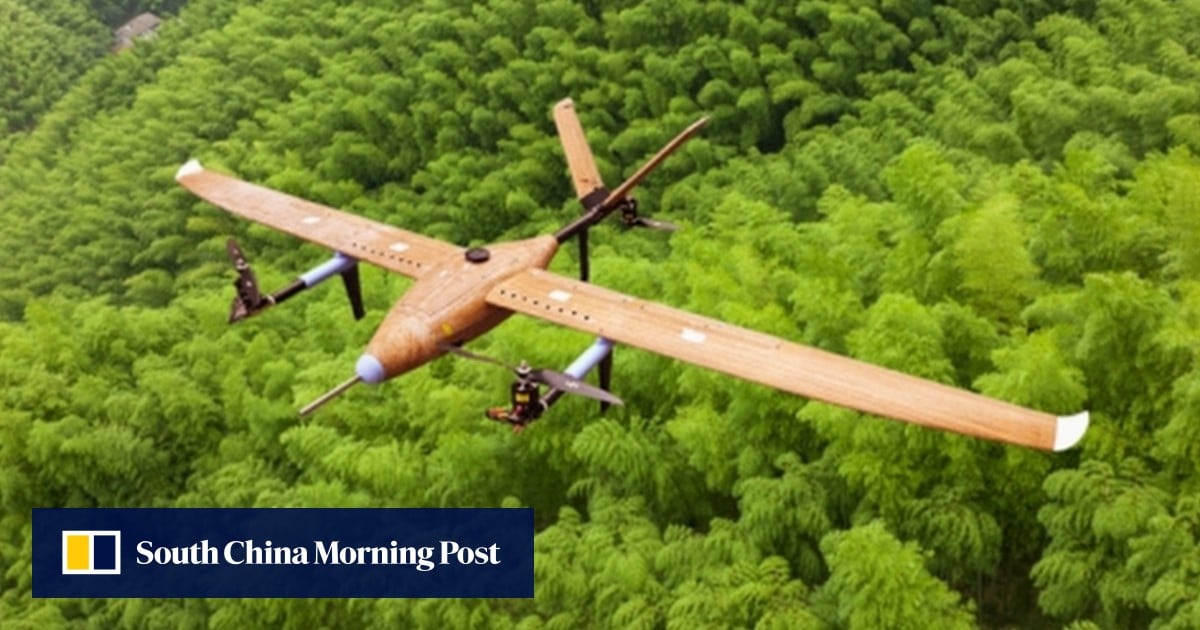
China team releases world’s first bamboo drone flight control software – for free
A team of researchers in China has unveiled what they describe as the world’s first open-source flight control system designed specifically for bamboo-frame drones, offering a potential breakthrough in the push for low-cost, eco-friendly unmanned aerial vehicles (UAVs). The system, developed by researchers at Northwestern Polytechnical University’s school of civil aviation, aims to solve a long-standing bottleneck in sustainable drone design: integrating non-traditional materials such as bamboo...
Knowledge Map
Connected Articles — Knowledge Graph
This article is connected to other articles through shared AI topics and tags.
More in Research Papers
![Thoughts on AI and Research [pdf]](https://d2xsxph8kpxj0f.cloudfront.net/310419663032563854/konzwo8nGf8Z4uZsMefwMr/default-img-robot-hand-JvPW6jsLFTCtkgtb97Kys5.webp)

Request for arXiv cs.AI Endorsement – Life-Aligned AI Framework
Hi everyone, I’m preparing to submit a paper to arXiv (cs.AI, with cross-lists to q-bio.PE and physics.soc-ph) and am currently awaiting endorsement from a qualified author. Posting here in case anyone in this community can help or knows someone who can. Title: Life-Aligned AI: A Framework for Grounding Artificial Intelligence in the Empirical Conditions of Flourishing Here’s the main idea: Current alignment approaches work backwards — rules imposed in advance by minds that the systems they constrain may eventually exceed. This paper proposes a different starting point: training AI on living systems — the only adaptive framework continuously pressure-tested across four billion years under conditions of genuine consequence — and letting the operating principles emerge from genuine reasoning

Discussion
Sign in to join the discussion
No comments yet — be the first to share your thoughts!