

Crossing the NL/PL Divide: Information Flow Analysis Across the NL/PL Boundary in LLM-Integrated Code
arXiv:2603.28345v1 Announce Type: cross Abstract: LLM API calls are becoming a ubiquitous program construct, yet they create a boundary that no existing program analysis can cross: runtime values enter a natural-language prompt, undergo opaque processing inside the LLM, and re-emerge as code, SQL, JSON, or text that the program consumes. Every analysis that tracks data across function boundaries, including taint analysis, program slicing, dependency analysis, and change-impact analysis, relies on dataflow summaries of callee behavior. LLM calls have no such summaries, breaking all of these ana — Zihao Xu, Xiao Cheng, Ruijie Meng, Yuekang Li
View PDF HTML (experimental)
Abstract:LLM API calls are becoming a ubiquitous program construct, yet they create a boundary that no existing program analysis can cross: runtime values enter a natural-language prompt, undergo opaque processing inside the LLM, and re-emerge as code, SQL, JSON, or text that the program consumes. Every analysis that tracks data across function boundaries, including taint analysis, program slicing, dependency analysis, and change-impact analysis, relies on dataflow summaries of callee behavior. LLM calls have no such summaries, breaking all of these analyses at what we call the NL/PL boundary. We present the first information flow method to bridge this boundary. Grounded in quantitative information flow theory, our taxonomy defines 24 labels along two orthogonal dimensions: information preservation level (from lexically preserved to fully blocked) and output modality (natural language, structured format, executable artifact). We label 9,083 placeholder-output pairs from 4,154 real-world Python files and validate reliability with Cohen's $\kappa = 0.82$ and near-complete coverage (0.01% unclassifiable). We demonstrate the taxonomy's utility on two downstream applications: (1)~a two-stage taint propagation pipeline combining taxonomy-based filtering with LLM verification achieves $F_1 = 0.923$ on 353 expert-annotated pairs, with cross-language validation on six real-world OpenClaw prompt injection cases further confirming effectiveness; (2)~taxonomy-informed backward slicing reduces slice size by a mean of 15% in files containing non-propagating placeholders. Per-label analysis reveals that four blocked labels account for nearly all non-propagating cases, providing actionable filtering criteria for tool builders.
Subjects:
Software Engineering (cs.SE); Artificial Intelligence (cs.AI)
Cite as: arXiv:2603.28345 [cs.SE]
(or arXiv:2603.28345v1 [cs.SE] for this version)
https://doi.org/10.48550/arXiv.2603.28345
arXiv-issued DOI via DataCite (pending registration)
Submission history
From: Zihao Xu [view email] [v1] Mon, 30 Mar 2026 12:14:24 UTC (1,022 KB)
Sign in to highlight and annotate this article

Conversation starters
Daily AI Digest
Get the top 5 AI stories delivered to your inbox every morning.
More about
researchpaperarxiv

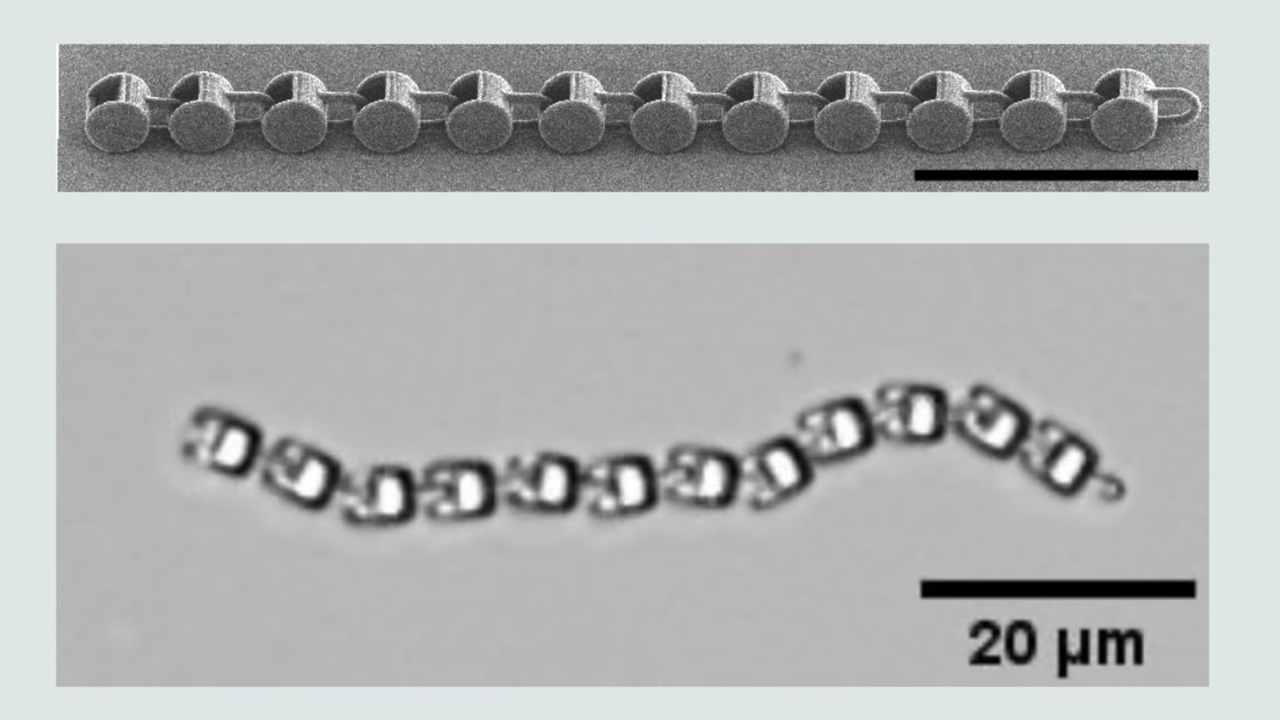
Researchers 3D print robot the size of a single-cell organism — devices move and navigate even without a ‘brain,’ uses their shape and the environment to get going
Researchers 3D print robot the size of a single-cell organism — devices move and navigate even without a ‘brain,’ uses their shape and the environment to get going
Knowledge Map
Connected Articles — Knowledge Graph
This article is connected to other articles through shared AI topics and tags.
More in Research Papers
Researchers 3D print robot the size of a single-cell organism — devices move and navigate even without a ‘brain,’ uses their shape and the environment to get going
Researchers 3D print robot the size of a single-cell organism — devices move and navigate even without a ‘brain,’ uses their shape and the environment to get going

Developing psychosocial phenotypes to understand engagement with digital health technologies for heart failure
npj Digital Medicine, Published online: 04 April 2026; doi:10.1038/s41746-026-02571-z Developing psychosocial phenotypes to understand engagement with digital health technologies for heart failure
Discussion
Sign in to join the discussion
No comments yet — be the first to share your thoughts!