

Agent-Driven Autonomous Reinforcement Learning Research: Iterative Policy Improvement for Quadruped Locomotion
arXiv:2603.27416v1 Announce Type: cross Abstract: This paper documents a case study in agent-driven autonomous reinforcement learning research for quadruped locomotion. The setting was not a fully self-starting research system. A human provided high-level directives through an agentic coding environment, while an agent carried out most of the execution loop: reading code, diagnosing failures, editing reward and terrain configurations, launching and monitoring jobs, analyzing intermediate metrics, and proposing the next wave of experiments. Across more than 70 experiments organized into fourtee — Nimesh Khandelwal, Shakti S. Gupta
View PDF HTML (experimental)
Abstract:This paper documents a case study in agent-driven autonomous reinforcement learning research for quadruped locomotion. The setting was not a fully self-starting research system. A human provided high-level directives through an agentic coding environment, while an agent carried out most of the execution loop: reading code, diagnosing failures, editing reward and terrain configurations, launching and monitoring jobs, analyzing intermediate metrics, and proposing the next wave of experiments. Across more than 70 experiments organized into fourteen waves on a DHAV1 12-DoF quadruped in Isaac Lab, the agent progressed from early rough-terrain runs with mean reward around 7 to a best logged Wave 12 run, exp063, with velocity error 0.263 and 97% timeout over 2000 iterations, independently reproduced five times across different GPUs. The archive also records several concrete autonomous research decisions: isolating PhysX deadlocks to terrain sets containing boxes and stair-like primitives, porting four reward terms from openly available reference implementations \cite{deeprobotics, rlsar}, correcting Isaac Sim import and bootstrapping issues, reducing environment count for diagnosis, terminating hung runs, and pivoting effort away from HIM after repeated terrain=0.0 outcomes. Relative to the AutoResearch paradigm \cite{autoresearch}, this case study operates in a more failure-prone robotics RL setting with multi-GPU experiment management and simulator-specific engineering constraints. The contribution is empirical and documentary: it shows that an agent can materially execute the iterative RL research loop in this domain with limited human intervention, while also making clear where human direction still shaped the agenda.
Subjects:
Robotics (cs.RO); Artificial Intelligence (cs.AI)
Cite as: arXiv:2603.27416 [cs.RO]
(or arXiv:2603.27416v1 [cs.RO] for this version)
https://doi.org/10.48550/arXiv.2603.27416
arXiv-issued DOI via DataCite (pending registration)
Submission history
From: Nimesh Khandelwal [view email] [v1] Sat, 28 Mar 2026 21:30:04 UTC (590 KB)
Sign in to highlight and annotate this article

Conversation starters
Daily AI Digest
Get the top 5 AI stories delivered to your inbox every morning.
More about
researchpaperarxiv
Research across 1,372 participants and 9K+ trials details "cognitive surrender", where most subjects had minimal AI skepticism and accepted faulty AI reasoning (Kyle Orland/Ars Technica)
Kyle Orland / Ars Technica : Research across 1,372 participants and 9K+ trials details cognitive surrender , where most subjects had minimal AI skepticism and accepted faulty AI reasoning When it comes to large language model-powered tools, there are generally two broad categories of users.
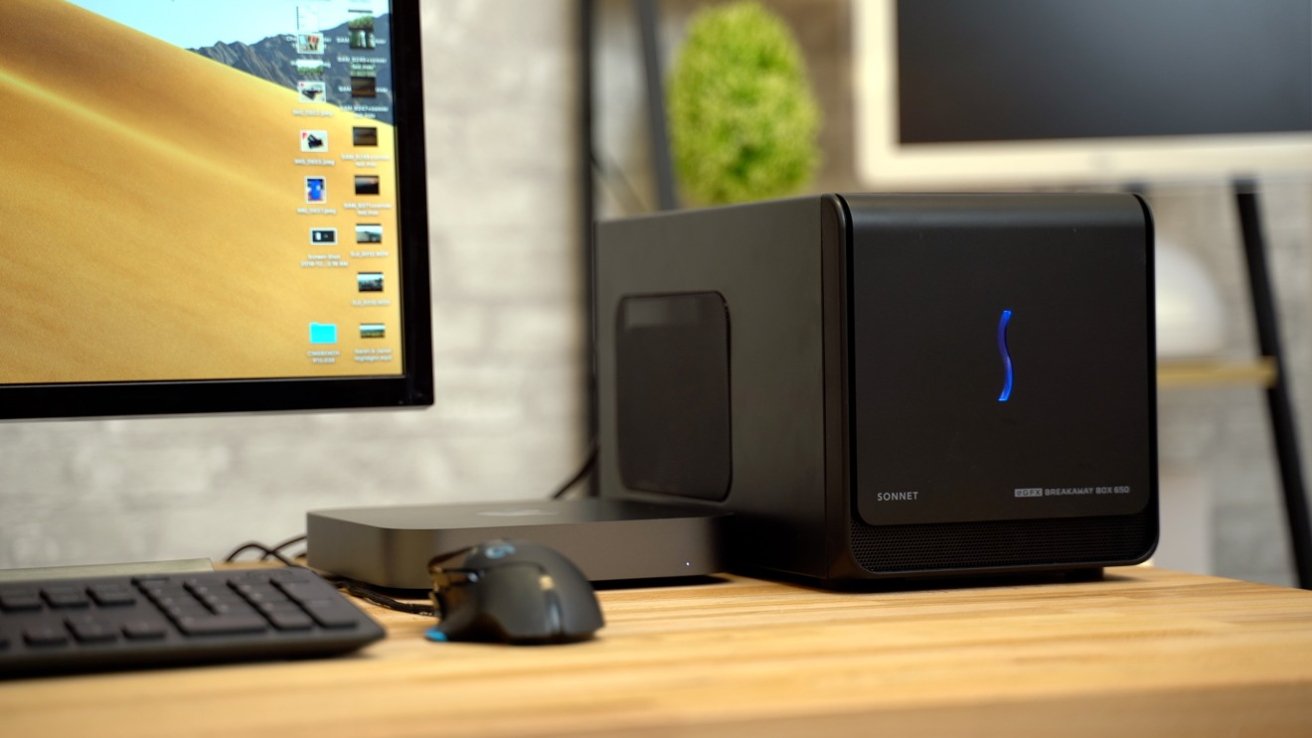
Apple reportedly signed a 3rd-party driver, by Tiny Corp, for AMD or Nvidia eGPUs for Apple Silicon Macs; it s meant for AI research, not accelerating graphics (AppleInsider)
AppleInsider : Apple reportedly signed a 3rd-party driver, by Tiny Corp, for AMD or Nvidia eGPUs for Apple Silicon Macs; it's meant for AI research, not accelerating graphics Apple has signed a driver for AMD or Nvidia eGPUs connected to Apple Silicon but there are some big caveats, and it won't improve your graphics.

Knowledge Map
Connected Articles — Knowledge Graph
This article is connected to other articles through shared AI topics and tags.
More in Research Papers
![[D] KDD Review Discussion](https://d2xsxph8kpxj0f.cloudfront.net/310419663032563854/konzwo8nGf8Z4uZsMefwMr/default-img-wave-pattern-4YWNKzoeu65vYpqRKWMiWf.webp)
[D] KDD Review Discussion
KDD 2026 (Feb Cycle) reviews will release today (4-April AoE), This thread is open to discuss about reviews and importantly celebrate successful reviews. Let us all remember that review system is noisy and we all suffer from it and this doesn't define our research impact. Let's all prioritise reviews which enhance our papers. Feel free to discuss your experiences submitted by /u/BomsDrag [link] [comments]

The CEO Building the Most Powerful AI on Earth Just Admitted It Will Destroy Half Your Industry.
January 26, 2026. Dario Amodei published a 20,000-word essay warning that AI will displace 50% of entry-level white-collar jobs in 1–5… Continue reading on Towards AI »

New Rowhammer attack can grant kernel-level control on Nvidia workstation GPUs
A study from researchers at UNC Chapel Hill and Georgia Tech shows that GDDR6-based Rowhammer attacks can grant kernel-level access to Linux systems equipped with GPUs based on Nvidia's Ampere and Ada Lovelace architectures. The vulnerability appears significantly more severe than what was outlined in a paper last year. Read Entire Article
Discussion
Sign in to join the discussion
No comments yet — be the first to share your thoughts!