

The Hidden Costs of AI-Mediated Political Outreach: Persuasion and AI Penalties in the US and UK
arXiv:2603.27413v1 Announce Type: cross Abstract: As AI-enabled systems become available for political campaign outreach, an important question has received little empirical attention: how do people evaluate the communicative practices these systems represent, and what consequences do those evaluations carry? Most research on AI-enabled persuasion examines attitude change under enforced exposure, leaving aside whether people regard AI-mediated outreach as legitimate or not. We address this gap with a preregistered 2x2 experiment conducted in the United States and United Kingdom (N = 1,800 per — Andreas Jungherr, Adrian Rauchfleisch
View PDF HTML (experimental)
Abstract:As AI-enabled systems become available for political campaign outreach, an important question has received little empirical attention: how do people evaluate the communicative practices these systems represent, and what consequences do those evaluations carry? Most research on AI-enabled persuasion examines attitude change under enforced exposure, leaving aside whether people regard AI-mediated outreach as legitimate or not. We address this gap with a preregistered 2x2 experiment conducted in the United States and United Kingdom (N = 1,800 per country) varying outreach intent (informational vs.~persuasive) and type of interaction partner (human vs.~AI-mediated) in the context of political issues that respondents consider highly important. We find consistent evidence for two evaluation penalties. A persuasion penalty emerges across nearly all outcomes in both countries: explicitly persuasive outreach is evaluated as less acceptable, more threatening to personal autonomy, less beneficial, and more damaging to organizational trust than informational outreach, consistent with reactance to perceived threats to attitudinal freedom. An AI penalty is consistent with a distinct mechanism: AI-mediated outreach triggers normative concerns about appropriate communicative agents, producing similarly negative evaluations across five outcomes in both countries. As automated outreach becomes more widespread, how people judge it may matter for democratic communication just as much as whether it changes minds.
Subjects:
Computers and Society (cs.CY); Artificial Intelligence (cs.AI)
Cite as: arXiv:2603.27413 [cs.CY]
(or arXiv:2603.27413v1 [cs.CY] for this version)
https://doi.org/10.48550/arXiv.2603.27413
arXiv-issued DOI via DataCite (pending registration)
Submission history
From: Andreas Jungherr [view email] [v1] Sat, 28 Mar 2026 21:22:02 UTC (76 KB)
Sign in to highlight and annotate this article

Conversation starters
Daily AI Digest
Get the top 5 AI stories delivered to your inbox every morning.
More about
researchpaperarxiv
Syntaqlite Playground
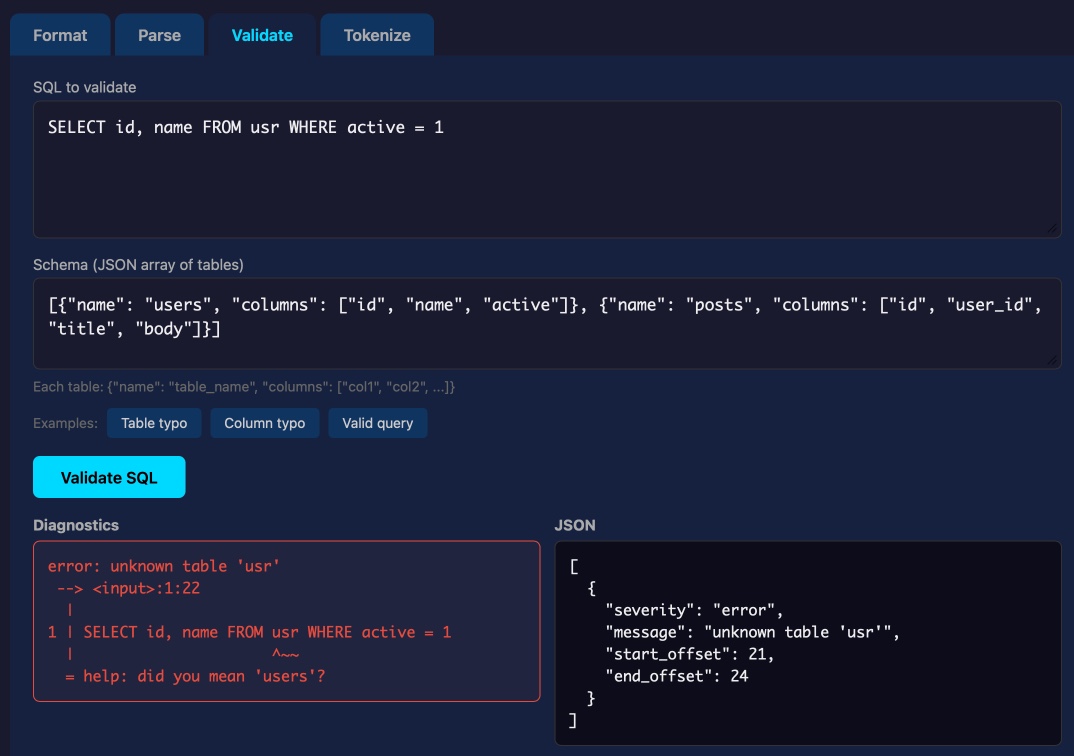
Tool: Syntaqlite Playground Lalit Maganti's syntaqlite is currently being discussed on Hacker News thanks to Eight years of wanting, three months of building with AI , a deep dive into exactly how it was built. This inspired me to revisit a research project I ran when Lalit first released it a couple of weeks ago, where I tried it out and then compiled it to a WebAssembly wheel so it could run in Pyodide in a browser (the library itself uses C and Rust). This new playground loads up the Python library and provides a UI for trying out its different features: formating, parsing into an AST, validating, and tokenizing SQLite SQL queries. Tags: sql , ai-assisted-programming , sqlite , tools , agentic-engineering

Nonprofit Research Groups Disturbed to Learn That OpenAI Has Secretly Been Funding Their Work
"I don't want OpenAI to write their own rules for how they interact with children." The post Nonprofit Research Groups Disturbed to Learn That OpenAI Has Secretly Been Funding Their Work appeared first on Futurism .
Knowledge Map
Connected Articles — Knowledge Graph
This article is connected to other articles through shared AI topics and tags.


Discussion
Sign in to join the discussion
No comments yet — be the first to share your thoughts!