
VAN-AD: Visual Masked Autoencoder with Normalizing Flow For Time Series Anomaly Detection
arXiv:2603.26842v1 Announce Type: cross Abstract: Time series anomaly detection (TSAD) is essential for maintaining the reliability and security of IoT-enabled service systems. Existing methods require training one specific model for each dataset, which exhibits limited generalization capability across different target datasets, hindering anomaly detection performance in various scenarios with scarce training data. To address this limitation, foundation models have emerged as a promising direction. However, existing approaches either repurpose large language models (LLMs) or construct largesca — PengYu Chen, Shang Wan, Xiaohou Shi, Yuan Chang, Yan Sun, Sajal K. Das
View PDF HTML (experimental)
Abstract:Time series anomaly detection (TSAD) is essential for maintaining the reliability and security of IoT-enabled service systems. Existing methods require training one specific model for each dataset, which exhibits limited generalization capability across different target datasets, hindering anomaly detection performance in various scenarios with scarce training data. To address this limitation, foundation models have emerged as a promising direction. However, existing approaches either repurpose large language models (LLMs) or construct largescale time series datasets to develop general anomaly detection foundation models, and still face challenges caused by severe cross-modal gaps or in-domain heterogeneity. In this paper, we investigate the applicability of large-scale vision models to TSAD. Specifically, we adapt a visual Masked Autoencoder (MAE) pretrained on ImageNet to the TSAD task. However, directly transferring MAE to TSAD introduces two key challenges: overgeneralization and limited local perception. To address these challenges, we propose VAN-AD, a novel MAE-based framework for TSAD. To alleviate the over-generalization issue, we design an Adaptive Distribution Mapping Module (ADMM), which maps the reconstruction results before and after MAE into a unified statistical space to amplify discrepancies caused by abnormal patterns. To overcome the limitation of local perception, we further develop a Normalizing Flow Module (NFM), which combines MAE with normalizing flow to estimate the probability density of the current window under the global distribution. Extensive experiments on nine real-world datasets demonstrate that VAN-AD consistently outperforms existing state-of-the-art methods across multiple evaluation this http URL make our code and datasets available at this https URL.
Comments: 13 pages, 20 figures
Subjects:
Machine Learning (cs.LG); Artificial Intelligence (cs.AI); Computer Vision and Pattern Recognition (cs.CV)
Cite as: arXiv:2603.26842 [cs.LG]
(or arXiv:2603.26842v1 [cs.LG] for this version)
https://doi.org/10.48550/arXiv.2603.26842
arXiv-issued DOI via DataCite (pending registration)
Submission history
From: Peny Chen [view email] [v1] Fri, 27 Mar 2026 08:48:59 UTC (3,692 KB)
Sign in to highlight and annotate this article

Conversation starters
Daily AI Digest
Get the top 5 AI stories delivered to your inbox every morning.
More about
researchpaperarxiv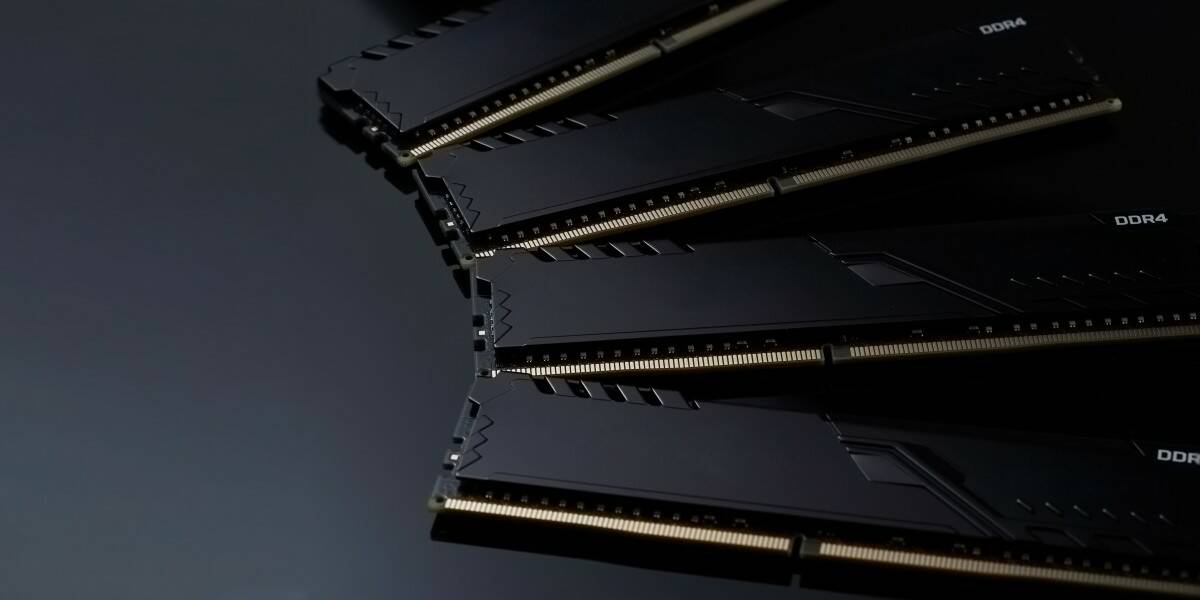
Google's TurboQuant saves memory, but won't save us from DRAM-pricing hell
<h4>Chocolate Factory’s compression tech clears the way to cheaper AI inference, not more affordable memory</h4> <p>When Google unveiled <a target="_blank" rel="nofollow" href="https://research.google/blog/turboquant-redefining-ai-efficiency-with-extreme-compression/">TurboQuant</a>, an AI data compression technology that promises to slash the amount of memory required to serve models, many hoped it would help with a memory shortage that has seen prices triple since last year. Not so much.…</p>

Illinois Tech computer science researcher honored by IEEE Chicago Section - EurekAlert!
<a href="https://news.google.com/rss/articles/CBMiXEFVX3lxTE13OVpWMEk1Z3hlMkR2bHNBQ2dkazFwb3VqN3hCa29GWGJvSVlPa00zd2xUakRmYXFqQmc5OWU0eGl4a21FMDAwWUN2Q3p0M3FrbXBkNV8zN0cxaG1s?oc=5" target="_blank">Illinois Tech computer science researcher honored by IEEE Chicago Section</a> <font color="#6f6f6f">EurekAlert!</font>

My Journey to becoming a Quantum Engineer
<p>I have procrastinated on documenting this process for the longest time. But I think i am ready now (maybe). <br> Coming from a front end engineering background, I am fascinated by the work being done by the quantum engineers at IBM. I am not that great with maths and statistics but I believe anything can be learned with tons of practice and consistency. I want to use this platform to hold myself accountable (that is if i don't give up half way and delete all my posts. I'll try not to btw). </p> <p>This is an article describing <a href="https://www.ibm.com/think/topics/quantum-computing" rel="noopener noreferrer">what quantum computing is</a> and some of it's use cases.</p> <p>I became an IBM qiskit advocate late last year and I have been exposed to a lot of resources and networked a bun
Knowledge Map
Connected Articles — Knowledge Graph
This article is connected to other articles through shared AI topics and tags.
More in Research Papers
Illinois Tech computer science researcher honored by IEEE Chicago Section - EurekAlert!
<a href="https://news.google.com/rss/articles/CBMiXEFVX3lxTE13OVpWMEk1Z3hlMkR2bHNBQ2dkazFwb3VqN3hCa29GWGJvSVlPa00zd2xUakRmYXFqQmc5OWU0eGl4a21FMDAwWUN2Q3p0M3FrbXBkNV8zN0cxaG1s?oc=5" target="_blank">Illinois Tech computer science researcher honored by IEEE Chicago Section</a> <font color="#6f6f6f">EurekAlert!</font>
AI maps science papers to predict research trends two to three years ahead - Tech Xplore
<a href="https://news.google.com/rss/articles/CBMie0FVX3lxTE5aTkZYTWdaRDZwTXNRMldpMG1WZ1YzWDZTOHN5M183Z3A1ZTFYbnhEWTdPRmpvZnZFU0xodlRsNWxFaGxTcEpwalhJNmJpQWE5VjhaRS1tOXJIeTc5Z0JNblJ3dFd4WjRYZGJOX0NrWGt6ZmZJVTBpRm5wWQ?oc=5" target="_blank">AI maps science papers to predict research trends two to three years ahead</a> <font color="#6f6f6f">Tech Xplore</font>
AI inspires new research topics in materials science - Nanowerk
<a href="https://news.google.com/rss/articles/CBMiZ0FVX3lxTFBPWlJSM2ExeVQ3LVppTm45NHpEMW9YVkxscThCNDd2OVB0c3J1ZmVCbWNSZWZ0TjZwSzlOdEFXN2UtRk5LU1hxdXd4ZklldGxoM0FZSnhCd19PWkNHQ1ZRVDNwSHNUSk0?oc=5" target="_blank">AI inspires new research topics in materials science</a> <font color="#6f6f6f">Nanowerk</font>
Discussion
Sign in to join the discussion
No comments yet — be the first to share your thoughts!