

Training-Free Diffusion-Driven Modeling of Pareto Set Evolution for Dynamic Multiobjective Optimization
arXiv:2603.26749v1 Announce Type: cross Abstract: Dynamic multiobjective optimization problems (DMOPs) feature time-varying objectives, which cause the Pareto optimal solution (POS) set to drift over time and make it difficult to maintain both convergence and diversity under limited response time. Many existing prediction-based dynamic multiobjective evolutionary algorithms (DMOEAs) either depend on learned models with nontrivial training cost or employ one-step population mapping, which may overlook the gradual nature of POS evolution. This paper proposes DD-DMOEA, a training-free diffusion-b — Jian Guan, Huolong Wu, Zhenzhong Wang, Gary G. Yen, Min Jiang
View PDF HTML (experimental)
Abstract:Dynamic multiobjective optimization problems (DMOPs) feature time-varying objectives, which cause the Pareto optimal solution (POS) set to drift over time and make it difficult to maintain both convergence and diversity under limited response time. Many existing prediction-based dynamic multiobjective evolutionary algorithms (DMOEAs) either depend on learned models with nontrivial training cost or employ one-step population mapping, which may overlook the gradual nature of POS evolution. This paper proposes DD-DMOEA, a training-free diffusion-based dynamic response mechanism for DMOPs. The key idea is to treat the POS obtained in the previous environment as a "noisy" sample set and to guide its evolution toward the current POS through an analytically constructed multi-step denoising process. A knee-point-based auxiliary strategy is used to specify the target region in the new environment, and an explicit probability-density formulation is derived to compute the denoising update without neural training. To reduce the risk of misleading guidance caused by knee-point prediction errors, an uncertainty-aware scheme adaptively adjusts the guidance strength according to the historical prediction deviation. Experiments on the CEC2018 dynamic multiobjective benchmarks show that DD-DMOEA achieves competitive or better convergence-diversity performance and provides faster dynamic response than several state-of-the-art DMOEAs.
Subjects:
Neural and Evolutionary Computing (cs.NE); Artificial Intelligence (cs.AI)
Cite as: arXiv:2603.26749 [cs.NE]
(or arXiv:2603.26749v1 [cs.NE] for this version)
https://doi.org/10.48550/arXiv.2603.26749
arXiv-issued DOI via DataCite (pending registration)
Submission history
From: Jian Guan [view email] [v1] Mon, 23 Mar 2026 11:09:58 UTC (2,436 KB)
Sign in to highlight and annotate this article

Conversation starters
Daily AI Digest
Get the top 5 AI stories delivered to your inbox every morning.
More about
researchpaperarxiv![[D] Is research in semantic segmentation saturated?](https://d2xsxph8kpxj0f.cloudfront.net/310419663032563854/konzwo8nGf8Z4uZsMefwMr/default-img-microchip-RD7Ub6Tkp8JwbZxSThJdV5.webp)
[D] Is research in semantic segmentation saturated?
Nowadays I dont see a lot of papers addressing 2D semantic segmentation problem statements be it supervised, semi-supervised, domain adaptation. Is the problem statement saturated? Are there any promising research directions in segmentation except open-set segmentation? submitted by /u/Hot_Version_6403 [link] [comments]

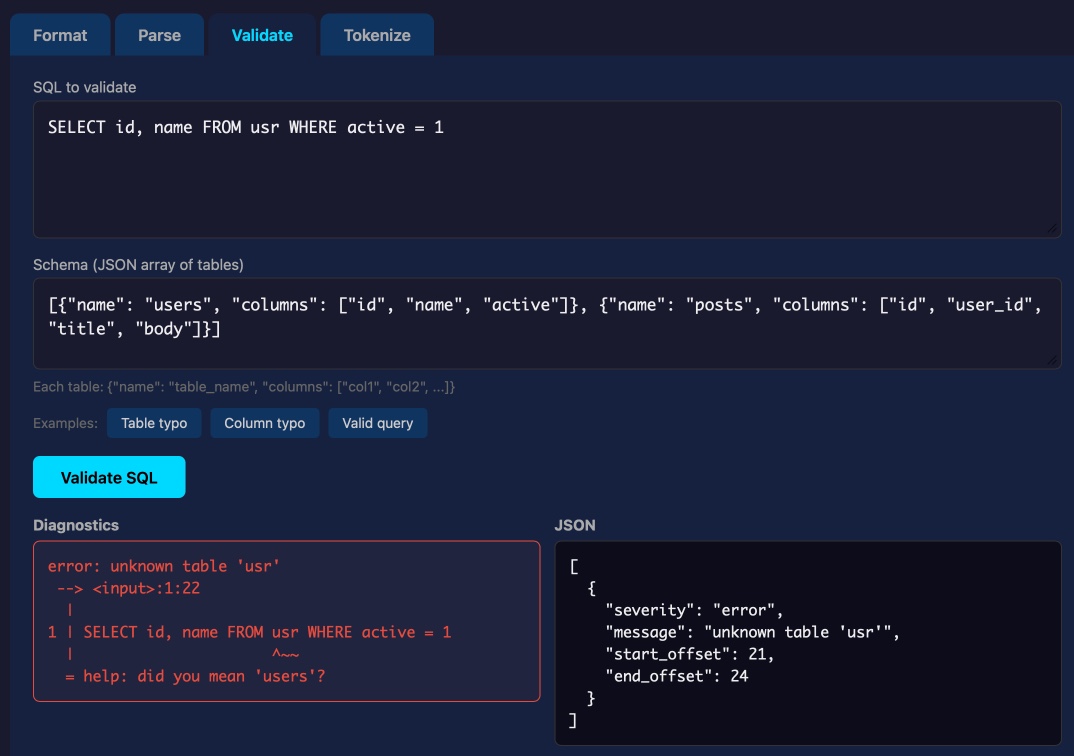
Syntaqlite Playground
Tool: Syntaqlite Playground Lalit Maganti's syntaqlite is currently being discussed on Hacker News thanks to Eight years of wanting, three months of building with AI , a deep dive into exactly how it was built. This inspired me to revisit a research project I ran when Lalit first released it a couple of weeks ago, where I tried it out and then compiled it to a WebAssembly wheel so it could run in Pyodide in a browser (the library itself uses C and Rust). This new playground loads up the Python library and provides a UI for trying out its different features: formating, parsing into an AST, validating, and tokenizing SQLite SQL queries. Tags: sql , ai-assisted-programming , sqlite , tools , agentic-engineering
Knowledge Map
Connected Articles — Knowledge Graph
This article is connected to other articles through shared AI topics and tags.
More in Research Papers
[D] Is research in semantic segmentation saturated?
Nowadays I dont see a lot of papers addressing 2D semantic segmentation problem statements be it supervised, semi-supervised, domain adaptation. Is the problem statement saturated? Are there any promising research directions in segmentation except open-set segmentation? submitted by /u/Hot_Version_6403 [link] [comments]


Discussion
Sign in to join the discussion
No comments yet — be the first to share your thoughts!