
Cone-Beam CT Image Quality Enhancement Using A Latent Diffusion Model Trained with Simulated CBCT Artifacts
arXiv:2603.26014v1 Announce Type: cross Abstract: Cone-beam computed tomography (CBCT) images are problematic in clinical medicine because of their low contrast and high artifact content compared with conventional CT images. Although there are some studies to improve image quality, in regions subject to organ deformation, the anatomical structure may change after such image quality improvement. In this study, we propose an overcorrection-free CBCT image quality enhancement method based on a conditional latent diffusion model using pseudo-CBCT images. Pseudo-CBCT images are created from CT imag — Naruki Murahashi, Mitsuhiro Nakamura, Megumi Nakao
View PDF HTML (experimental)
Abstract:Cone-beam computed tomography (CBCT) images are problematic in clinical medicine because of their low contrast and high artifact content compared with conventional CT images. Although there are some studies to improve image quality, in regions subject to organ deformation, the anatomical structure may change after such image quality improvement. In this study, we propose an overcorrection-free CBCT image quality enhancement method based on a conditional latent diffusion model using pseudo-CBCT images. Pseudo-CBCT images are created from CT images using a simple method that simulates CBCT artifacts and are spatially consistent with the CT images. By performing self-supervised learning with these spatially consistent paired images, we can improve image quality while maintaining anatomical structures. Furthermore, extending the framework of the conditional diffusion model to latent space improves the efficiency of image processing. Our model was trained on pelvic CT-pseudo-CBCT paired data and was applied to both pseudo-CBCT and real CBCT data. The experimental results using data of 75 cases show that with our proposed method, the structural changes were less than 1/1000th (in terms of the number of pixels) of those of a conventional method involving learning with real images, and the correlation coefficient between the CT value distributions of the generated and reference images was 0.916, approaching the same level as conventional methods. We also confirmed that the proposed framework achieves faster processing and superior improvement performance compared with the framework of a conditional diffusion model, even under constrained training settings.
Subjects:
Image and Video Processing (eess.IV); Computer Vision and Pattern Recognition (cs.CV)
Cite as: arXiv:2603.26014 [eess.IV]
(or arXiv:2603.26014v1 [eess.IV] for this version)
https://doi.org/10.48550/arXiv.2603.26014
arXiv-issued DOI via DataCite (pending registration)
Submission history
From: Naruki Murahashi [view email] [v1] Fri, 27 Mar 2026 02:16:15 UTC (5,047 KB)
Sign in to highlight and annotate this article

Conversation starters
Daily AI Digest
Get the top 5 AI stories delivered to your inbox every morning.
More about
researchpaperarxiv
Artificial Intelligence at JPMorgan Chase - Emerj Artificial Intelligence Research
<a href="https://news.google.com/rss/articles/CBMibEFVX3lxTE12bUwyd1dkamZPZExOVHJvb1MxTkZDaml4ak1PbDBvdXlrODBFdmtFVnBMVkhiS1RHTy0yWVRqVmYzQng2NG9VUkcwYVo0R0txZHhMUjFmTDh6NG00N3E2R0RIZWxUb2d4X0dJcw?oc=5" target="_blank">Artificial Intelligence at JPMorgan Chase</a> <font color="#6f6f6f">Emerj Artificial Intelligence Research</font>

Exclusive | Caltech Researchers Claim Radical Compression of High-Fidelity AI Models - WSJ
<a href="https://news.google.com/rss/articles/CBMiuANBVV95cUxNYk90NlRFVDRuRDQxRlFGY3o1SHhHSWdXR3Z3eGJkZjE4blJGSzdKZUNlMlNXR1lUUU5ydGhZQ2ZCS1ItUi12MjBMMEdDc3VfNTE1bUpPYjgxTUI1YU8wZjNZQ3F5RmFyVThObXlZMG9VM1FqQ0xUaThidHNYU3k5dzRBQ2FKcnNLY3FZMjBKcjFUZlFJcVd6dFoyRUd5QlVsVDdCWGVBZk9KXzg4WWotZVdqMUpGS0xUbDBYRmwtWWwxLXRsYU4zSDBLVVhFby12SXFqSVVxWU5YUkMtaVh5b1NPS2tBYkdiR0JuLXR0TEp5MHg0Y1dRR1EyOXV5STdkSzF0U0t2Z0V4UlBJUXkzbDNDNTZvZWotN0Z1UFZ4d2lNY0RMVWo3TEI1MHFrTG11aUZ1bmEtRExzZlhncFg0elYwOTd1RTBvS0t4dGQxcmpvV2JmRU9zWWxMSjVnbW15YklFeG83cWJZNHhEN3JNZXp3WFNGaDdtdDVvNFdTNlJnODFsWlZBTDE1VmRFWGI4SzdFMWxGUFZKUDR5RFNsUGJiaHZnYWlJQmJvTGRRRXdTS3FBVWpIaA?oc=5" target="_blank">Exclusive | Caltech Researchers Claim Radical Compression of High-Fidelity AI Models</a> <font color="#6f6f6f">WSJ</font>
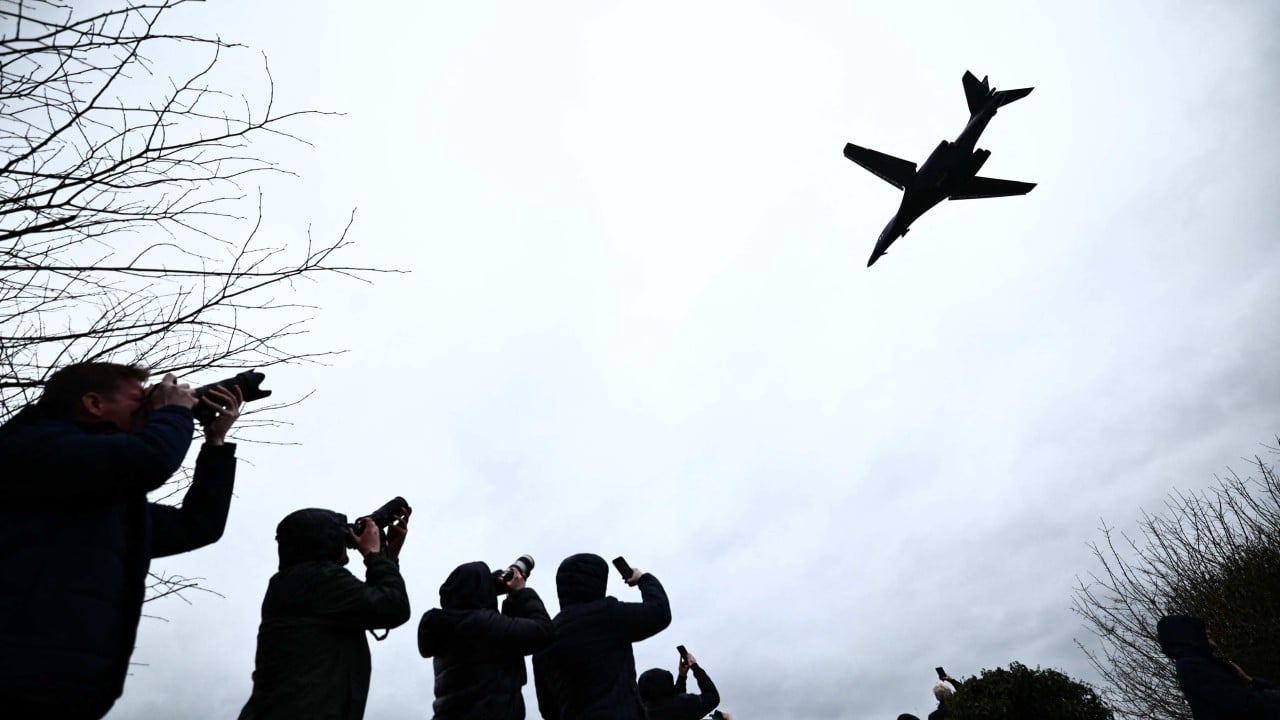
US may reassess Nato ties after Iran war ends, Rubio says
Secretary of State Marco Rubio said the US may need to reassess its relationship with Nato after the Iran war is finished, calling the military alliance’s alleged lack of support during the Middle East conflict “very disappointing”. Rubio assailed Nato members for denying access to military bases, following prior criticism from US President Donald Trump that partners in the security bloc are “cowards” and that the alliance is a “paper tiger”. “The president and our country will have to...
Knowledge Map
Connected Articles — Knowledge Graph
This article is connected to other articles through shared AI topics and tags.
More in Research Papers

A Retrospective on the ICLR 2026 Review Process
The selection of papers for ICLR 2026 has fully concluded. We extend our congratulations to the authors whose work will appear at the conference. Creating ICLR’s technical program requires immense effort from the authors, reviewers, and area chairs, and we thank you for your contributions and service. For researchers whose work was rejected, we hope […]
Vector Researchers present papers at ACL 2024
Vector researchers will be well represented at the 62nd Annual Meeting of the Association for Computational Linguistics in Bangkok, Thailand this year. 14 papers co-authored by Vector-affiliated researchers are being […] The post Vector Researchers present papers at ACL 2024 appeared first on Vector Institute for Artificial Intelligence .
Yann LeCun's Team's New Paper: AI Development Mimicking Human Intelligence Hits a Dead End - eu.36kr.com
<a href="https://news.google.com/rss/articles/CBMiU0FVX3lxTFBkbTRhNlhtRnY0cVBERld2OTdWNkRGMXBEaG9Vc21janRUcjJaUlJ4YzZRajVmMGQxNGJYTFB6M3lleUFNakUtWElHdGwzTXBQZjNZ?oc=5" target="_blank">Yann LeCun's Team's New Paper: AI Development Mimicking Human Intelligence Hits a Dead End</a> <font color="#6f6f6f">eu.36kr.com</font>
Plans must be made for the welfare of sentient AI, animal consciousness researchers argue - The Hill
<a href="https://news.google.com/rss/articles/CBMiiAFBVV95cUxNNzVaUTkzYkFUaVRsNGtnQVRXS2xsQVZfd1dFQ01RUlNZWUdDbjBNLUNycll2enl2NHp4Z0Ficm9HUnNWUnlvSGFrR3lDVUVxT1QyeE03QWhWcHFDTVJxV3VUQ0FKT3hiTkY3dWZha3JjcjRIM3l3WUtHZVlBUlhxdVBhLW1tdlJ40gGOAUFVX3lxTFBDQnllcVNNa1NRYVMyYlBtVXVxR0VPeHNjTjNMNWNTMFZXRjRkSU1OeXRFNmxvcENqbXkwSERoU1pGdXJYX2g5c214cFJFdEc1WUlkaEE5TlFDTTNoek5yR18tVi1vWUlGUnl4Tk13VWlFMDhzdUUyOUl3RmhNZ0FobTdiVG51N2h1SmJ5Y3c?oc=5" target="_blank">Plans must be made for the welfare of sentient AI, animal consciousness researchers argue</a> <font color="#6f6f6f">The Hill</font>
Discussion
Sign in to join the discussion
No comments yet — be the first to share your thoughts!