
Longitudinal Boundary Sharpness Coefficient Slopes Predict Time to Alzheimer's Disease Conversion in Mild Cognitive Impairment: A Survival Analysis Using the ADNI Cohort
arXiv:2603.26007v1 Announce Type: cross Abstract: Predicting whether someone with mild cognitive impairment (MCI) will progress to Alzheimer's disease (AD) is crucial in the early stages of neurodegeneration. This uncertainty limits enrollment in clinical trials and delays urgent treatment. The Boundary Sharpness Coefficient (BSC) measures how well-defined the gray-white matter boundary looks on structural MRI. This study measures how BSC changes over time, namely, how fast the boundary degrades each year works much better than looking at a single baseline scan for predicting MCI-to-AD convers — Ishaan Cherukuri
View PDF HTML (experimental)
Abstract:Predicting whether someone with mild cognitive impairment (MCI) will progress to Alzheimer's disease (AD) is crucial in the early stages of neurodegeneration. This uncertainty limits enrollment in clinical trials and delays urgent treatment. The Boundary Sharpness Coefficient (BSC) measures how well-defined the gray-white matter boundary looks on structural MRI. This study measures how BSC changes over time, namely, how fast the boundary degrades each year works much better than looking at a single baseline scan for predicting MCI-to-AD conversion. This study analyzed 1,824 T1-weighted MRI scans from 450 ADNI subjects (95 converters, 355 stable; mean follow-up: 4.84 years). BSC voxel-wise maps were computed using tissue segmentation at the gray-white matter cortical ribbon. Previous studies have used CNN and RNN models that reached 96.0% accuracy for AD classification and 84.2% for MCI conversion, but those approaches disregard specific regions within the brain. This study focused specifically on the gray-white matter interface. The approach uses temporal slope features capturing boundary degradation rates, feeding them into Random Survival Forest, a non-parametric ensemble method for right-censored survival data. The Random Survival Forest trained on BSC slopes achieved a test C-index of 0.63, a 163% improvement over baseline parametric models (test C-index: 0.24). Structural MRI costs a fraction of PET imaging ($800--$1,500 vs. $5,000--$7,000) and does not require CSF collection. These temporal biomarkers could help with patient-centered safety screening as well as risk assessment.
Subjects:
Neurons and Cognition (q-bio.NC); Artificial Intelligence (cs.AI); Computer Vision and Pattern Recognition (cs.CV)
Cite as: arXiv:2603.26007 [q-bio.NC]
(or arXiv:2603.26007v1 [q-bio.NC] for this version)
https://doi.org/10.48550/arXiv.2603.26007
arXiv-issued DOI via DataCite (pending registration)
Submission history
From: Ishaan Cherukuri [view email] [v1] Fri, 27 Mar 2026 01:53:59 UTC (1,343 KB)
Sign in to highlight and annotate this article

Conversation starters
Daily AI Digest
Get the top 5 AI stories delivered to your inbox every morning.
More about
researchpaperarxiv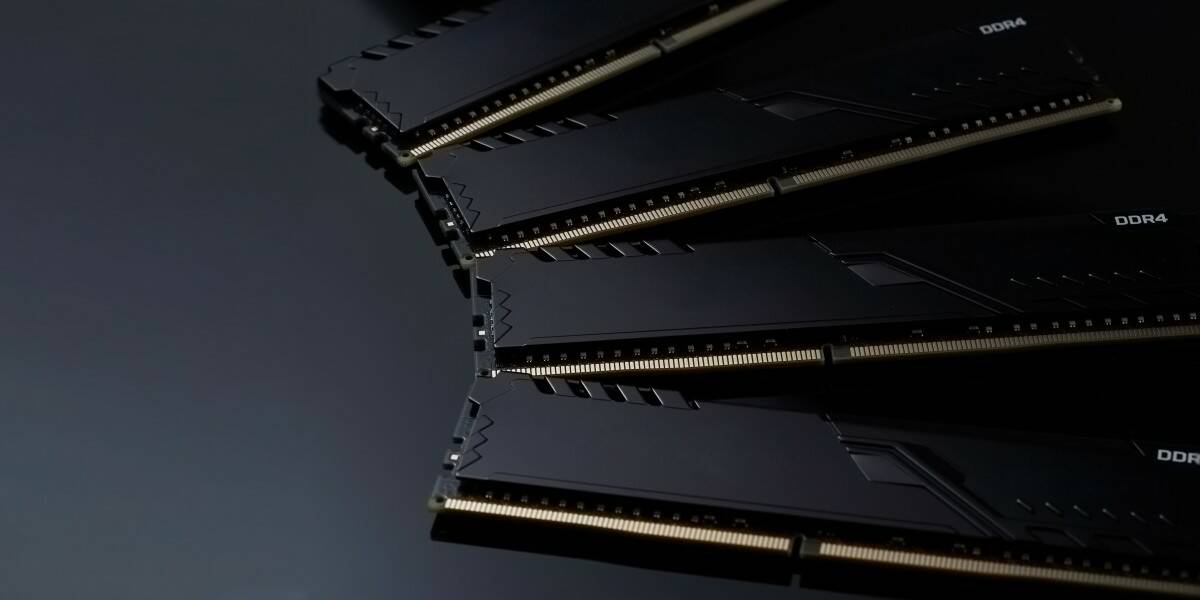
Google's TurboQuant saves memory, but won't save us from DRAM-pricing hell
<h4>Chocolate Factory’s compression tech clears the way to cheaper AI inference, not more affordable memory</h4> <p>When Google unveiled <a target="_blank" rel="nofollow" href="https://research.google/blog/turboquant-redefining-ai-efficiency-with-extreme-compression/">TurboQuant</a>, an AI data compression technology that promises to slash the amount of memory required to serve models, many hoped it would help with a memory shortage that has seen prices triple since last year. Not so much.…</p>

Illinois Tech computer science researcher honored by IEEE Chicago Section - EurekAlert!
<a href="https://news.google.com/rss/articles/CBMiXEFVX3lxTE13OVpWMEk1Z3hlMkR2bHNBQ2dkazFwb3VqN3hCa29GWGJvSVlPa00zd2xUakRmYXFqQmc5OWU0eGl4a21FMDAwWUN2Q3p0M3FrbXBkNV8zN0cxaG1s?oc=5" target="_blank">Illinois Tech computer science researcher honored by IEEE Chicago Section</a> <font color="#6f6f6f">EurekAlert!</font>

My Journey to becoming a Quantum Engineer
<p>I have procrastinated on documenting this process for the longest time. But I think i am ready now (maybe). <br> Coming from a front end engineering background, I am fascinated by the work being done by the quantum engineers at IBM. I am not that great with maths and statistics but I believe anything can be learned with tons of practice and consistency. I want to use this platform to hold myself accountable (that is if i don't give up half way and delete all my posts. I'll try not to btw). </p> <p>This is an article describing <a href="https://www.ibm.com/think/topics/quantum-computing" rel="noopener noreferrer">what quantum computing is</a> and some of it's use cases.</p> <p>I became an IBM qiskit advocate late last year and I have been exposed to a lot of resources and networked a bun
Knowledge Map
Connected Articles — Knowledge Graph
This article is connected to other articles through shared AI topics and tags.
More in Research Papers
Illinois Tech computer science researcher honored by IEEE Chicago Section - EurekAlert!
<a href="https://news.google.com/rss/articles/CBMiXEFVX3lxTE13OVpWMEk1Z3hlMkR2bHNBQ2dkazFwb3VqN3hCa29GWGJvSVlPa00zd2xUakRmYXFqQmc5OWU0eGl4a21FMDAwWUN2Q3p0M3FrbXBkNV8zN0cxaG1s?oc=5" target="_blank">Illinois Tech computer science researcher honored by IEEE Chicago Section</a> <font color="#6f6f6f">EurekAlert!</font>
AI maps science papers to predict research trends two to three years ahead - Tech Xplore
<a href="https://news.google.com/rss/articles/CBMie0FVX3lxTE5aTkZYTWdaRDZwTXNRMldpMG1WZ1YzWDZTOHN5M183Z3A1ZTFYbnhEWTdPRmpvZnZFU0xodlRsNWxFaGxTcEpwalhJNmJpQWE5VjhaRS1tOXJIeTc5Z0JNblJ3dFd4WjRYZGJOX0NrWGt6ZmZJVTBpRm5wWQ?oc=5" target="_blank">AI maps science papers to predict research trends two to three years ahead</a> <font color="#6f6f6f">Tech Xplore</font>
AI inspires new research topics in materials science - Nanowerk
<a href="https://news.google.com/rss/articles/CBMiZ0FVX3lxTFBPWlJSM2ExeVQ3LVppTm45NHpEMW9YVkxscThCNDd2OVB0c3J1ZmVCbWNSZWZ0TjZwSzlOdEFXN2UtRk5LU1hxdXd4ZklldGxoM0FZSnhCd19PWkNHQ1ZRVDNwSHNUSk0?oc=5" target="_blank">AI inspires new research topics in materials science</a> <font color="#6f6f6f">Nanowerk</font>
Discussion
Sign in to join the discussion
No comments yet — be the first to share your thoughts!