

Few Shots Text to Image Retrieval: New Benchmarking Dataset and Optimization Methods
arXiv:2603.25891v1 Announce Type: new Abstract: Pre-trained vision-language models (VLMs) excel in multimodal tasks, commonly encoding images as embedding vectors for storage in databases and retrieval via approximate nearest neighbor search (ANNS). However, these models struggle with compositional queries and out-of-distribution (OOD) image-text pairs. Inspired by human cognition's ability to learn from minimal examples, we address this performance gap through few-shot learning approaches specifically designed for image retrieval. We introduce the Few-Shot Text-to-Image Retrieval (FSIR) task — Ofer Idan, Vladi Vexler, Gil Lederman, Dima Sivov, Aviad Cohen Zada, Shir Niego Komforti
View PDF HTML (experimental)
Abstract:Pre-trained vision-language models (VLMs) excel in multimodal tasks, commonly encoding images as embedding vectors for storage in databases and retrieval via approximate nearest neighbor search (ANNS). However, these models struggle with compositional queries and out-of-distribution (OOD) image-text pairs. Inspired by human cognition's ability to learn from minimal examples, we address this performance gap through few-shot learning approaches specifically designed for image retrieval. We introduce the Few-Shot Text-to-Image Retrieval (FSIR) task and its accompanying benchmark dataset, FSIR-BD - the first to explicitly target image retrieval by text accompanied by reference examples, focusing on the challenging compositional and OOD queries. The compositional part is divided to urban scenes and nature species, both in specific situations or with distinctive features. FSIR-BD contains 38,353 images and 303 queries, with 82% comprising the test corpus (averaging per query 37 positives, ground truth matches, and significant number of hard negatives) and 18% forming the few-shot reference corpus (FSR) of exemplar positive and hard negative images. Additionally, we propose two novel retrieval optimization methods leveraging single shot or few shot reference examples in the FSR to improve performance. Both methods are compatible with any pre-trained image encoder, making them applicable to existing large-scale environments. Our experiments demonstrate that: (1) FSIR-BD provides a challenging benchmark for image retrieval; and (2) our optimization methods outperform existing baselines as measured by mean Average Precision (mAP). Further research into FSIR optimization methods will help narrow the gap between machine and human-level understanding, particularly for compositional reasoning from limited examples.
Subjects:
Computer Vision and Pattern Recognition (cs.CV)
Cite as: arXiv:2603.25891 [cs.CV]
(or arXiv:2603.25891v1 [cs.CV] for this version)
https://doi.org/10.48550/arXiv.2603.25891
arXiv-issued DOI via DataCite
Submission history
From: Ofer Idan [view email] [v1] Thu, 26 Mar 2026 20:26:05 UTC (889 KB)
Sign in to highlight and annotate this article

Conversation starters
Daily AI Digest
Get the top 5 AI stories delivered to your inbox every morning.
More about
researchpaperarxiv
Google DeepMind s Research Lets an LLM Rewrite Its Own Game Theory Algorithms — And It Outperformed the Experts
Designing algorithms for Multi-Agent Reinforcement Learning (MARL) in imperfect-information games — scenarios where players act sequentially and cannot see each other s private information, like poker — has historically relied on manual iteration. Researchers identify weighting schemes, discounting rules, and equilibrium solvers through intuition and trial-and-error. Google DeepMind researchers proposes AlphaEvolve, an LLM-powered evolutionary coding agent [ ] The post Google DeepMind s Research Lets an LLM Rewrite Its Own Game Theory Algorithms — And It Outperformed the Experts appeared first on MarkTechPost .
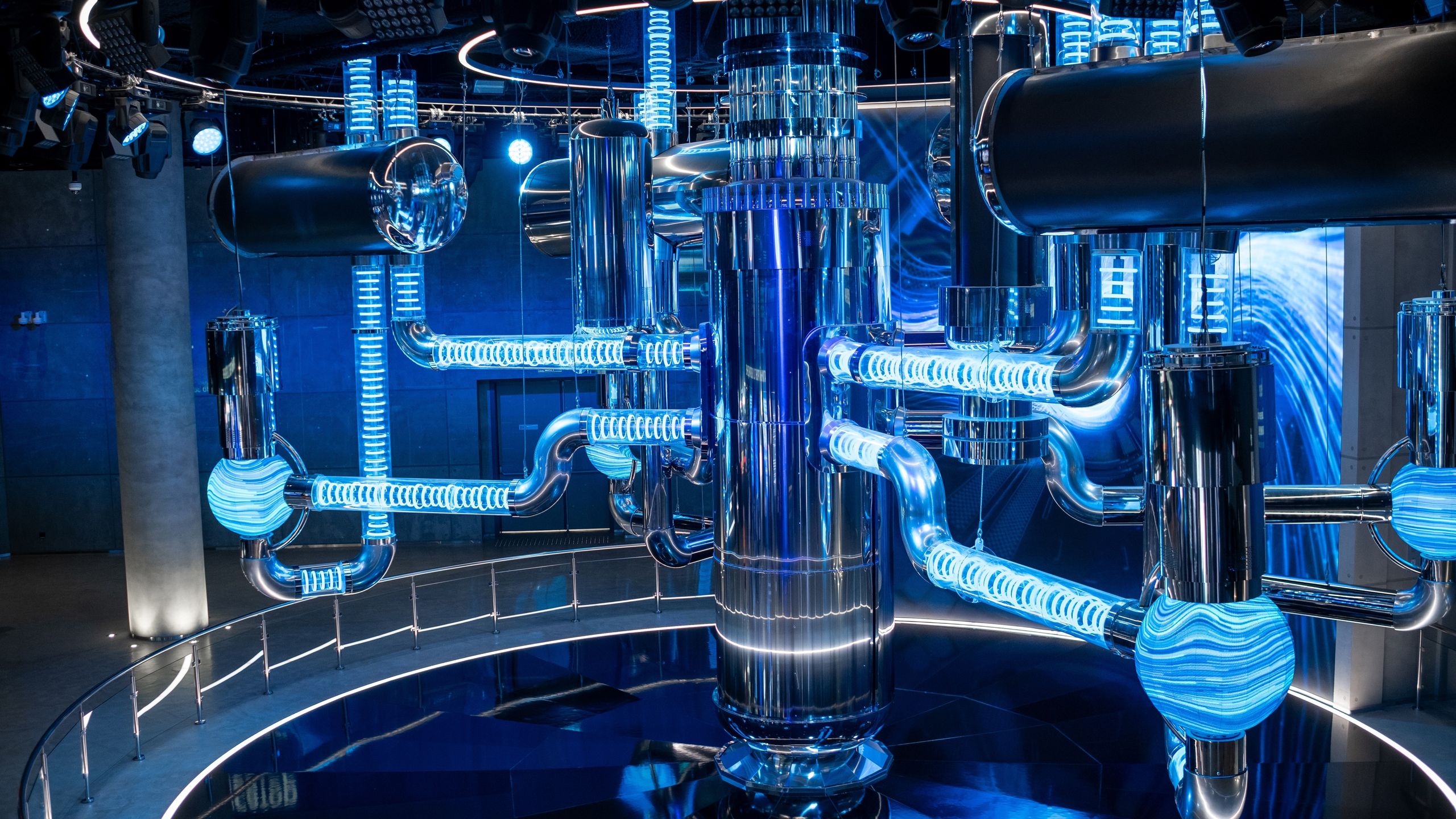
Researchers build Wi-Fi chip that can operate inside a nuclear reactor — receiver uses special materials and design to withstand high doses of radiation for at least six months
Researchers build Wi-Fi chip that can operate inside a nuclear reactor — receiver uses special materials and design to withstand high doses of radiation for at least six months

Knowledge Map
Connected Articles — Knowledge Graph
This article is connected to other articles through shared AI topics and tags.


Discussion
Sign in to join the discussion
No comments yet — be the first to share your thoughts!