
Vision Transformers and Graph Neural Networks for Charged Particle Tracking in the ATLAS Muon Spectrometer
arXiv:2603.25793v1 Announce Type: cross Abstract: The identification and reconstruction of charged particles, such as muons, is a main challenge for the physics program of the ATLAS experiment at the Large Hadron Collider. This task will become increasingly difficult with the start of the High-Luminosity LHC era after 2030, when the number of proton-proton collisions per bunch crossing will increase from 60 to up to 200. This elevated interaction density will also increase the occupancy within the ATLAS Muon Spectrometer, requiring more efficient and robust real-time data processing strategies — Jonathan Renusch (on behalf of the ATLAS Collaboration)
View PDF HTML (experimental)
Abstract:The identification and reconstruction of charged particles, such as muons, is a main challenge for the physics program of the ATLAS experiment at the Large Hadron Collider. This task will become increasingly difficult with the start of the High-Luminosity LHC era after 2030, when the number of proton-proton collisions per bunch crossing will increase from 60 to up to 200. This elevated interaction density will also increase the occupancy within the ATLAS Muon Spectrometer, requiring more efficient and robust real-time data processing strategies within the experiment's trigger system, particularly the Event Filter. To address these algorithmic challenges, we present two machine-learning-based approaches. First, we target the problem of background-hit rejection in the Muon Spectrometer using Graph Neural Networks integrated into the non-ML baseline reconstruction chain, demonstrating a 15 % improvement in reconstruction speed (from 255 ms to 217 ms). Second, we present a proof-of-concept for end-to-end muon tracking using state-of-the-art Vision Transformer architectures, achieving ultra-fast approximate muon reconstruction in 2.3 ms on consumer-grade GPUs at 98 % tracking efficiency.
Subjects:
Data Analysis, Statistics and Probability (physics.data-an); Machine Learning (cs.LG); High Energy Physics - Experiment (hep-ex)
ACM classes: I.2.10; I.5.1
Report number: PROC-CTD2025-81
Cite as: arXiv:2603.25793 [physics.data-an]
(or arXiv:2603.25793v1 [physics.data-an] for this version)
https://doi.org/10.48550/arXiv.2603.25793
arXiv-issued DOI via DataCite
Submission history
From: Jonathan Renusch [view email] [v1] Thu, 26 Mar 2026 18:00:45 UTC (959 KB)
Sign in to highlight and annotate this article

Conversation starters
Daily AI Digest
Get the top 5 AI stories delivered to your inbox every morning.
More about
researchpaperarxiv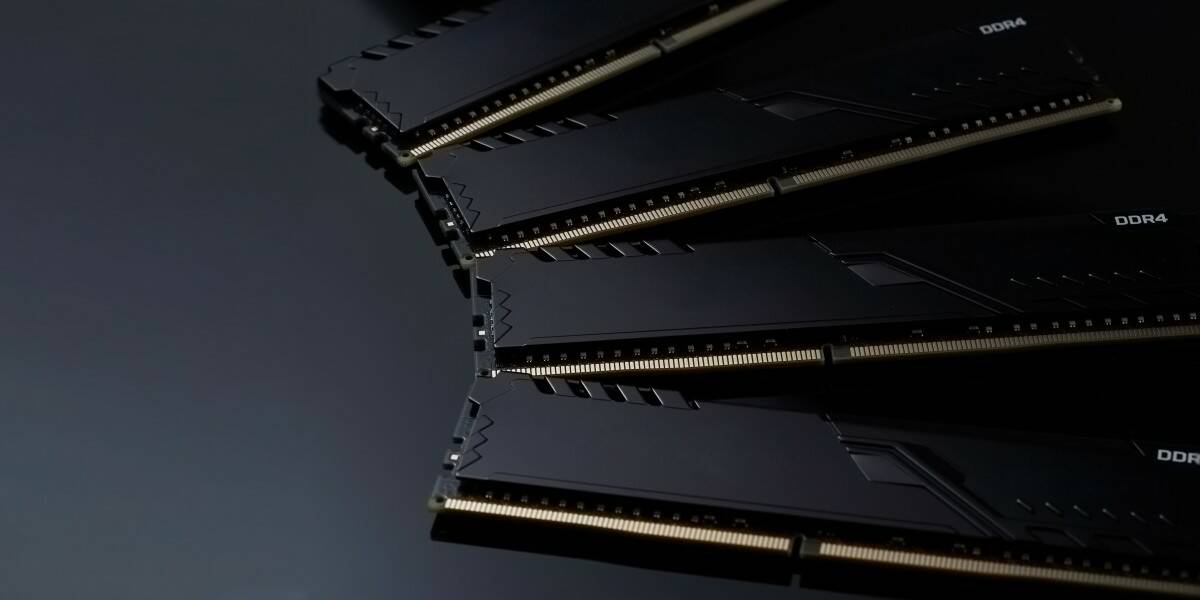
Google's TurboQuant saves memory, but won't save us from DRAM-pricing hell
<h4>Chocolate Factory’s compression tech clears the way to cheaper AI inference, not more affordable memory</h4> <p>When Google unveiled <a target="_blank" rel="nofollow" href="https://research.google/blog/turboquant-redefining-ai-efficiency-with-extreme-compression/">TurboQuant</a>, an AI data compression technology that promises to slash the amount of memory required to serve models, many hoped it would help with a memory shortage that has seen prices triple since last year. Not so much.…</p>

Illinois Tech computer science researcher honored by IEEE Chicago Section - EurekAlert!
<a href="https://news.google.com/rss/articles/CBMiXEFVX3lxTE13OVpWMEk1Z3hlMkR2bHNBQ2dkazFwb3VqN3hCa29GWGJvSVlPa00zd2xUakRmYXFqQmc5OWU0eGl4a21FMDAwWUN2Q3p0M3FrbXBkNV8zN0cxaG1s?oc=5" target="_blank">Illinois Tech computer science researcher honored by IEEE Chicago Section</a> <font color="#6f6f6f">EurekAlert!</font>

My Journey to becoming a Quantum Engineer
<p>I have procrastinated on documenting this process for the longest time. But I think i am ready now (maybe). <br> Coming from a front end engineering background, I am fascinated by the work being done by the quantum engineers at IBM. I am not that great with maths and statistics but I believe anything can be learned with tons of practice and consistency. I want to use this platform to hold myself accountable (that is if i don't give up half way and delete all my posts. I'll try not to btw). </p> <p>This is an article describing <a href="https://www.ibm.com/think/topics/quantum-computing" rel="noopener noreferrer">what quantum computing is</a> and some of it's use cases.</p> <p>I became an IBM qiskit advocate late last year and I have been exposed to a lot of resources and networked a bun
Knowledge Map
Connected Articles — Knowledge Graph
This article is connected to other articles through shared AI topics and tags.
More in Research Papers
Illinois Tech computer science researcher honored by IEEE Chicago Section - EurekAlert!
<a href="https://news.google.com/rss/articles/CBMiXEFVX3lxTE13OVpWMEk1Z3hlMkR2bHNBQ2dkazFwb3VqN3hCa29GWGJvSVlPa00zd2xUakRmYXFqQmc5OWU0eGl4a21FMDAwWUN2Q3p0M3FrbXBkNV8zN0cxaG1s?oc=5" target="_blank">Illinois Tech computer science researcher honored by IEEE Chicago Section</a> <font color="#6f6f6f">EurekAlert!</font>
AI maps science papers to predict research trends two to three years ahead - Tech Xplore
<a href="https://news.google.com/rss/articles/CBMie0FVX3lxTE5aTkZYTWdaRDZwTXNRMldpMG1WZ1YzWDZTOHN5M183Z3A1ZTFYbnhEWTdPRmpvZnZFU0xodlRsNWxFaGxTcEpwalhJNmJpQWE5VjhaRS1tOXJIeTc5Z0JNblJ3dFd4WjRYZGJOX0NrWGt6ZmZJVTBpRm5wWQ?oc=5" target="_blank">AI maps science papers to predict research trends two to three years ahead</a> <font color="#6f6f6f">Tech Xplore</font>
AI inspires new research topics in materials science - Nanowerk
<a href="https://news.google.com/rss/articles/CBMiZ0FVX3lxTFBPWlJSM2ExeVQ3LVppTm45NHpEMW9YVkxscThCNDd2OVB0c3J1ZmVCbWNSZWZ0TjZwSzlOdEFXN2UtRk5LU1hxdXd4ZklldGxoM0FZSnhCd19PWkNHQ1ZRVDNwSHNUSk0?oc=5" target="_blank">AI inspires new research topics in materials science</a> <font color="#6f6f6f">Nanowerk</font>
Discussion
Sign in to join the discussion
No comments yet — be the first to share your thoughts!