
DeepFAN, a transformer-based deep learning model for human-artificial intelligence collaborative assessment of incidental pulmonary nodules in CT scans: a multi-reader, multi-case trial
The widespread adoption of CT has notably increased the number of detected lung nodules. However, current deep learning methods for classifying benign and malignant nodules often fail to comprehensively integrate global and local features, and most of them have not been validated through clinical trials. To address this, we developed DeepFAN, a transformer-based model trained on over 10K pathology-confirmed nodules and further conducted a multi-reader, multi-case clinical trial to evaluate its efficacy in assisting junior radiologists. DeepFAN achieved diagnostic area under the curve (AUC) of — Zhenchen Zhu, Ge Hu, Weixiong Tan
Authors:Zhenchen Zhu, Ge Hu, Weixiong Tan, Kai Gao, Chao Sun, Zhen Zhou, Kepei Xu, Wei Han, Meixia Shang, Xiaoming Qiu, Yiqing Tan, Jinhua Wang, Zhoumeng Ying, Li Peng, Wei Song, Lan Song, Zhengyu Jin, Nan Hong, Yizhou Yu
View PDF
Abstract:The widespread adoption of CT has notably increased the number of detected lung nodules. However, current deep learning methods for classifying benign and malignant nodules often fail to comprehensively integrate global and local features, and most of them have not been validated through clinical trials. To address this, we developed DeepFAN, a transformer-based model trained on over 10K pathology-confirmed nodules and further conducted a multi-reader, multi-case clinical trial to evaluate its efficacy in assisting junior radiologists. DeepFAN achieved diagnostic area under the curve (AUC) of 0.939 (95% CI 0.930-0.948) on an internal test set and 0.954 (95% CI 0.934-0.973) on the clinical trial dataset involving 400 cases across three independent medical institutions. Explainability analysis indicated higher contributions from global than local features. Twelve readers' average performance significantly improved by 10.9% (95% CI 8.3%-13.5%) in AUC, 10.0% (95% CI 8.9%-11.1%) in accuracy, 7.6% (95% CI 6.1%-9.2%) in sensitivity, and 12.6% (95% CI 10.9%-14.3%) in specificity (P<0.001 for all). Nodule-level inter-reader diagnostic consistency improved from fair to moderate (overall k: 0.313 vs. 0.421; P=0.019). In conclusion, DeepFAN effectively assisted junior radiologists and may help homogenize diagnostic quality and reduce unnecessary follow-up of indeterminate pulmonary nodules. Chinese Clinical Trial Registry: ChiCTR2400084624.
Comments: 28 pages for main text and 37 pages for supplementary information, 7 figures in main text and 9 figures in supplementary information
Subjects:
Computer Vision and Pattern Recognition (cs.CV); Artificial Intelligence (cs.AI)
Cite as: arXiv:2603.25607 [cs.CV]
(or arXiv:2603.25607v1 [cs.CV] for this version)
https://doi.org/10.48550/arXiv.2603.25607
arXiv-issued DOI via DataCite (pending registration)
Submission history
From: Zhen Zhou [view email] [v1] Thu, 26 Mar 2026 16:24:56 UTC (41,280 KB)
Sign in to highlight and annotate this article

Conversation starters
Daily AI Digest
Get the top 5 AI stories delivered to your inbox every morning.
More about
researchpaperarxiv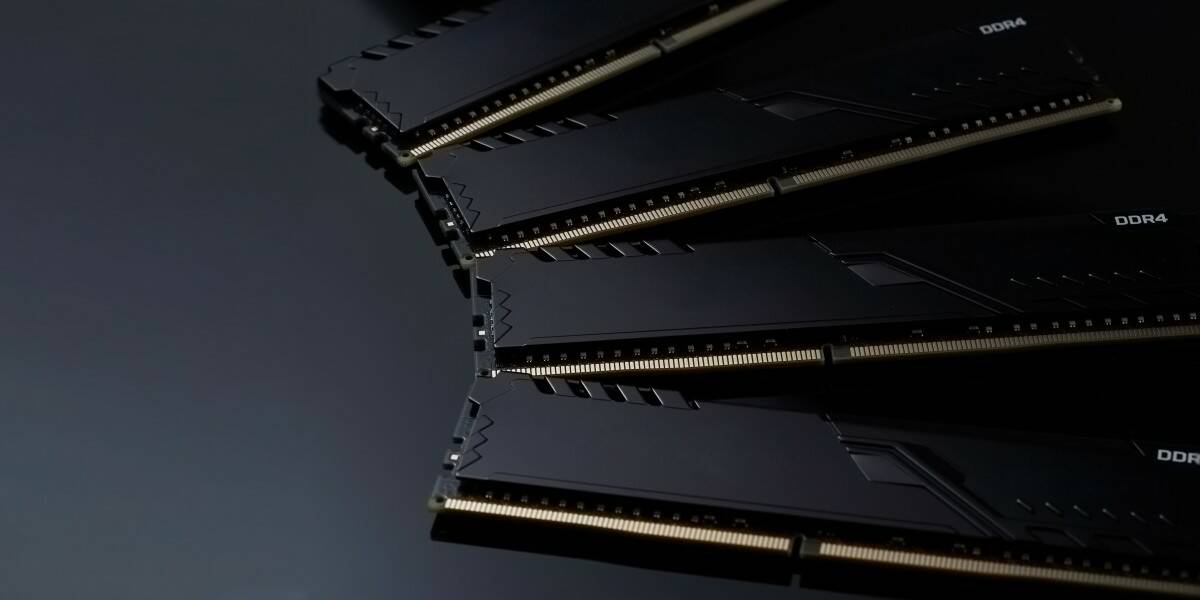
Google's TurboQuant saves memory, but won't save us from DRAM-pricing hell
<h4>Chocolate Factory’s compression tech clears the way to cheaper AI inference, not more affordable memory</h4> <p>When Google unveiled <a target="_blank" rel="nofollow" href="https://research.google/blog/turboquant-redefining-ai-efficiency-with-extreme-compression/">TurboQuant</a>, an AI data compression technology that promises to slash the amount of memory required to serve models, many hoped it would help with a memory shortage that has seen prices triple since last year. Not so much.…</p>

Illinois Tech computer science researcher honored by IEEE Chicago Section - EurekAlert!
<a href="https://news.google.com/rss/articles/CBMiXEFVX3lxTE13OVpWMEk1Z3hlMkR2bHNBQ2dkazFwb3VqN3hCa29GWGJvSVlPa00zd2xUakRmYXFqQmc5OWU0eGl4a21FMDAwWUN2Q3p0M3FrbXBkNV8zN0cxaG1s?oc=5" target="_blank">Illinois Tech computer science researcher honored by IEEE Chicago Section</a> <font color="#6f6f6f">EurekAlert!</font>

My Journey to becoming a Quantum Engineer
<p>I have procrastinated on documenting this process for the longest time. But I think i am ready now (maybe). <br> Coming from a front end engineering background, I am fascinated by the work being done by the quantum engineers at IBM. I am not that great with maths and statistics but I believe anything can be learned with tons of practice and consistency. I want to use this platform to hold myself accountable (that is if i don't give up half way and delete all my posts. I'll try not to btw). </p> <p>This is an article describing <a href="https://www.ibm.com/think/topics/quantum-computing" rel="noopener noreferrer">what quantum computing is</a> and some of it's use cases.</p> <p>I became an IBM qiskit advocate late last year and I have been exposed to a lot of resources and networked a bun
Knowledge Map
Connected Articles — Knowledge Graph
This article is connected to other articles through shared AI topics and tags.
More in Research Papers
Illinois Tech computer science researcher honored by IEEE Chicago Section - EurekAlert!
<a href="https://news.google.com/rss/articles/CBMiXEFVX3lxTE13OVpWMEk1Z3hlMkR2bHNBQ2dkazFwb3VqN3hCa29GWGJvSVlPa00zd2xUakRmYXFqQmc5OWU0eGl4a21FMDAwWUN2Q3p0M3FrbXBkNV8zN0cxaG1s?oc=5" target="_blank">Illinois Tech computer science researcher honored by IEEE Chicago Section</a> <font color="#6f6f6f">EurekAlert!</font>
AI maps science papers to predict research trends two to three years ahead - Tech Xplore
<a href="https://news.google.com/rss/articles/CBMie0FVX3lxTE5aTkZYTWdaRDZwTXNRMldpMG1WZ1YzWDZTOHN5M183Z3A1ZTFYbnhEWTdPRmpvZnZFU0xodlRsNWxFaGxTcEpwalhJNmJpQWE5VjhaRS1tOXJIeTc5Z0JNblJ3dFd4WjRYZGJOX0NrWGt6ZmZJVTBpRm5wWQ?oc=5" target="_blank">AI maps science papers to predict research trends two to three years ahead</a> <font color="#6f6f6f">Tech Xplore</font>
AI inspires new research topics in materials science - Nanowerk
<a href="https://news.google.com/rss/articles/CBMiZ0FVX3lxTFBPWlJSM2ExeVQ3LVppTm45NHpEMW9YVkxscThCNDd2OVB0c3J1ZmVCbWNSZWZ0TjZwSzlOdEFXN2UtRk5LU1hxdXd4ZklldGxoM0FZSnhCd19PWkNHQ1ZRVDNwSHNUSk0?oc=5" target="_blank">AI inspires new research topics in materials science</a> <font color="#6f6f6f">Nanowerk</font>
Discussion
Sign in to join the discussion
No comments yet — be the first to share your thoughts!