

NERO-Net: A Neuroevolutionary Approach for the Design of Adversarially Robust CNNs
Neuroevolution automates the complex task of neural network design but often ignores the inherent adversarial fragility of evolved models which is a barrier to adoption in safety-critical scenarios. While robust training methods have received significant attention, the design of architectures exhibiting intrinsic robustness remains largely unexplored. In this paper, we propose NERO-Net, a neuroevolutionary approach to design convolutional neural networks better equipped to resist adversarial attacks. Our search strategy isolates architectural influence on robustness by avoiding adversarial tra — Inês Valentim, Nuno Antunes, Nuno Lourenço
View PDF HTML (experimental)
Abstract:Neuroevolution automates the complex task of neural network design but often ignores the inherent adversarial fragility of evolved models which is a barrier to adoption in safety-critical scenarios. While robust training methods have received significant attention, the design of architectures exhibiting intrinsic robustness remains largely unexplored. In this paper, we propose NERO-Net, a neuroevolutionary approach to design convolutional neural networks better equipped to resist adversarial attacks. Our search strategy isolates architectural influence on robustness by avoiding adversarial training during the evolutionary loop. As such, our fitness function promotes candidates that, even trained with standard (non-robust) methods, achieve high post-attack accuracy without sacrificing the accuracy on clean samples. We assess NERO-Net on CIFAR-10 with a specific focus on $L_\infty$-robustness. In particular, the fittest individual emerged from evolutionary search with 33% accuracy against FGSM, used as an efficient estimator for robustness during the search phase, while maintaining 87% clean accuracy. Further standard training of this individual boosted these metrics to 47% adversarial and 93% clean accuracy, suggesting inherent architectural robustness. Adversarial training brings the overall accuracy of the model up to 40% against AutoAttack.
Subjects:
Neural and Evolutionary Computing (cs.NE); Artificial Intelligence (cs.AI); Machine Learning (cs.LG)
Cite as: arXiv:2603.25517 [cs.NE]
(or arXiv:2603.25517v1 [cs.NE] for this version)
https://doi.org/10.48550/arXiv.2603.25517
arXiv-issued DOI via DataCite
Submission history
From: Inês Valentim [view email] [v1] Thu, 26 Mar 2026 14:51:30 UTC (77 KB)
Sign in to highlight and annotate this article

Conversation starters
Daily AI Digest
Get the top 5 AI stories delivered to your inbox every morning.
More about
researchpaperarxiv

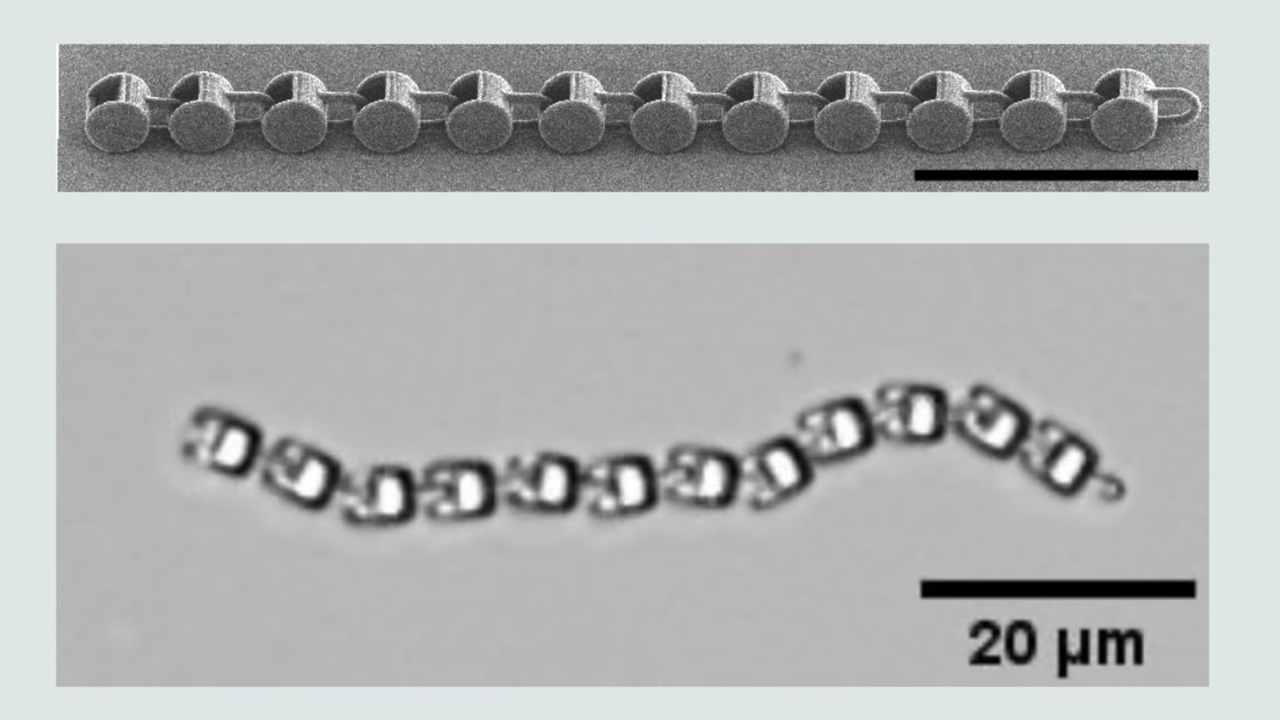
Researchers 3D print robot the size of a single-cell organism — devices move and navigate even without a ‘brain,’ uses their shape and the environment to get going
Researchers 3D print robot the size of a single-cell organism — devices move and navigate even without a ‘brain,’ uses their shape and the environment to get going
Knowledge Map
Connected Articles — Knowledge Graph
This article is connected to other articles through shared AI topics and tags.
More in Research Papers
Researchers 3D print robot the size of a single-cell organism — devices move and navigate even without a ‘brain,’ uses their shape and the environment to get going
Researchers 3D print robot the size of a single-cell organism — devices move and navigate even without a ‘brain,’ uses their shape and the environment to get going

Developing psychosocial phenotypes to understand engagement with digital health technologies for heart failure
npj Digital Medicine, Published online: 04 April 2026; doi:10.1038/s41746-026-02571-z Developing psychosocial phenotypes to understand engagement with digital health technologies for heart failure
Discussion
Sign in to join the discussion
No comments yet — be the first to share your thoughts!