
Policy-Guided Threat Hunting: An LLM enabled Framework with Splunk SOC Triage
arXiv:2603.23966v2 Announce Type: replace-cross Abstract: With frequently evolving Advanced Persistent Threats (APTs) in cyberspace, traditional security solutions approaches have become inadequate for threat hunting for organizations. Moreover, SOC (Security Operation Centers) analysts are often overwhelmed and struggle to analyze the huge volume of logs received from diverse devices in organizations. To address these challenges, we propose an automated and dynamic threat hunting framework for monitoring evolving threats, adapting to changing network conditions, and performing risk-based prio — Rishikesh Sahay, Bell Eapen, Weizhi Meng, Md Rasel Al Mamun, Nikhil Kumar Dora, Manjusha Sumasadan, Sumit Kumar Tetarave, Rod Soto, Elyson De La Cruz
View PDF HTML (experimental)
Abstract:With frequently evolving Advanced Persistent Threats (APTs) in cyberspace, traditional security solutions approaches have become inadequate for threat hunting for organizations. Moreover, SOC (Security Operation Centers) analysts are often overwhelmed and struggle to analyze the huge volume of logs received from diverse devices in organizations. To address these challenges, we propose an automated and dynamic threat hunting framework for monitoring evolving threats, adapting to changing network conditions, and performing risk-based prioritization for the mitigation of suspicious and malicious traffic. By integrating Agentic AI with Splunk, an established SIEM platform, we developed a unique threat hunting framework. The framework systematically and seamlessly integrates different threat hunting modules together, ranging from traffic ingestion to anomaly assessment using a reconstruction-based autoencoder, deep reinforcement learning (DRL) with two layers for initial triage, and a large language model (LLM) for contextual analysis. We evaluated the framework against a publicly available benchmark dataset, as well as against a simulated dataset. The experimental results show that the framework can effectively adapt to different SOC objectives autonomously and identify suspicious and malicious traffic. The framework enhances operational effectiveness by supporting SOC analysts in their decision-making to block, allow, or monitor network traffic. This study thus enhances cybersecurity and threat hunting literature by presenting the novel threat hunting framework for security decision-making, as well as promoting cumulative research efforts to develop more effective frameworks to battle continuously evolving cyber threats.
Subjects:
Cryptography and Security (cs.CR); Artificial Intelligence (cs.AI)
Cite as: arXiv:2603.23966 [cs.CR]
(or arXiv:2603.23966v2 [cs.CR] for this version)
https://doi.org/10.48550/arXiv.2603.23966
arXiv-issued DOI via DataCite
Submission history
From: Rishikesh Sahay [view email] [v1] Wed, 25 Mar 2026 05:59:34 UTC (755 KB) [v2] Mon, 30 Mar 2026 15:17:07 UTC (755 KB)
Sign in to highlight and annotate this article

Conversation starters
Daily AI Digest
Get the top 5 AI stories delivered to your inbox every morning.
More about
researchpaperarxiv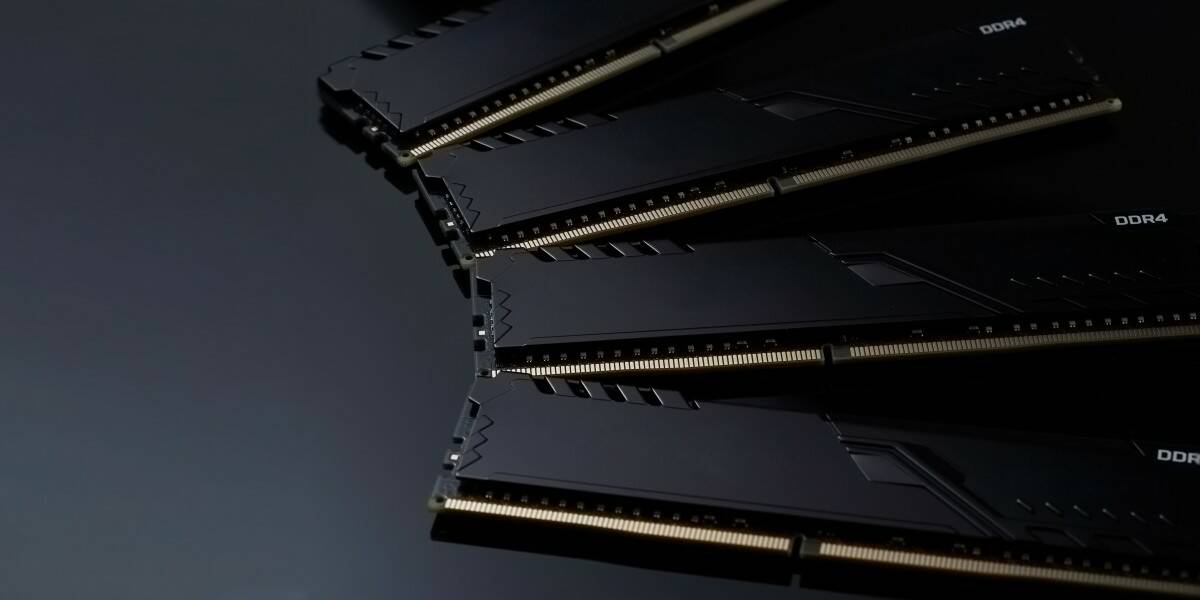
Google's TurboQuant saves memory, but won't save us from DRAM-pricing hell
<h4>Chocolate Factory’s compression tech clears the way to cheaper AI inference, not more affordable memory</h4> <p>When Google unveiled <a target="_blank" rel="nofollow" href="https://research.google/blog/turboquant-redefining-ai-efficiency-with-extreme-compression/">TurboQuant</a>, an AI data compression technology that promises to slash the amount of memory required to serve models, many hoped it would help with a memory shortage that has seen prices triple since last year. Not so much.…</p>

Illinois Tech computer science researcher honored by IEEE Chicago Section - EurekAlert!
<a href="https://news.google.com/rss/articles/CBMiXEFVX3lxTE13OVpWMEk1Z3hlMkR2bHNBQ2dkazFwb3VqN3hCa29GWGJvSVlPa00zd2xUakRmYXFqQmc5OWU0eGl4a21FMDAwWUN2Q3p0M3FrbXBkNV8zN0cxaG1s?oc=5" target="_blank">Illinois Tech computer science researcher honored by IEEE Chicago Section</a> <font color="#6f6f6f">EurekAlert!</font>

My Journey to becoming a Quantum Engineer
<p>I have procrastinated on documenting this process for the longest time. But I think i am ready now (maybe). <br> Coming from a front end engineering background, I am fascinated by the work being done by the quantum engineers at IBM. I am not that great with maths and statistics but I believe anything can be learned with tons of practice and consistency. I want to use this platform to hold myself accountable (that is if i don't give up half way and delete all my posts. I'll try not to btw). </p> <p>This is an article describing <a href="https://www.ibm.com/think/topics/quantum-computing" rel="noopener noreferrer">what quantum computing is</a> and some of it's use cases.</p> <p>I became an IBM qiskit advocate late last year and I have been exposed to a lot of resources and networked a bun
Knowledge Map
Connected Articles — Knowledge Graph
This article is connected to other articles through shared AI topics and tags.
More in Research Papers
Illinois Tech computer science researcher honored by IEEE Chicago Section - EurekAlert!
<a href="https://news.google.com/rss/articles/CBMiXEFVX3lxTE13OVpWMEk1Z3hlMkR2bHNBQ2dkazFwb3VqN3hCa29GWGJvSVlPa00zd2xUakRmYXFqQmc5OWU0eGl4a21FMDAwWUN2Q3p0M3FrbXBkNV8zN0cxaG1s?oc=5" target="_blank">Illinois Tech computer science researcher honored by IEEE Chicago Section</a> <font color="#6f6f6f">EurekAlert!</font>

AI maps science papers to predict research trends two to three years ahead - Tech Xplore
<a href="https://news.google.com/rss/articles/CBMie0FVX3lxTE5aTkZYTWdaRDZwTXNRMldpMG1WZ1YzWDZTOHN5M183Z3A1ZTFYbnhEWTdPRmpvZnZFU0xodlRsNWxFaGxTcEpwalhJNmJpQWE5VjhaRS1tOXJIeTc5Z0JNblJ3dFd4WjRYZGJOX0NrWGt6ZmZJVTBpRm5wWQ?oc=5" target="_blank">AI maps science papers to predict research trends two to three years ahead</a> <font color="#6f6f6f">Tech Xplore</font>
AI inspires new research topics in materials science - Nanowerk
<a href="https://news.google.com/rss/articles/CBMiZ0FVX3lxTFBPWlJSM2ExeVQ3LVppTm45NHpEMW9YVkxscThCNDd2OVB0c3J1ZmVCbWNSZWZ0TjZwSzlOdEFXN2UtRk5LU1hxdXd4ZklldGxoM0FZSnhCd19PWkNHQ1ZRVDNwSHNUSk0?oc=5" target="_blank">AI inspires new research topics in materials science</a> <font color="#6f6f6f">Nanowerk</font>
Discussion
Sign in to join the discussion
No comments yet — be the first to share your thoughts!