

SmaAT-QMix-UNet: A Parameter-Efficient Vector-Quantized UNet for Precipitation Nowcasting
arXiv:2603.21879v2 Announce Type: replace-cross Abstract: Weather forecasting supports critical socioeconomic activities and complements environmental protection, yet operational Numerical Weather Prediction (NWP) systems remain computationally intensive, thus being inefficient for certain applications. Meanwhile, recent advances in deep data-driven models have demonstrated promising results in nowcasting tasks. This paper presents SmaAT-QMix-UNet, an enhanced variant of SmaAT-UNet that introduces two key innovations: a vector quantization (VQ) bottleneck at the encoder-decoder bridge, and mix — Nikolas Stavrou, Siamak Mehrkanoon
View PDF HTML (experimental)
Abstract:Weather forecasting supports critical socioeconomic activities and complements environmental protection, yet operational Numerical Weather Prediction (NWP) systems remain computationally intensive, thus being inefficient for certain applications. Meanwhile, recent advances in deep data-driven models have demonstrated promising results in nowcasting tasks. This paper presents SmaAT-QMix-UNet, an enhanced variant of SmaAT-UNet that introduces two key innovations: a vector quantization (VQ) bottleneck at the encoder-decoder bridge, and mixed kernel depth-wise convolutions (MixConv) replacing selected encoder and decoder blocks. These enhancements both reduce the model's size and improve its nowcasting performance. We train and evaluate SmaAT-QMix-UNet on a Dutch radar precipitation dataset (2016-2019), predicting precipitation 30 minutes ahead. Three configurations are benchmarked: using only VQ, only MixConv, and the full SmaAT-QMix-UNet. Grad-CAM saliency maps highlight the regions influencing each nowcast, while a UMAP embedding of the codewords illustrates how the VQ layer clusters encoder outputs. The source code for SmaAT-QMix-UNet is publicly available on GitHub: this https URL.
Comments: 6 pages, 5 figures
Subjects:
Machine Learning (cs.LG); Artificial Intelligence (cs.AI)
Cite as: arXiv:2603.21879 [cs.LG]
(or arXiv:2603.21879v2 [cs.LG] for this version)
https://doi.org/10.48550/arXiv.2603.21879
arXiv-issued DOI via DataCite
Submission history
From: Siamak Mehrkanoon [view email] [v1] Mon, 23 Mar 2026 12:09:37 UTC (1,569 KB) [v2] Sun, 29 Mar 2026 08:18:16 UTC (1,569 KB)
Sign in to highlight and annotate this article

Conversation starters
Daily AI Digest
Get the top 5 AI stories delivered to your inbox every morning.
More about
researchpaperarxiv
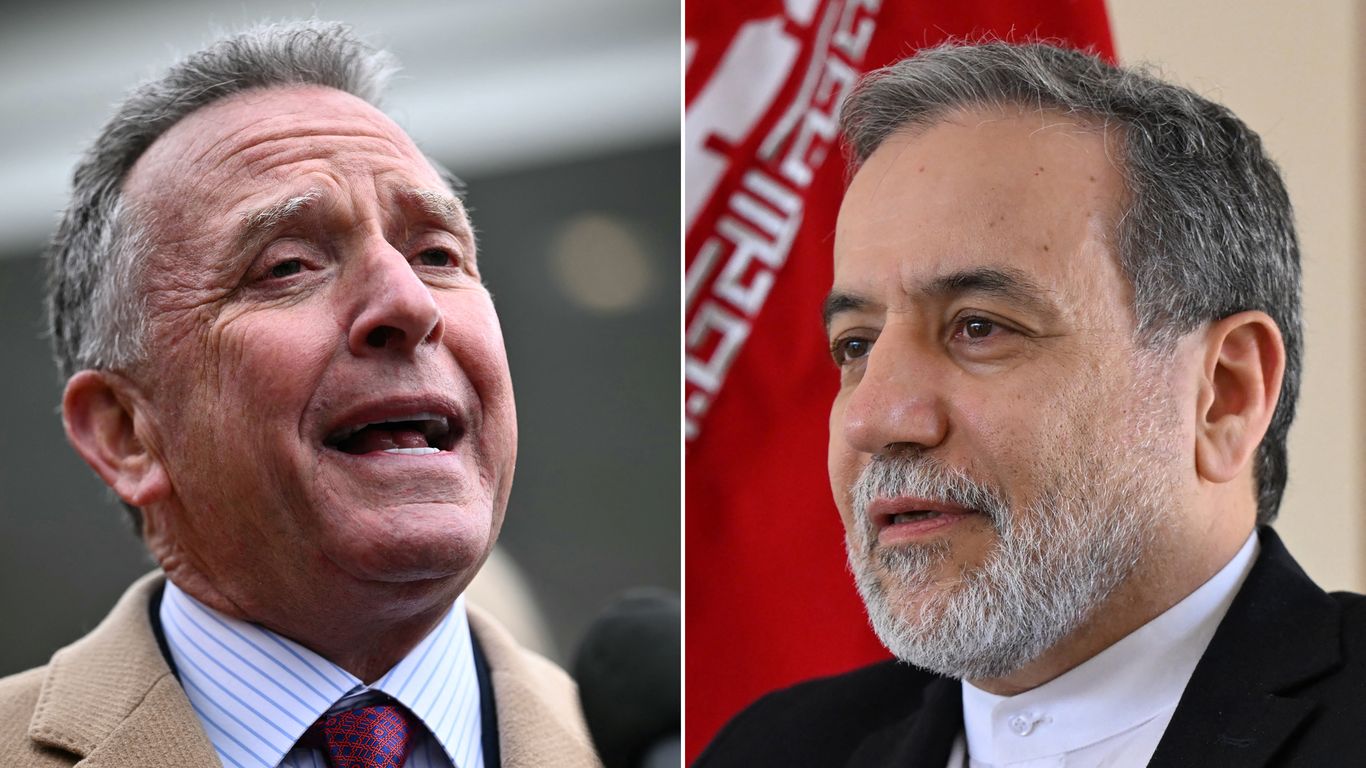
Iran mediators make last-ditch push for 45-day ceasefire
The U.S., Iran and a group of regional mediators are discussing the terms for a potential 45-day ceasefire that could lead to a permanent end to the war, according to four U.S., Israeli and regional sources with knowledge of the talks. Why it matters: The sources said the chances for reaching a partial deal over the next 48 hours are slim. But this last-ditch effort is the only chance to prevent a dramatic escalation in the war that will include massive strikes on Iranian civilian infrastructure and a retaliation against energy and water facilities in the Gulf states. Driving the news: President Trump's 10-day deadline to Iran was expected to expire Monday evening. But on Sunday, Trump extended his deadline by 20 hours and posted on Truth Social a new deadline of Tuesday at 8pm ET. Trump t

Knowledge Map
Connected Articles — Knowledge Graph
This article is connected to other articles through shared AI topics and tags.
More in Research Papers

Study finds smart glasses boost AI scribe accuracy and more briefs
Flinders study tests vision-enabled AI scribe Researchers at Flinders University have tested a vision-enabled AI clinical scribe combining Google Gemini and Ray-Ban Meta smart glasses and found improved accuracy in documenting pharmacist-patient consultations.

[R] ICML Anonymized git repos for rebuttal
A number of the papers I'm reviewing for have submitted additional figures and code through anonymized git repos (e.g. https://anonymous.4open.science/ ) to help supplement their rebuttal. Is this against any policy? I'm considering submitting additional graphs during the discussion phase for clarity, and would like to make sure that won't cause any issues submitted by /u/drahcirenoob [link] [comments]
Discussion
Sign in to join the discussion
No comments yet — be the first to share your thoughts!