
CoVFT: Context-aware Visual Fine-tuning for Multimodal Large Language Models
arXiv:2603.21077v2 Announce Type: replace Abstract: Multimodal large language models (MLLMs) achieve remarkable progress in cross-modal perception and reasoning, yet a fundamental question remains unresolved: should the vision encoder be fine-tuned or frozen? Despite the success of models such as LLaVA and Qwen-VL, inconsistent design choices and heterogeneous training setups hinder a unified understanding of visual fine-tuning (VFT) in MLLMs. Through a configuration-aligned benchmark, we find that existing VFT methods fail to consistently outperform the frozen baseline across multimodal tasks — Nan Zhou, Huiqun Wang, Yaoyan Zheng, Di Huang
View PDF HTML (experimental)
Abstract:Multimodal large language models (MLLMs) achieve remarkable progress in cross-modal perception and reasoning, yet a fundamental question remains unresolved: should the vision encoder be fine-tuned or frozen? Despite the success of models such as LLaVA and Qwen-VL, inconsistent design choices and heterogeneous training setups hinder a unified understanding of visual fine-tuning (VFT) in MLLMs. Through a configuration-aligned benchmark, we find that existing VFT methods fail to consistently outperform the frozen baseline across multimodal tasks. Our analysis suggests that this instability arises from visual preference conflicts, where the context-agnostic nature of vision encoders induces divergent parameter updates under diverse multimodal context. To address this issue, we propose the Context-aware Visual Fine-tuning (CoVFT) framework, which explicitly incorporates multimodal context into visual adaptation. By integrating a Context Vector Extraction (CVE) and a Contextual Mixture-of-Experts (CoMoE) module, CoVFT decomposes conflicting optimization signals and enables stable, context-sensitive visual updates. Extensive experiments on 12 multimodal benchmarks demonstrate that CoVFT achieves state-of-the-art performance with superior stability. Notably, fine-tuning a 7B MLLM with CoVFT surpasses the average performance of its 13B counterpart, revealing substantial untapped potential in visual encoder optimization within MLLMs.
Comments: Accepted by CVPR 2026
Subjects:
Computer Vision and Pattern Recognition (cs.CV)
Cite as: arXiv:2603.21077 [cs.CV]
(or arXiv:2603.21077v2 [cs.CV] for this version)
https://doi.org/10.48550/arXiv.2603.21077
arXiv-issued DOI via DataCite
Submission history
From: Nan Zhou [view email] [v1] Sun, 22 Mar 2026 06:04:44 UTC (5,383 KB) [v2] Fri, 27 Mar 2026 06:54:52 UTC (5,383 KB)
Sign in to highlight and annotate this article

Conversation starters
Daily AI Digest
Get the top 5 AI stories delivered to your inbox every morning.
More about
researchpaperarxiv
Artificial Intelligence at JPMorgan Chase - Emerj Artificial Intelligence Research
<a href="https://news.google.com/rss/articles/CBMibEFVX3lxTE12bUwyd1dkamZPZExOVHJvb1MxTkZDaml4ak1PbDBvdXlrODBFdmtFVnBMVkhiS1RHTy0yWVRqVmYzQng2NG9VUkcwYVo0R0txZHhMUjFmTDh6NG00N3E2R0RIZWxUb2d4X0dJcw?oc=5" target="_blank">Artificial Intelligence at JPMorgan Chase</a> <font color="#6f6f6f">Emerj Artificial Intelligence Research</font>

Exclusive | Caltech Researchers Claim Radical Compression of High-Fidelity AI Models - WSJ
<a href="https://news.google.com/rss/articles/CBMiuANBVV95cUxNYk90NlRFVDRuRDQxRlFGY3o1SHhHSWdXR3Z3eGJkZjE4blJGSzdKZUNlMlNXR1lUUU5ydGhZQ2ZCS1ItUi12MjBMMEdDc3VfNTE1bUpPYjgxTUI1YU8wZjNZQ3F5RmFyVThObXlZMG9VM1FqQ0xUaThidHNYU3k5dzRBQ2FKcnNLY3FZMjBKcjFUZlFJcVd6dFoyRUd5QlVsVDdCWGVBZk9KXzg4WWotZVdqMUpGS0xUbDBYRmwtWWwxLXRsYU4zSDBLVVhFby12SXFqSVVxWU5YUkMtaVh5b1NPS2tBYkdiR0JuLXR0TEp5MHg0Y1dRR1EyOXV5STdkSzF0U0t2Z0V4UlBJUXkzbDNDNTZvZWotN0Z1UFZ4d2lNY0RMVWo3TEI1MHFrTG11aUZ1bmEtRExzZlhncFg0elYwOTd1RTBvS0t4dGQxcmpvV2JmRU9zWWxMSjVnbW15YklFeG83cWJZNHhEN3JNZXp3WFNGaDdtdDVvNFdTNlJnODFsWlZBTDE1VmRFWGI4SzdFMWxGUFZKUDR5RFNsUGJiaHZnYWlJQmJvTGRRRXdTS3FBVWpIaA?oc=5" target="_blank">Exclusive | Caltech Researchers Claim Radical Compression of High-Fidelity AI Models</a> <font color="#6f6f6f">WSJ</font>
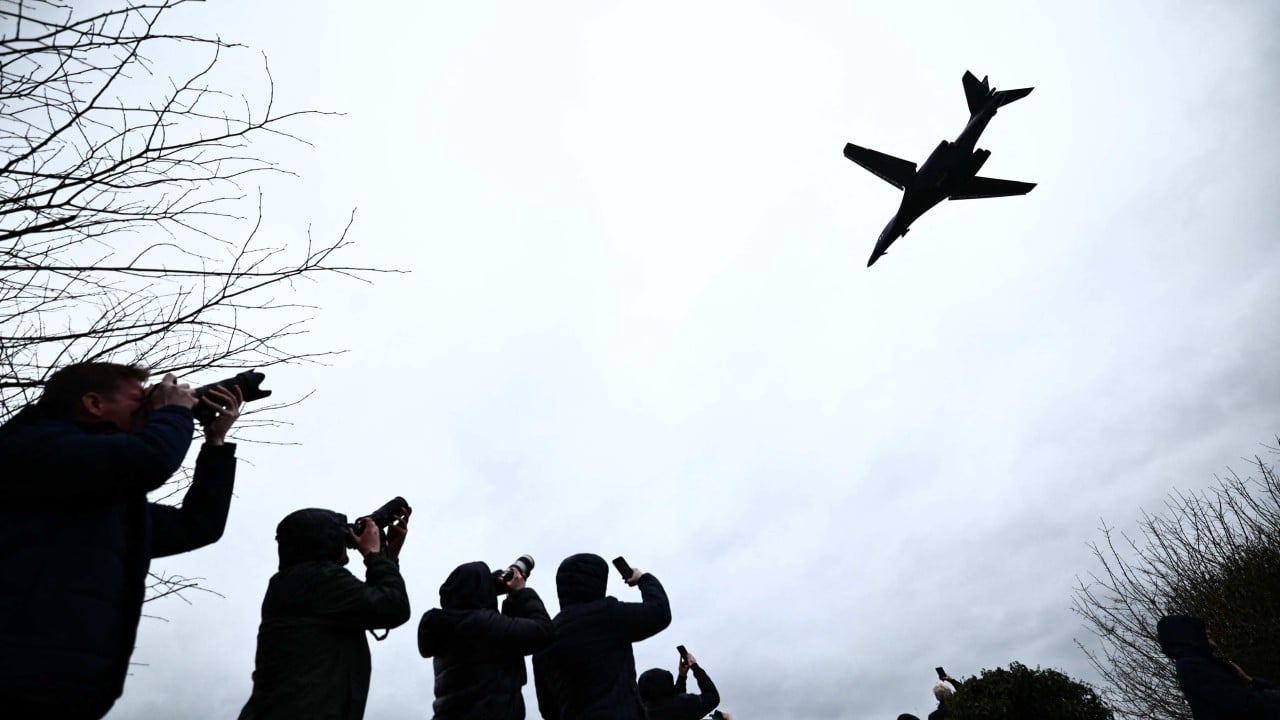
US may reassess Nato ties after Iran war ends, Rubio says
Secretary of State Marco Rubio said the US may need to reassess its relationship with Nato after the Iran war is finished, calling the military alliance’s alleged lack of support during the Middle East conflict “very disappointing”. Rubio assailed Nato members for denying access to military bases, following prior criticism from US President Donald Trump that partners in the security bloc are “cowards” and that the alliance is a “paper tiger”. “The president and our country will have to...
Knowledge Map
Connected Articles — Knowledge Graph
This article is connected to other articles through shared AI topics and tags.
More in Research Papers

A Retrospective on the ICLR 2026 Review Process
The selection of papers for ICLR 2026 has fully concluded. We extend our congratulations to the authors whose work will appear at the conference. Creating ICLR’s technical program requires immense effort from the authors, reviewers, and area chairs, and we thank you for your contributions and service. For researchers whose work was rejected, we hope […]
Vector Researchers present papers at ACL 2024
Vector researchers will be well represented at the 62nd Annual Meeting of the Association for Computational Linguistics in Bangkok, Thailand this year. 14 papers co-authored by Vector-affiliated researchers are being […] The post Vector Researchers present papers at ACL 2024 appeared first on Vector Institute for Artificial Intelligence .
Yann LeCun's Team's New Paper: AI Development Mimicking Human Intelligence Hits a Dead End - eu.36kr.com
<a href="https://news.google.com/rss/articles/CBMiU0FVX3lxTFBkbTRhNlhtRnY0cVBERld2OTdWNkRGMXBEaG9Vc21janRUcjJaUlJ4YzZRajVmMGQxNGJYTFB6M3lleUFNakUtWElHdGwzTXBQZjNZ?oc=5" target="_blank">Yann LeCun's Team's New Paper: AI Development Mimicking Human Intelligence Hits a Dead End</a> <font color="#6f6f6f">eu.36kr.com</font>
Plans must be made for the welfare of sentient AI, animal consciousness researchers argue - The Hill
<a href="https://news.google.com/rss/articles/CBMiiAFBVV95cUxNNzVaUTkzYkFUaVRsNGtnQVRXS2xsQVZfd1dFQ01RUlNZWUdDbjBNLUNycll2enl2NHp4Z0Ficm9HUnNWUnlvSGFrR3lDVUVxT1QyeE03QWhWcHFDTVJxV3VUQ0FKT3hiTkY3dWZha3JjcjRIM3l3WUtHZVlBUlhxdVBhLW1tdlJ40gGOAUFVX3lxTFBDQnllcVNNa1NRYVMyYlBtVXVxR0VPeHNjTjNMNWNTMFZXRjRkSU1OeXRFNmxvcENqbXkwSERoU1pGdXJYX2g5c214cFJFdEc1WUlkaEE5TlFDTTNoek5yR18tVi1vWUlGUnl4Tk13VWlFMDhzdUUyOUl3RmhNZ0FobTdiVG51N2h1SmJ5Y3c?oc=5" target="_blank">Plans must be made for the welfare of sentient AI, animal consciousness researchers argue</a> <font color="#6f6f6f">The Hill</font>
Discussion
Sign in to join the discussion
No comments yet — be the first to share your thoughts!