
Scaling Sim-to-Real Reinforcement Learning for Robot VLAs with Generative 3D Worlds
arXiv:2603.18532v2 Announce Type: replace-cross Abstract: The strong performance of large vision-language models (VLMs) trained with reinforcement learning (RL) has motivated similar approaches for fine-tuning vision-language-action (VLA) models in robotics. Many recent works fine-tune VLAs directly in the real world to avoid addressing the sim-to-real gap. While real-world RL circumvents sim-to-real issues, it inherently limits the generality of the resulting VLA, as scaling scene and object diversity in the physical world is prohibitively difficult. This leads to the paradoxical outcome of t — Andrew Choi, Xinjie Wang, Zhizhong Su, Wei Xu
View PDF
Abstract:The strong performance of large vision-language models (VLMs) trained with reinforcement learning (RL) has motivated similar approaches for fine-tuning vision-language-action (VLA) models in robotics. Many recent works fine-tune VLAs directly in the real world to avoid addressing the sim-to-real gap. While real-world RL circumvents sim-to-real issues, it inherently limits the generality of the resulting VLA, as scaling scene and object diversity in the physical world is prohibitively difficult. This leads to the paradoxical outcome of transforming a broadly pretrained model into an overfitted, scene-specific policy. Training in simulation can instead provide access to diverse scenes, but designing those scenes is also costly. In this work, we show that VLAs can be RL fine-tuned without sacrificing generality and with reduced labor by leveraging 3D world generative models. Using these models together with a language-driven scene designer, we generate hundreds of diverse interactive scenes containing unique objects and backgrounds, enabling scalable and highly parallel policy learning. Starting from a pretrained imitation baseline, our approach increases simulation success from 9.7% to 79.8% while achieving a 1.25$\times$ speedup in task completion time. We further demonstrate successful sim-to-real transfer enabled by the quality of the generated digital twins together with domain randomization, improving real-world success from 21.7% to 75% and achieving a 1.13$\times$ speedup. Finally, we further highlight the benefits of leveraging the effectively unlimited data from 3D world generative models through an ablation study showing that increasing scene diversity directly improves zero-shot generalization.
Subjects:
Robotics (cs.RO); Artificial Intelligence (cs.AI); Machine Learning (cs.LG)
Cite as: arXiv:2603.18532 [cs.RO]
(or arXiv:2603.18532v2 [cs.RO] for this version)
https://doi.org/10.48550/arXiv.2603.18532
arXiv-issued DOI via DataCite
Submission history
From: Andrew Choi [view email] [v1] Thu, 19 Mar 2026 06:22:11 UTC (44,258 KB) [v2] Sat, 28 Mar 2026 07:03:02 UTC (44,254 KB)
Sign in to highlight and annotate this article

Conversation starters
Daily AI Digest
Get the top 5 AI stories delivered to your inbox every morning.
More about
researchpaperarxiv
UCLA Researchers Highlight the ‘Body Gap’ in AI: Why Lacking Human Experience Could Impact Safety - Bioengineer.org
<a href="https://news.google.com/rss/articles/CBMiuwFBVV95cUxNekVOelBPcWt4Y2lGcHFvalZ4UWdRLUxLMnN5NndWVURBNUt2T25DYjVsT2F4VVdUUE1XbEFsTW91d3JDaFJsV1NiSjBDenU2Z1ZCaUhrUl81ME5TTlN4OC1lSzhmV1hrUThSc3U5UkRyelRGYWVDdE9fUF84VUZSWEpFYlNBTnU0WHBMVTVHUlFqd1VXZ1hna3NNSjNfeXdTdkdJTHdJQzhvdE52eVZLVkV6R0hETW84a2pR?oc=5" target="_blank">UCLA Researchers Highlight the ‘Body Gap’ in AI: Why Lacking Human Experience Could Impact Safety</a> <font color="#6f6f6f">Bioengineer.org</font>

Exclusive | Caltech Researchers Claim Radical Compression of High-Fidelity AI Models - WSJ
<a href="https://news.google.com/rss/articles/CBMiuANBVV95cUxNd09pNzVMTG0wTVNDZGgyWlZKNFpURjg4YkZTYVpKNWd2WnUzSUllZXdsYVgxM0tRblhmbXNDQ050cGlmY0gwVVpxVXZxLW5XX1V5U1NUXy1xaXVoVmlLb29RSG1aa0hNSzBaZjh3Q1N0a1pIQnNpc3lKQnJDdG5rUjlZUjE0NUhtUWstUGwxSHdtSWUzelUydXFQbzdZaTB1QnNjYWF2WWQ5RnB3YV9vNk00VkhyQUdKSnFzX1VoZWFzZElkLVh6a2QzMm1pY21EeURBVFhvMUZMNDFZTFpmd0k2OWJ1MFpYd0wydi1BSUFyalJhUGRfeWFHY21UZzVGYm5USU9iV3dCQjdHR2hUVGw1UUk5aU5xVkExX1RBckhQYk1OcTQwRDJsNldSRWdIZ2ljdlg0SVdYQWRkQkx2eG1feWtfdXM2YWFNdEpuLXZEcGVqSVRzNFdid0dwd2QwQUFQWEItUVp2VktzeG1LM09KOHM3bEltekZyRjNSbDhiZnRleGVnU0VBSTI0NDhMZEx3RThvSFFKVFRFMms0cEtVeXpuQ3Z2OWQyeGstaDJOLWJmNFpzWA?oc=5" target="_blank">Exclusive | Caltech Researchers Claim Radical Compression of High-Fidelity AI Models</a> <font color="#6f6f6f">WSJ</font>
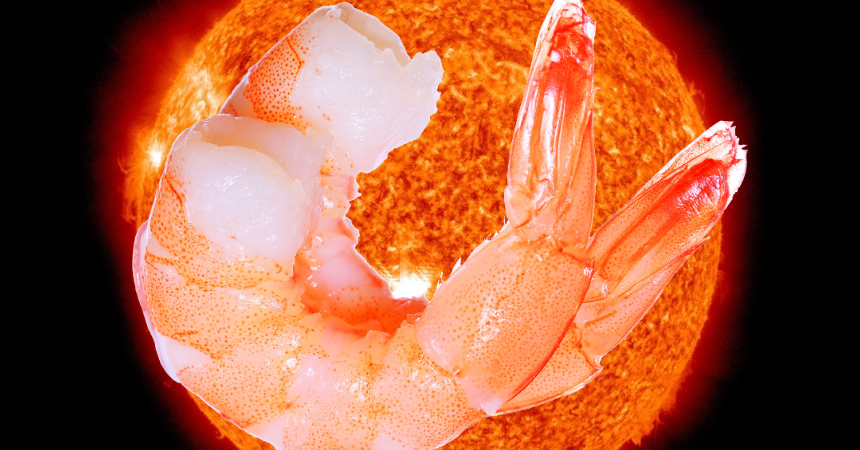
Save the Sun Shrimp!
The supposition that we live in a "goldilocks zone" is frankly just nonsense built up by an anthropocentric need to feel self-important, like Copernicus I am here to rescue us from a self-absorbed disaster of thought. Indeed, what is required for life to form is the ability to create complex structures with causal persistence times above a threshold. With this in mind we are able to find many areas where organisms could persist, if we just had the eyes to see them, namely the Sun! The surface of the Sun is frankly massive, mjx-math { display: inline-block; text-align: left; line-height: 0; text-indent: 0; font-style: normal; font-weight: normal; font-size: 100%; font-size-adjust: none; letter-spacing: normal; border-collapse: collapse; word-wrap: normal; word-spacing: normal; white-space:
Knowledge Map
Connected Articles — Knowledge Graph
This article is connected to other articles through shared AI topics and tags.
More in Research Papers

Researchers to use robotics and AI to help sheep producers - University of Nevada, Reno
<a href="https://news.google.com/rss/articles/CBMic0FVX3lxTFB4UmxpREpFODBJN0lKakYwRVVtdlZPNmNiTExRelVFaDYzYW9kX2RCc0pEZjlmX01fT1dWYTlxZE1ET2ZKVVgzSVZIenY3bDlHa3FXS1dUdVBmTEdLa1hUR2x3OWxHbkE2RnROSjl6VHVHQ2c?oc=5" target="_blank">Researchers to use robotics and AI to help sheep producers</a> <font color="#6f6f6f">University of Nevada, Reno</font>
AIRA_2: Breaking Bottlenecks In AI Research Agents - Forbes
<a href="https://news.google.com/rss/articles/CBMiowFBVV95cUxNNmtndHhmQ2lpZGdPdTJwY25xejcyV1c1SWNLdWFOWnNwbjRUQTF0ZWdOZFNaclNBNWVsaUgtU0JUM2xrakhoOXVLMVJzVTNkajdrMmJGeS1lYUpMUG1NMkZNMDJFREZZdXU2ZVdEbkNZSDNBRjJBLVYyZE9XeEY4T0RJY3J5aDVWcEZVQ2lWUjhUYXBsUk16d09NdGdsQ3lxb3gw?oc=5" target="_blank">AIRA_2: Breaking Bottlenecks In AI Research Agents</a> <font color="#6f6f6f">Forbes</font>

Oracle Layoffs Recast Costs To Back US$50b AI Infrastructure Bet - simplywall.st
<a href="https://news.google.com/rss/articles/CBMivwFBVV95cUxQNWpZb2ZQVDBIOGVZTTBtLThzaGwxS3NkMnJBSS1wek5pQlJXRWdTOEh5aTdPTE9Cd3JHdjZDeWRtVzdMUUdESHJOQXZDdGNVdGZtTTBhanpfb3UxQnRobVlzNGdVUXJLZWptV2V6NXlNSWllX3FxOU5XYTF0RkM2TnJIaFJkcVBFOGc2alBSLTZEeU85QU1oTjBrMVZSTl84dm9GeFl5OGtUMjc3LVd1dS1fcHZ1RG9HcV82T2JFWdIBxAFBVV95cUxOSE5XVXh0QkM4Yi1WbXNhWkJ2Z2dLRlBGNjAwaTcyNFJWMWRPdXo5WjRQQkRGTG9IamxxbmdhMHpsaEJ6RDQwZl9ENGl5WDc5a2lrTXZ1bVpFbGdsdndHYjFINnZPSnNKX1dZamszUXByR1BlRXF6d1pKOHpBU3M5UFhUSldlUWtIMlRNQzdvTk9haEJKeDI1ZEg0WWQ1SXYzLUZCWElQc3pzR19ucGExdVpnc2hBQXlQNVpOZFVBVzRkLXFE?oc=5" target="_blank">Oracle Layoffs Recast Costs To Back US$50b AI Infrastructure Bet</a> <font color="#6f6f6f">simplywall.st</font>
Discussion
Sign in to join the discussion
No comments yet — be the first to share your thoughts!