

Local Precise Refinement: A Dual-Gated Mixture-of-Experts for Enhancing Foundation Model Generalization against Spectral Shifts
arXiv:2603.13352v3 Announce Type: replace Abstract: Domain Generalization Semantic Segmentation (DGSS) in spectral remote sensing is severely challenged by spectral shifts across diverse acquisition conditions, which cause significant performance degradation for models deployed in unseen domains. While fine-tuning foundation models is a promising direction, existing methods employ global, homogeneous adjustments. This "one-size-fits-all" tuning struggles with the spatial heterogeneity of land cover, causing semantic confusion. We argue that the key to robust DGSS lies not in a single global ad — Xi Chen, Maojun Zhang, Yu Liu, Shen Yan
View PDF HTML (experimental)
Abstract:Domain Generalization Semantic Segmentation (DGSS) in spectral remote sensing is severely challenged by spectral shifts across diverse acquisition conditions, which cause significant performance degradation for models deployed in unseen domains. While fine-tuning foundation models is a promising direction, existing methods employ global, homogeneous adjustments. This "one-size-fits-all" tuning struggles with the spatial heterogeneity of land cover, causing semantic confusion. We argue that the key to robust DGSS lies not in a single global adaptation, but in performing fine-grained, spatially-adaptive refinement of a foundation model's features. To achieve this, we propose SpectralMoE, a novel fine-tuning framework for DGSS. It operationalizes this principle by utilizing a Mixture-of-Experts (MoE) architecture to perform \textbf{local precise refinement} on the foundation model's features, incorporating depth features estimated from selected RGB bands of the spectral remote sensing imagery to guide the fine-tuning process. Specifically, SpectralMoE employs a dual-gated MoE architecture that independently routes visual and depth features to top-k selected experts for specialized refinement, enabling modality-specific adjustments. A subsequent cross-attention mechanism then judiciously fuses the refined structural cues into the visual stream, mitigating semantic ambiguities caused by spectral variations. Extensive experiments show that SpectralMoE sets a new state-of-the-art on multiple DGSS benchmarks across hyperspectral, multispectral, and RGB remote sensing imagery.
Subjects:
Computer Vision and Pattern Recognition (cs.CV)
Cite as: arXiv:2603.13352 [cs.CV]
(or arXiv:2603.13352v3 [cs.CV] for this version)
https://doi.org/10.48550/arXiv.2603.13352
arXiv-issued DOI via DataCite
Submission history
From: Silas Chen [view email] [v1] Sun, 8 Mar 2026 04:53:05 UTC (13,898 KB) [v2] Tue, 24 Mar 2026 10:11:10 UTC (2,983 KB) [v3] Fri, 27 Mar 2026 10:15:57 UTC (2,982 KB)
Sign in to highlight and annotate this article

Conversation starters
Daily AI Digest
Get the top 5 AI stories delivered to your inbox every morning.
More about
researchpaperarxiv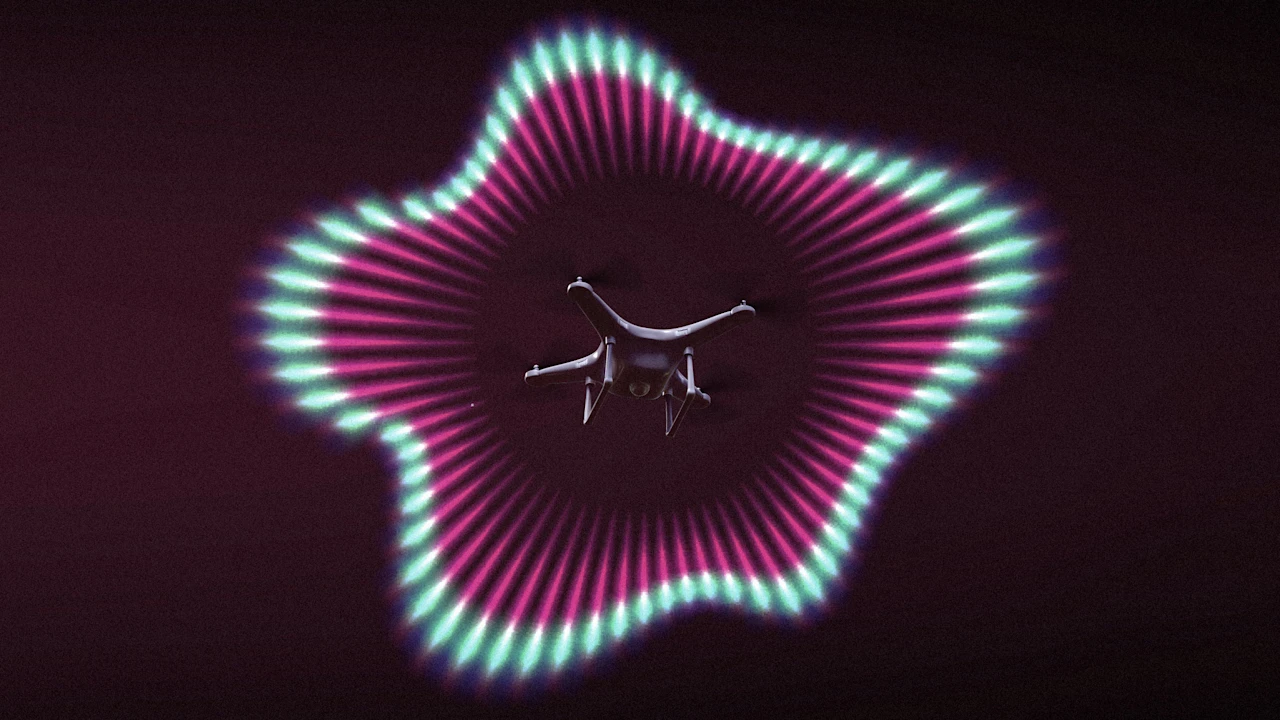
How AI-powered echolocation is giving small drones night vision
To help small aerial robots navigate in the dark and other low-visibility environments, my colleagues and I developed an ultrasound-based perception system inspired by bat echolocation. Current robots rely heavily on cameras or light detection and ranging , known as lidar, or both. But these sensors fail in visually challenging conditions, such as smoke, fog, dust, snow, or complete darkness. I’m a scientific engineer who develops bio-inspired microrobots. To solve this challenge, my research team looked at nature’s experts at navigating in poor visibility: bats. They thrive in dark, damp, and dusty caves and can detect obstacles as thin as a human hair using echolocation while weighing as little as two paper clips. They emit sound waves and listen to weak echoes reflected from objects. Ho

Knowledge Map
Connected Articles — Knowledge Graph
This article is connected to other articles through shared AI topics and tags.
More in Research Papers
How AI-powered echolocation is giving small drones night vision
To help small aerial robots navigate in the dark and other low-visibility environments, my colleagues and I developed an ultrasound-based perception system inspired by bat echolocation. Current robots rely heavily on cameras or light detection and ranging , known as lidar, or both. But these sensors fail in visually challenging conditions, such as smoke, fog, dust, snow, or complete darkness. I’m a scientific engineer who develops bio-inspired microrobots. To solve this challenge, my research team looked at nature’s experts at navigating in poor visibility: bats. They thrive in dark, damp, and dusty caves and can detect obstacles as thin as a human hair using echolocation while weighing as little as two paper clips. They emit sound waves and listen to weak echoes reflected from objects. Ho

Infinite-Horizon Ergodic Control via Kernel Mean Embeddings
arXiv:2604.01023v1 Announce Type: new Abstract: This paper derives an infinite-horizon ergodic controller based on kernel mean embeddings for long-duration coverage tasks on general domains. While existing kernel-based ergodic control methods provide strong coverage guarantees on general coverage domains, their practical use has been limited to sub-ergodic, finite-time horizons due to intractable computational scaling, prohibiting its use for long-duration coverage. We resolve this scaling by deriving an infinite-horizon ergodic controller equipped with an extended kernel mean embedding error visitation state that recursively records state visitation. This extended state decouples past visitation from future control synthesis and expands ergodic control to infinite-time settings. In additi
Discussion
Sign in to join the discussion
No comments yet — be the first to share your thoughts!