
CLASP: Defending Hybrid Large Language Models Against Hidden State Poisoning Attacks
arXiv:2603.12206v2 Announce Type: replace Abstract: State space models (SSMs) like Mamba have gained significant traction as efficient alternatives to Transformers, achieving linear complexity while maintaining competitive performance. However, Hidden State Poisoning Attacks (HiSPAs), a recently discovered vulnerability that corrupts SSM memory through adversarial strings, pose a critical threat to these architectures and their hybrid variants. Framing the HiSPA mitigation task as a binary classification problem at the token level, we introduce the CLASP model (Classifier Against State Poisoni — Alexandre Le Mercier, Thomas Demeester, Chris Develder
View PDF HTML (experimental)
Abstract:State space models (SSMs) like Mamba have gained significant traction as efficient alternatives to Transformers, achieving linear complexity while maintaining competitive performance. However, Hidden State Poisoning Attacks (HiSPAs), a recently discovered vulnerability that corrupts SSM memory through adversarial strings, pose a critical threat to these architectures and their hybrid variants. Framing the HiSPA mitigation task as a binary classification problem at the token level, we introduce the CLASP model (Classifier Against State Poisoning) to defend against this threat. CLASP exploits distinct patterns in Mamba's block output embeddings (BOEs) and uses an XGBoost classifier to identify malicious tokens with minimal computational overhead. We consider a realistic scenario in which both SSMs and HiSPAs are likely to be used: an LLM screening résumés to identify the best candidates for a role. Evaluated on a corpus of 2,483 résumés totaling 9.5M tokens with controlled injections, CLASP achieves 95.9% token-level F1 score and 99.3% document-level F1 score on malicious tokens detection. Crucially, the model generalizes to unseen attack patterns: under leave-one-out cross-validation, performance remains high (96.9% document-level F1), while under clustered cross-validation with structurally novel triggers, it maintains useful detection capability (91.6% average document-level F1). Operating independently of any downstream model, CLASP processes 1,032 tokens per second with under 4GB VRAM consumption, potentially making it suitable for real-world deployment as a lightweight front-line defense for SSM-based and hybrid architectures. All code and detailed results are available at this https URL.
Comments: 22 pages, 6 figures
Subjects:
Computation and Language (cs.CL)
Cite as: arXiv:2603.12206 [cs.CL]
(or arXiv:2603.12206v2 [cs.CL] for this version)
https://doi.org/10.48550/arXiv.2603.12206
arXiv-issued DOI via DataCite
Submission history
From: Alexandre Le Mercier [view email] [v1] Thu, 12 Mar 2026 17:29:55 UTC (702 KB) [v2] Fri, 27 Mar 2026 13:08:27 UTC (701 KB)
Sign in to highlight and annotate this article

Conversation starters
Daily AI Digest
Get the top 5 AI stories delivered to your inbox every morning.
More about
researchpaperarxiv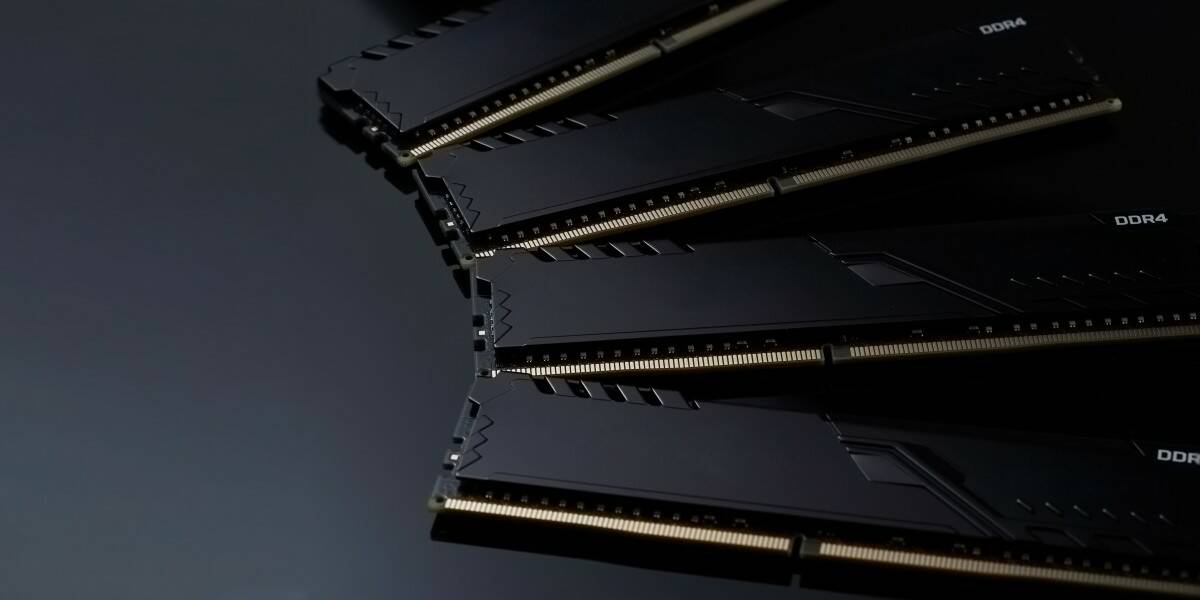
Google's TurboQuant saves memory, but won't save us from DRAM-pricing hell
<h4>Chocolate Factory’s compression tech clears the way to cheaper AI inference, not more affordable memory</h4> <p>When Google unveiled <a target="_blank" rel="nofollow" href="https://research.google/blog/turboquant-redefining-ai-efficiency-with-extreme-compression/">TurboQuant</a>, an AI data compression technology that promises to slash the amount of memory required to serve models, many hoped it would help with a memory shortage that has seen prices triple since last year. Not so much.…</p>

Illinois Tech computer science researcher honored by IEEE Chicago Section - EurekAlert!
<a href="https://news.google.com/rss/articles/CBMiXEFVX3lxTE13OVpWMEk1Z3hlMkR2bHNBQ2dkazFwb3VqN3hCa29GWGJvSVlPa00zd2xUakRmYXFqQmc5OWU0eGl4a21FMDAwWUN2Q3p0M3FrbXBkNV8zN0cxaG1s?oc=5" target="_blank">Illinois Tech computer science researcher honored by IEEE Chicago Section</a> <font color="#6f6f6f">EurekAlert!</font>

My Journey to becoming a Quantum Engineer
<p>I have procrastinated on documenting this process for the longest time. But I think i am ready now (maybe). <br> Coming from a front end engineering background, I am fascinated by the work being done by the quantum engineers at IBM. I am not that great with maths and statistics but I believe anything can be learned with tons of practice and consistency. I want to use this platform to hold myself accountable (that is if i don't give up half way and delete all my posts. I'll try not to btw). </p> <p>This is an article describing <a href="https://www.ibm.com/think/topics/quantum-computing" rel="noopener noreferrer">what quantum computing is</a> and some of it's use cases.</p> <p>I became an IBM qiskit advocate late last year and I have been exposed to a lot of resources and networked a bun
Knowledge Map
Connected Articles — Knowledge Graph
This article is connected to other articles through shared AI topics and tags.
More in Research Papers
Illinois Tech computer science researcher honored by IEEE Chicago Section - EurekAlert!
<a href="https://news.google.com/rss/articles/CBMiXEFVX3lxTE13OVpWMEk1Z3hlMkR2bHNBQ2dkazFwb3VqN3hCa29GWGJvSVlPa00zd2xUakRmYXFqQmc5OWU0eGl4a21FMDAwWUN2Q3p0M3FrbXBkNV8zN0cxaG1s?oc=5" target="_blank">Illinois Tech computer science researcher honored by IEEE Chicago Section</a> <font color="#6f6f6f">EurekAlert!</font>
AI maps science papers to predict research trends two to three years ahead - Tech Xplore
<a href="https://news.google.com/rss/articles/CBMie0FVX3lxTE5aTkZYTWdaRDZwTXNRMldpMG1WZ1YzWDZTOHN5M183Z3A1ZTFYbnhEWTdPRmpvZnZFU0xodlRsNWxFaGxTcEpwalhJNmJpQWE5VjhaRS1tOXJIeTc5Z0JNblJ3dFd4WjRYZGJOX0NrWGt6ZmZJVTBpRm5wWQ?oc=5" target="_blank">AI maps science papers to predict research trends two to three years ahead</a> <font color="#6f6f6f">Tech Xplore</font>
AI inspires new research topics in materials science - Nanowerk
<a href="https://news.google.com/rss/articles/CBMiZ0FVX3lxTFBPWlJSM2ExeVQ3LVppTm45NHpEMW9YVkxscThCNDd2OVB0c3J1ZmVCbWNSZWZ0TjZwSzlOdEFXN2UtRk5LU1hxdXd4ZklldGxoM0FZSnhCd19PWkNHQ1ZRVDNwSHNUSk0?oc=5" target="_blank">AI inspires new research topics in materials science</a> <font color="#6f6f6f">Nanowerk</font>
Discussion
Sign in to join the discussion
No comments yet — be the first to share your thoughts!