

Understanding the Use of a Large Language Model-Powered Guide to Make Virtual Reality Accessible for Blind and Low Vision People
arXiv:2603.09964v2 Announce Type: replace-cross Abstract: As social virtual reality (VR) grows more popular, addressing accessibility for blind and low vision (BLV) users is increasingly critical. Researchers have proposed an AI "sighted guide" to help users navigate VR and answer their questions, but it has not been studied with users. To address this gap, we developed a large language model (LLM)-powered guide and studied its use with 16 BLV participants in virtual environments with confederates posing as other users. We found that when alone, participants treated the guide as a tool, but tr — Jazmin Collins, Sharon Y Lin, Tianqi Liu, Andrea Stevenson Won, Shiri Azenkot
View PDF HTML (experimental)
Abstract:As social virtual reality (VR) grows more popular, addressing accessibility for blind and low vision (BLV) users is increasingly critical. Researchers have proposed an AI "sighted guide" to help users navigate VR and answer their questions, but it has not been studied with users. To address this gap, we developed a large language model (LLM)-powered guide and studied its use with 16 BLV participants in virtual environments with confederates posing as other users. We found that when alone, participants treated the guide as a tool, but treated it companionably around others, giving it nicknames, rationalizing its mistakes with its appearance, and encouraging confederate-guide interaction. Our work furthers understanding of guides as a versatile method for VR accessibility and presents design recommendations for future guides.
Comments: 16 pages, 5 figures, 3 tables, Proceedings of the 2026 CHI Conference on Human Factors in Computing Systems (CHI '26), April 13-17, 2026, Barcelona, Spain. ACM
Subjects:
Human-Computer Interaction (cs.HC); Artificial Intelligence (cs.AI); Emerging Technologies (cs.ET)
ACM classes: H.5.1; K.4.2; I.2.1
Cite as: arXiv:2603.09964 [cs.HC]
(or arXiv:2603.09964v2 [cs.HC] for this version)
https://doi.org/10.48550/arXiv.2603.09964
arXiv-issued DOI via DataCite
Related DOI:
https://doi.org/10.1145/3772318.3791143
DOI(s) linking to related resources
Submission history
From: Jazmin Collins [view email] [v1] Tue, 10 Mar 2026 17:56:57 UTC (6,536 KB) [v2] Mon, 30 Mar 2026 15:28:55 UTC (6,536 KB)
Sign in to highlight and annotate this article

Conversation starters
Daily AI Digest
Get the top 5 AI stories delivered to your inbox every morning.
More about
researchpaperarxiv

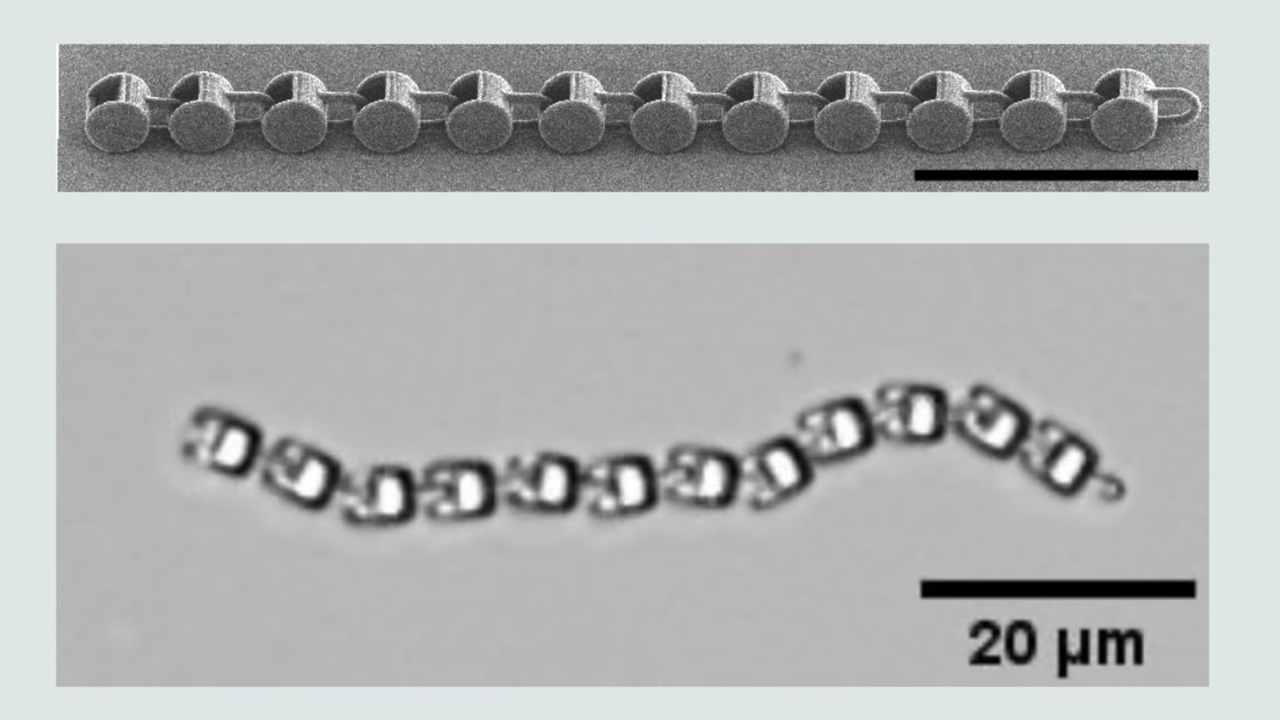
Researchers 3D print robot the size of a single-cell organism — devices move and navigate even without a ‘brain,’ uses their shape and the environment to get going
Researchers 3D print robot the size of a single-cell organism — devices move and navigate even without a ‘brain,’ uses their shape and the environment to get going
Knowledge Map
Connected Articles — Knowledge Graph
This article is connected to other articles through shared AI topics and tags.
More in Research Papers
Researchers 3D print robot the size of a single-cell organism — devices move and navigate even without a ‘brain,’ uses their shape and the environment to get going
Researchers 3D print robot the size of a single-cell organism — devices move and navigate even without a ‘brain,’ uses their shape and the environment to get going

Developing psychosocial phenotypes to understand engagement with digital health technologies for heart failure
npj Digital Medicine, Published online: 04 April 2026; doi:10.1038/s41746-026-02571-z Developing psychosocial phenotypes to understand engagement with digital health technologies for heart failure

Discussion
Sign in to join the discussion
No comments yet — be the first to share your thoughts!