
Compact Conformal Subgraphs
arXiv:2602.07530v2 Announce Type: replace Abstract: Conformal prediction provides rigorous, distribution-free uncertainty guarantees, but often yields prohibitively large prediction sets in structured domains such as routing, planning, or sequential recommendation. We introduce "graph-based conformal compression", a framework for constructing compact subgraphs that preserve statistical validity while reducing structural complexity. We formulate compression as selecting a smallest subgraph capturing a prescribed fraction of the probability mass, and reduce to a weighted version of densest $k$-s — Sreenivas Gollapudi, Kostas Kollias, Kamesh Munagala, Aravindan Vijayaraghavan
View PDF HTML (experimental)
Abstract:Conformal prediction provides rigorous, distribution-free uncertainty guarantees, but often yields prohibitively large prediction sets in structured domains such as routing, planning, or sequential recommendation. We introduce "graph-based conformal compression", a framework for constructing compact subgraphs that preserve statistical validity while reducing structural complexity. We formulate compression as selecting a smallest subgraph capturing a prescribed fraction of the probability mass, and reduce to a weighted version of densest $k$-subgraphs in hypergraphs, in the regime where the subgraph has a large fraction of edges. We design efficient approximation algorithms that achieve constant factor coverage and size trade-offs. Crucially, we prove that our relaxation satisfies a monotonicity property, derived from a connection to parametric minimum cuts, which guarantees the nestedness required for valid conformal guarantees. Our results on the one hand bridge efficient conformal prediction with combinatorial graph compression via monotonicity, to provide rigorous guarantees on both statistical validity, and compression or size. On the other hand, they also highlight an algorithmic regime, distinct from classical densest-$k$-subgraph hardness settings, where the problem can be approximated efficiently. We finally validate our algorithmic approach via simulations for trip planning and navigation, and compare to natural baselines.
Subjects:
Machine Learning (cs.LG); Data Structures and Algorithms (cs.DS)
Cite as: arXiv:2602.07530 [cs.LG]
(or arXiv:2602.07530v2 [cs.LG] for this version)
https://doi.org/10.48550/arXiv.2602.07530
arXiv-issued DOI via DataCite
Submission history
From: Kamesh Munagala [view email] [v1] Sat, 7 Feb 2026 12:55:54 UTC (839 KB) [v2] Fri, 27 Mar 2026 21:19:08 UTC (580 KB)
Sign in to highlight and annotate this article

Conversation starters
Daily AI Digest
Get the top 5 AI stories delivered to your inbox every morning.
More about
researchpaperarxiv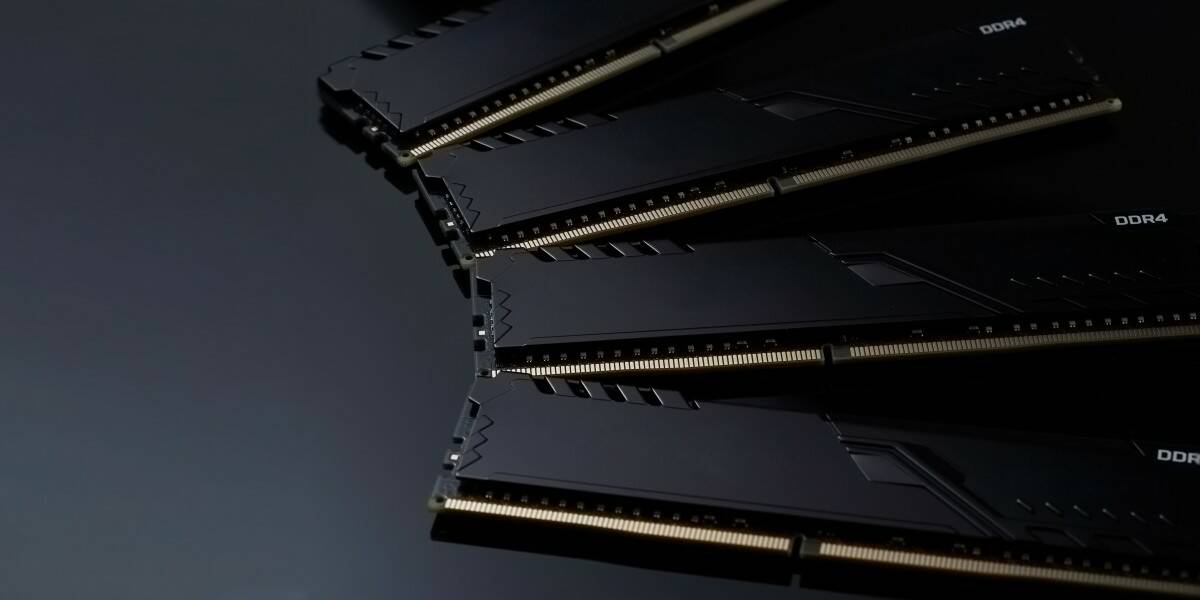
Google's TurboQuant saves memory, but won't save us from DRAM-pricing hell
<h4>Chocolate Factory’s compression tech clears the way to cheaper AI inference, not more affordable memory</h4> <p>When Google unveiled <a target="_blank" rel="nofollow" href="https://research.google/blog/turboquant-redefining-ai-efficiency-with-extreme-compression/">TurboQuant</a>, an AI data compression technology that promises to slash the amount of memory required to serve models, many hoped it would help with a memory shortage that has seen prices triple since last year. Not so much.…</p>

Illinois Tech computer science researcher honored by IEEE Chicago Section - EurekAlert!
<a href="https://news.google.com/rss/articles/CBMiXEFVX3lxTE13OVpWMEk1Z3hlMkR2bHNBQ2dkazFwb3VqN3hCa29GWGJvSVlPa00zd2xUakRmYXFqQmc5OWU0eGl4a21FMDAwWUN2Q3p0M3FrbXBkNV8zN0cxaG1s?oc=5" target="_blank">Illinois Tech computer science researcher honored by IEEE Chicago Section</a> <font color="#6f6f6f">EurekAlert!</font>

My Journey to becoming a Quantum Engineer
<p>I have procrastinated on documenting this process for the longest time. But I think i am ready now (maybe). <br> Coming from a front end engineering background, I am fascinated by the work being done by the quantum engineers at IBM. I am not that great with maths and statistics but I believe anything can be learned with tons of practice and consistency. I want to use this platform to hold myself accountable (that is if i don't give up half way and delete all my posts. I'll try not to btw). </p> <p>This is an article describing <a href="https://www.ibm.com/think/topics/quantum-computing" rel="noopener noreferrer">what quantum computing is</a> and some of it's use cases.</p> <p>I became an IBM qiskit advocate late last year and I have been exposed to a lot of resources and networked a bun
Knowledge Map
Connected Articles — Knowledge Graph
This article is connected to other articles through shared AI topics and tags.
More in Research Papers
Illinois Tech computer science researcher honored by IEEE Chicago Section - EurekAlert!
<a href="https://news.google.com/rss/articles/CBMiXEFVX3lxTE13OVpWMEk1Z3hlMkR2bHNBQ2dkazFwb3VqN3hCa29GWGJvSVlPa00zd2xUakRmYXFqQmc5OWU0eGl4a21FMDAwWUN2Q3p0M3FrbXBkNV8zN0cxaG1s?oc=5" target="_blank">Illinois Tech computer science researcher honored by IEEE Chicago Section</a> <font color="#6f6f6f">EurekAlert!</font>

AI maps science papers to predict research trends two to three years ahead - Tech Xplore
<a href="https://news.google.com/rss/articles/CBMie0FVX3lxTE5aTkZYTWdaRDZwTXNRMldpMG1WZ1YzWDZTOHN5M183Z3A1ZTFYbnhEWTdPRmpvZnZFU0xodlRsNWxFaGxTcEpwalhJNmJpQWE5VjhaRS1tOXJIeTc5Z0JNblJ3dFd4WjRYZGJOX0NrWGt6ZmZJVTBpRm5wWQ?oc=5" target="_blank">AI maps science papers to predict research trends two to three years ahead</a> <font color="#6f6f6f">Tech Xplore</font>
AI inspires new research topics in materials science - Nanowerk
<a href="https://news.google.com/rss/articles/CBMiZ0FVX3lxTFBPWlJSM2ExeVQ3LVppTm45NHpEMW9YVkxscThCNDd2OVB0c3J1ZmVCbWNSZWZ0TjZwSzlOdEFXN2UtRk5LU1hxdXd4ZklldGxoM0FZSnhCd19PWkNHQ1ZRVDNwSHNUSk0?oc=5" target="_blank">AI inspires new research topics in materials science</a> <font color="#6f6f6f">Nanowerk</font>
Discussion
Sign in to join the discussion
No comments yet — be the first to share your thoughts!