

A Dynamic Framework for Grid Adaptation in Kolmogorov-Arnold Networks
arXiv:2601.18672v2 Announce Type: replace Abstract: Kolmogorov-Arnold Networks (KANs) have recently demonstrated promising potential in scientific machine learning, partly due to their capacity for grid adaptation during training. However, existing adaptation strategies rely solely on input data density, failing to account for the geometric complexity of the target function or metrics calculated during network training. In this work, we propose a generalized framework that treats knot allocation as a density estimation task governed by Importance Density Functions (IDFs), allowing training dyn — Spyros Rigas, Thanasis Papaioannou, Panagiotis Trakadas, Georgios Alexandridis
View PDF HTML (experimental)
Abstract:Kolmogorov-Arnold Networks (KANs) have recently demonstrated promising potential in scientific machine learning, partly due to their capacity for grid adaptation during training. However, existing adaptation strategies rely solely on input data density, failing to account for the geometric complexity of the target function or metrics calculated during network training. In this work, we propose a generalized framework that treats knot allocation as a density estimation task governed by Importance Density Functions (IDFs), allowing training dynamics to determine grid resolution. We introduce a curvature-based adaptation strategy and evaluate it across synthetic function fitting, regression on a subset of the Feynman dataset and different instances of the Helmholtz PDE, demonstrating that it significantly outperforms the standard input-based baseline. Specifically, our method yields average relative error reductions of 25.3% on synthetic functions, 9.4% on the Feynman dataset, and 23.3% on the PDE benchmark. Statistical significance is confirmed via Wilcoxon signed-rank tests, establishing curvature-based adaptation as a robust and computationally efficient alternative for KAN training.
Comments: Accepted in IJCNN 2026
Subjects:
Machine Learning (cs.LG)
Cite as: arXiv:2601.18672 [cs.LG]
(or arXiv:2601.18672v2 [cs.LG] for this version)
https://doi.org/10.48550/arXiv.2601.18672
arXiv-issued DOI via DataCite
Submission history
From: Spyros Rigas [view email] [v1] Mon, 26 Jan 2026 16:49:06 UTC (140 KB) [v2] Mon, 30 Mar 2026 12:41:10 UTC (140 KB)
Sign in to highlight and annotate this article

Conversation starters
Daily AI Digest
Get the top 5 AI stories delivered to your inbox every morning.
More about
researchpaperarxiv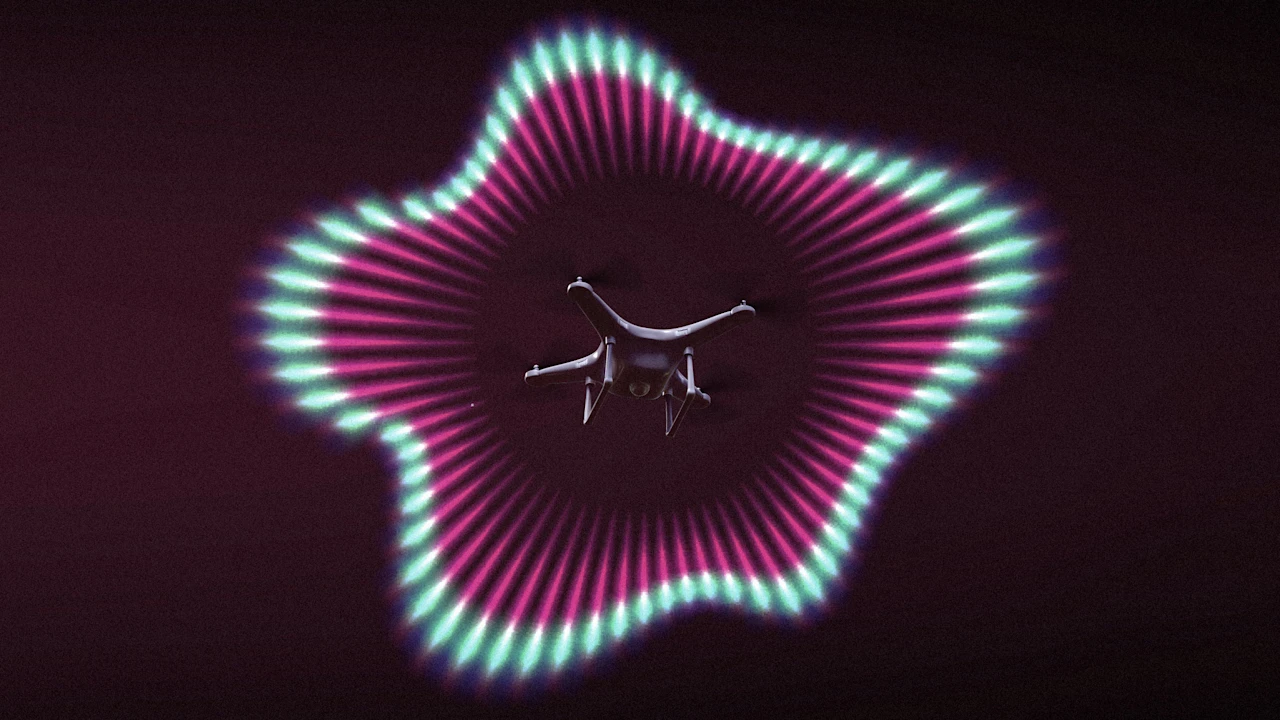
How AI-powered echolocation is giving small drones night vision
To help small aerial robots navigate in the dark and other low-visibility environments, my colleagues and I developed an ultrasound-based perception system inspired by bat echolocation. Current robots rely heavily on cameras or light detection and ranging , known as lidar, or both. But these sensors fail in visually challenging conditions, such as smoke, fog, dust, snow, or complete darkness. I’m a scientific engineer who develops bio-inspired microrobots. To solve this challenge, my research team looked at nature’s experts at navigating in poor visibility: bats. They thrive in dark, damp, and dusty caves and can detect obstacles as thin as a human hair using echolocation while weighing as little as two paper clips. They emit sound waves and listen to weak echoes reflected from objects. Ho

Knowledge Map
Connected Articles — Knowledge Graph
This article is connected to other articles through shared AI topics and tags.
More in Research Papers
How AI-powered echolocation is giving small drones night vision
To help small aerial robots navigate in the dark and other low-visibility environments, my colleagues and I developed an ultrasound-based perception system inspired by bat echolocation. Current robots rely heavily on cameras or light detection and ranging , known as lidar, or both. But these sensors fail in visually challenging conditions, such as smoke, fog, dust, snow, or complete darkness. I’m a scientific engineer who develops bio-inspired microrobots. To solve this challenge, my research team looked at nature’s experts at navigating in poor visibility: bats. They thrive in dark, damp, and dusty caves and can detect obstacles as thin as a human hair using echolocation while weighing as little as two paper clips. They emit sound waves and listen to weak echoes reflected from objects. Ho

Infinite-Horizon Ergodic Control via Kernel Mean Embeddings
arXiv:2604.01023v1 Announce Type: new Abstract: This paper derives an infinite-horizon ergodic controller based on kernel mean embeddings for long-duration coverage tasks on general domains. While existing kernel-based ergodic control methods provide strong coverage guarantees on general coverage domains, their practical use has been limited to sub-ergodic, finite-time horizons due to intractable computational scaling, prohibiting its use for long-duration coverage. We resolve this scaling by deriving an infinite-horizon ergodic controller equipped with an extended kernel mean embedding error visitation state that recursively records state visitation. This extended state decouples past visitation from future control synthesis and expands ergodic control to infinite-time settings. In additi
An Integrated Soft Robotic System for Measuring Vital Signs in Search and Rescue Environments
arXiv:2604.00971v1 Announce Type: new Abstract: Robots are frequently utilized in search-and-rescue operations. In recent years, significant advancements have been made in the field of victim assessment. However, there are still open issues regarding heart rate measurement, and no studies have been found that assess pressure in post-disaster scenarios. This work designs a soft gripper and integrates it into a mobile robotic system, thereby creating a device capable of measuring the pulse and blood pressure of victims in post-disaster environments. The gripper is designed to envelop the victim's arm and inflate like a sphygmomanometer, facilitated by a specialized portability system. The utilization of different signal processing algorithms has enabled the attainment of a pulse bias of \qty
Discussion
Sign in to join the discussion
No comments yet — be the first to share your thoughts!