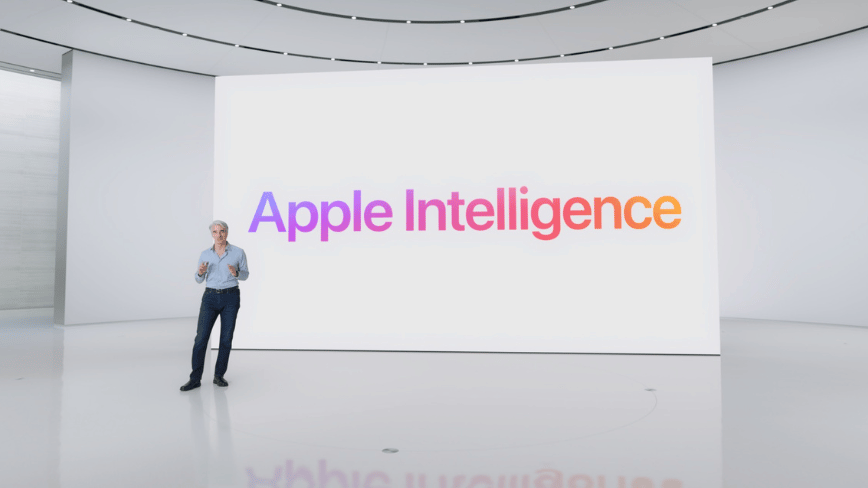
Apple Intelligence briefly goes live in China without approval, raising the spectre of regulatory penalties
In the small hours of Tuesday morning, something unexpected appeared on iPhones across mainland China. Apple Intelligence, the suite of AI-powered tools that the company has spent nearly two years trying to bring to its largest market outside the US, flickered to life, showed up in users’ settings menus, and then vanished. The brief, unannounced […] This story continues at The Next Web
n the small hours of Tuesday morning, something unexpected appeared on iPhones across mainland China. Apple Intelligence, the suite of AI-powered tools that the company has spent nearly two years trying to bring to its largest market outside the US, flickered to life, showed up in users’ settings menus, and then vanished.
The brief, unannounced appearance of the feature, which still lacks regulatory approval from China’s Cyberspace Administration, has exposed Apple to the risk of administrative penalties, according to You Yunting, a Shanghai-based intellectual property lawyer at Debund Law Offices.
Bloomberg’s Mark Gurman was among the first to flag the rollout as an error. Apple would not launch AI features in its most important international market without an announcement, he noted, nor would it do so in the middle of the night. He added that the feature, as briefly deployed, relied on Google’s reverse image search, a service that is blocked in China. Apple has since pulled the update offline.
The accidental deployment matters because China’s AI governance framework requires all generative AI models to pass a security evaluation and complete algorithm filing with the Cyberspace Administration of China before they can be offered to users. Even a brief, unintended release could be interpreted as providing a service without meeting those obligations, You warned, potentially subjecting Apple to penalties under the country’s Interim Measures for the Management of Generative AI Services.
The 💜 of EU tech
The latest rumblings from the EU tech scene, a story from our wise ol' founder Boris, and some questionable AI art. It's free, every week, in your inbox. Sign up now!
Apple did not respond to requests for comment.
The stumble comes after a protracted effort to bring Apple Intelligence to China. The company first announced its AI suite in June 2024 and launched it in the US that October. It reached the EU in April 2025 with iOS 18.4. But China, where foreign AI tools face strict content filtering requirements and must use domestically approved models, has proved far more difficult.
Apple struck a deal with Alibaba Group Holding in February 2025 to use the company’s Qwen large language model to power Apple Intelligence in China, according to confirmation from Alibaba chairman Joe Tsai reported by TechCrunch. Alibaba’s model must include a real-time filtering layer to comply with mandates from the CAC, which subjects AI systems to what has been described as a rigorous evaluation process covering sensitive political and social queries. A separate arrangement with Baidu for Visual Intelligence features has also been reported, though the details of that partnership remain less clear.
CEO Tim Cook addressed the delay during a visit to Shanghai in October 2025, telling attendees at the Global Asset Management Forum that Apple was actively working to bring the feature to China, without committing to a timeline. Gurman has since confirmed that Apple Intelligence has been technically ready for months but remains blocked by the regulatory approval process.
The wait has not been without competitive cost. Domestic rivals Xiaomi, Oppo, and Vivo have been aggressively integrating AI features into their handsets, with Oppo embedding Alibaba’s DeepSeek model into its ColorOS system and pledging to bring generative AI to 100 million users globally. Huawei, meanwhile, narrowly overtook Apple in Chinese smartphone shipments in 2025, according to market data, underscoring how the absence of Apple Intelligence has left Cupertino at a disadvantage in a market where AI functionality is fast becoming a differentiator.
Some Chinese users who managed to download the feature before it disappeared reported access to tools including real-time translation, photo editing, writing assistance, and personalised emoji creation, all carrying a beta label under the name “Apple Intelligence and Siri.” Parts of the Apple Intelligence suite, including writing and image tools, are already available in Hong Kong.
For Apple, the episode is an uncomfortable reminder that navigating AI regulation across different jurisdictions demands more than technical readiness. In a market where over 5,000 algorithms have already been filed with the CAC and the rules are enforced through active campaigns, even an accidental deployment can carry real consequences.
The Next Web AI
https://thenextweb.com/news/apple-intelligence-china-accidental-rollout-regulatory-riskSign in to highlight and annotate this article

Conversation starters
Daily AI Digest
Get the top 5 AI stories delivered to your inbox every morning.
More about
announcecompanymarket
Google's $20 per month AI Pro plan just got a big storage boost
Google's $20 per month AI Pro plan , which includes Gemini, Veo and Nano Banana, got a big storage boost and some other new perks. Users of the plan (also available for $200 per year ) will see their cloud space jump from 2TB to 5TB at no extra cost. That extra storage can be used not only for AI but also Gmail, Google Drive and Google Photos backups. Gemini can now pull context from Gmail and the web for Drive, Docs, Slides and Sheets, provide summaries for your Gmail inbox and proofread emails before you send them. It's also introducing additional agentic help with Chrome auto browse "that handles those tedious, multi-step chores — like planning a trip or filling out forms," Google VP Shimrit Ben-Yair wrote on X . Finally, Google announced that it's bundling its Home Premium subscription

Tencent, China AI stocks surge on optimism over AI agents - Investing.com
<a href="https://news.google.com/rss/articles/CBMiswFBVV95cUxNcjNyMDcxenBXNjFkQ01jckhNUGZhT0thbVhub1RybU1QcFd4YW80UkoyZXgzTHZPRDFiVlhKLWJCVUJxbV9IelI3b2VpdDdLZ1dleTFzeExROFRPQ0lTOC0xMVJxNHBwUXRYQWxyZk9jWHZOM3VLcEZEbXA2amJaZzBBYk5WTm1ZcE9kX1FYTE1YMm1RM0xzMDIzNDhBbHlxUzlxWW1pa0NJSDdxMWhZUDd2aw?oc=5" target="_blank">Tencent, China AI stocks surge on optimism over AI agents</a> <font color="#6f6f6f">Investing.com</font>

RefineRL: Advancing Competitive Programming with Self-Refinement Reinforcement Learning
arXiv:2604.00790v1 Announce Type: new Abstract: While large language models (LLMs) have demonstrated strong performance on complex reasoning tasks such as competitive programming (CP), existing methods predominantly focus on single-attempt settings, overlooking their capacity for iterative refinement. In this paper, we present RefineRL, a novel approach designed to unleash the self-refinement capabilities of LLMs for CP problem solving. RefineRL introduces two key innovations: (1) Skeptical-Agent, an iterative self-refinement agent equipped with local execution tools to validate generated solutions against public test cases of CP problems. This agent always maintains a skeptical attitude towards its own outputs and thereby enforces rigorous self-refinement even when validation suggests cor
Knowledge Map
Connected Articles — Knowledge Graph
This article is connected to other articles through shared AI topics and tags.
More in Products

A new WMG deal, an Ed Sheeran collaboration and 10M AI music production users… 3 things we learned from Tencent Music’s Q4 earnings call - Music Business Worldwide
<a href="https://news.google.com/rss/articles/CBMi_wFBVV95cUxQVF91WjQtUHdNS2puaGVRdktEY1N5ZHRrREZhWmRaOVF1UE1rZU0xaHlRV21DSVE0NngzUzRRQ2JyMTdLV0V0LVdNbEFOYjN6WmRveE1ocE8zX2pDSGJ1MUV3eFphU1N1Um96cGxTbm9QcHhBRTlLSFI0NUZtdkR0MkpVOFl4N3NtUEtOZjVmRGIwR25qeDlSU3lpd1dzeVd1OVVnQU9JX1dheGVZQk9qRE9rUjZSYkNBVTN6NXk2OWhSU3lTUktCcllnWkFWMlpGRndTSUdQNTk4aWhUeXpwQkoxbG9TNGk1clczeTB6YnRjYm5yS2xtV0Fma1pBUm8?oc=5" target="_blank">A new WMG deal, an Ed Sheeran collaboration and 10M AI music production users… 3 things we learned from Tencent Music’s Q4 earnings call</a> <font color="#6f6f6f">Music Business Worldwide</font>
Agent psychometrics: Task-level performance prediction in agentic coding benchmarks
arXiv:2604.00594v1 Announce Type: new Abstract: As the focus in LLM-based coding shifts from static single-step code generation to multi-step agentic interaction with tools and environments, understanding which tasks will challenge agents and why becomes increasingly difficult. This is compounded by current practice: agent performance is typically measured by aggregate pass rates on benchmarks, but single-number metrics obscure the diversity of tasks within a benchmark. We present a framework for predicting success or failure on individual tasks tailored to the agentic coding regime. Our approach augments Item Response Theory (IRT) with rich features extracted from tasks, including issue statements, repository contexts, solutions, and test cases, and introduces a novel decomposition of age
Phonological Fossils: Machine Learning Detection of Non-Mainstream Vocabulary in Sulawesi Basic Lexicon
arXiv:2604.00023v1 Announce Type: new Abstract: Basic vocabulary in many Sulawesi Austronesian languages includes forms resisting reconstruction to any proto-form with phonological patterns inconsistent with inherited roots, but whether this non-conforming vocabulary represents pre-Austronesian substrate or independent innovation has not been tested computationally. We combine rule-based cognate subtraction with a machine learning classifier trained on phonological features. Using 1,357 forms from six Sulawesi languages in the Austronesian Basic Vocabulary Database, we identify 438 candidate substrate forms (26.5%) through cognate subtraction and Proto-Austronesian cross-checking. An XGBoost classifier trained on 26 phonological features distinguishes inherited from non-mainstream forms wi
mmAnomaly: Leveraging Visual Context for Robust Anomaly Detection in the Non-Visual World with mmWave Radar
arXiv:2604.00382v1 Announce Type: new Abstract: mmWave radar enables human sensing in non-visual scenarios-e.g., through clothing or certain types of walls-where traditional cameras fail due to occlusion or privacy limitations. However, robust anomaly detection with mmWave remains challenging, as signal reflections are influenced by material properties, clutter, and multipath interference, producing complex, non-Gaussian distortions. Existing methods lack contextual awareness and misclassify benign signal variations as anomalies. We present mmAnomaly, a multi-modal anomaly detection framework that combines mmWave radar with RGBD input to incorporate visual context. Our system extracts semantic cues-such as scene geometry and material properties-using a fast ResNet-based classifier, and use
Discussion
Sign in to join the discussion
No comments yet — be the first to share your thoughts!