

A Survey of Real-Time Support, Analysis, and Advancements in ROS 2
arXiv:2601.10722v2 Announce Type: replace Abstract: The Robot Operating System 2 (ROS~2) has emerged as a relevant middleware framework for robotic applications, offering modularity, distributed execution, and communication. In the last six years, ROS~2 has drawn increasing attention from the real-time systems community and industry. This survey presents a comprehensive overview of research efforts that analyze, enhance, and extend ROS~2 to support real-time execution. We first provide a detailed description of the internal scheduling mechanisms of ROS~2 and its layered architecture, including the interaction with DDS-based communication and other communication middleware. We then review key contributions from the literature, covering timing analysis for both single- and multi-threaded exe
View PDF HTML (experimental)
Abstract:The Robot Operating System 2 (ROS
2) has emerged as a relevant middleware framework for robotic applications, offering modularity, distributed execution, and communication. In the last six years, ROS2 has drawn increasing attention from the real-time systems community and industry. This survey presents a comprehensive overview of research efforts that analyze, enhance, and extend ROS2 to support real-time execution. We first provide a detailed description of the internal scheduling mechanisms of ROS2 and its layered architecture, including the interaction with DDS-based communication and other communication middleware. We then review key contributions from the literature, covering timing analysis for both single- and multi-threaded executors, metrics such as response time, reaction time, and data age, and different communication modes. The survey also discusses community-driven enhancements to the ROS2 runtime, including new executor algorithm designs, real-time GPU management, and microcontroller support via micro-ROS. Furthermore, we summarize techniques for bounding DDS communication delays, message filters, and profiling tools that have been developed to support analysis and experimentation. To help systematize this growing body of work, we introduce taxonomies that classify the surveyed contributions based on different criteria. This survey aims to guide both researchers and practitioners in understanding and improving the real-time capabilities of ROS2.
Subjects:
Robotics (cs.RO); Distributed, Parallel, and Cluster Computing (cs.DC); Software Engineering (cs.SE)
Cite as: arXiv:2601.10722 [cs.RO]
(or arXiv:2601.10722v2 [cs.RO] for this version)
https://doi.org/10.48550/arXiv.2601.10722
arXiv-issued DOI via DataCite
Submission history
From: Daniel Casini [view email] [v1] Mon, 22 Dec 2025 14:46:48 UTC (696 KB) [v2] Fri, 3 Apr 2026 13:29:17 UTC (710 KB)
Sign in to highlight and annotate this article

Conversation starters
Daily AI Digest
Get the top 5 AI stories delivered to your inbox every morning.
More about
announceapplicationanalysis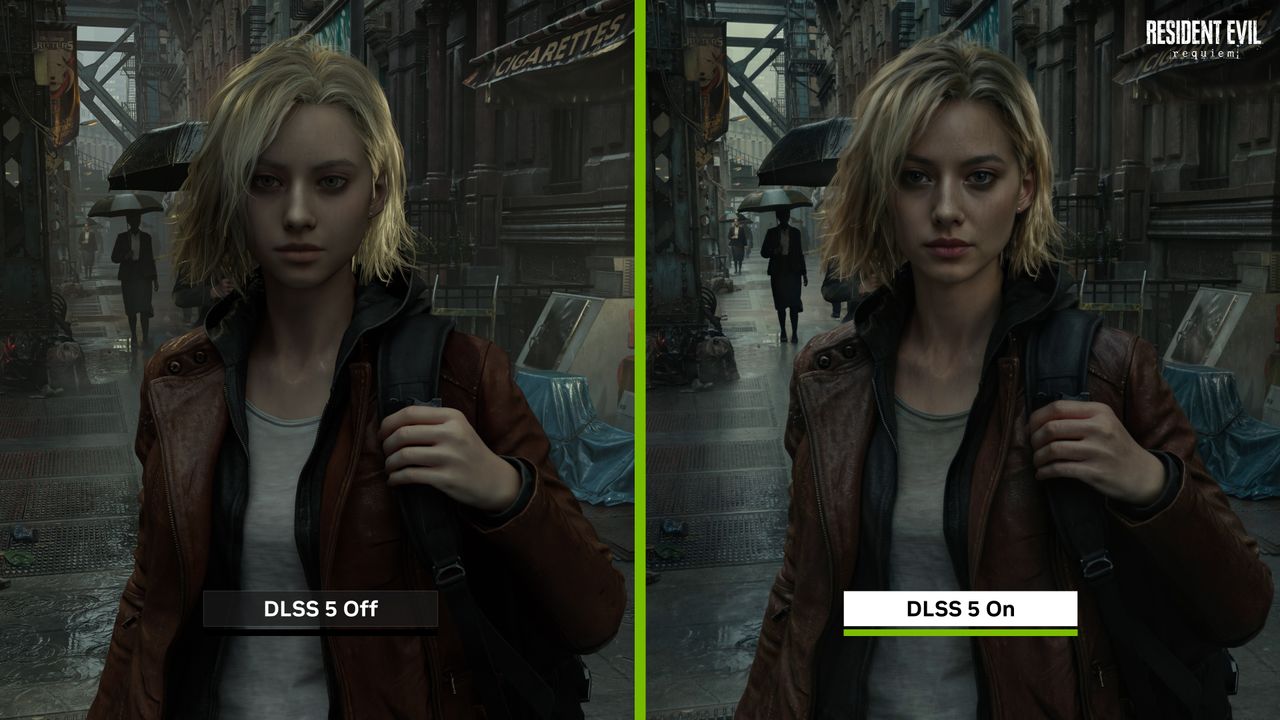
Nvidia's own DLSS 5 announcement video gets taken down by YouTube in Italy due to a copyright strike — local TV channel sent a copyright strike to every YouTube video for using the trailer it used for its own broadcast
Nvidia's own DLSS 5 announcement video gets taken down by YouTube in Italy due to a copyright strike — local TV channel sent a copyright strike to every YouTube video for using the trailer it used for its own broadcast

Knowledge Map
Connected Articles — Knowledge Graph
This article is connected to other articles through shared AI topics and tags.
More in Products

Buy Rating on MNTN: Scalable Self-Serve CTV Platform, Generative AI Innovation, and Underpenetrated SMB Opportunity Drive Multi-Year Growth Potential - TipRanks
Buy Rating on MNTN: Scalable Self-Serve CTV Platform, Generative AI Innovation, and Underpenetrated SMB Opportunity Drive Multi-Year Growth Potential TipRanks

Discussion
Sign in to join the discussion
No comments yet — be the first to share your thoughts!