

A Comprehensive Corpus of Biomechanically Constrained Piano Chords: Generation, Analysis, and Implications for Voicing and Psychoacoustics
arXiv:2603.29710v1 Announce Type: cross Abstract: I present the generation and analysis of the largest known open-source corpus of playable piano chords (approximately 19.3 million entries). This dataset enumerates the two-handed search space subject to biomechanical constraints (two hands, each with 1.5 octave reach) to an unprecedented extent. To demonstrate the corpus's utility, the relationship between voicing shape and psychoacoustic targets was modeled. Harmonicity proved intrinsic to pitch-class identity: voicing statistics added negligible variance ($\Delta R^2 \approx 0.014\%$, $p \approx 0.13$). Conversely, voicing significantly predicted dissonance ($\Delta R^2 \approx 6.75\%$, $p \approx 0.0008$). Crucially, skewness ($\beta \approx +0.145$) was approximately 5.8$\times$ more e
View PDF HTML (experimental)
Abstract:I present the generation and analysis of the largest known open-source corpus of playable piano chords (approximately 19.3 million entries). This dataset enumerates the two-handed search space subject to biomechanical constraints (two hands, each with 1.5 octave reach) to an unprecedented extent. To demonstrate the corpus's utility, the relationship between voicing shape and psychoacoustic targets was modeled. Harmonicity proved intrinsic to pitch-class identity: voicing statistics added negligible variance ($\Delta R^2 \approx 0.014%$, $p \approx 0.13$). Conversely, voicing significantly predicted dissonance ($\Delta R^2 \approx 6.75%$, $p \approx 0.0008$). Crucially, skewness ($\beta \approx +0.145$) was approximately 5.8$\times$ more effective than spread ($\beta \approx -0.025$) at predicting roughness. The analysis challenges the pedagogical emphasis on
spread'': skewness is a stronger predictor of dissonance than spread. This suggests that clarity inopen voicings'' is driven less by width than by negative skewness; achieving lower-register clearance by placing wide gaps at the bottom and allowing tighter clustering in the treble. The results demonstrate the corpus's ability to enable future research, especially in areas such as generative modeling, voice-leading topology, and psychoacoustic analysis.
Comments: 10 pages, 3 figures
Subjects:
Sound (cs.SD); Audio and Speech Processing (eess.AS)
MSC classes: 00A65
Cite as: arXiv:2603.29710 [cs.SD]
(or arXiv:2603.29710v1 [cs.SD] for this version)
https://doi.org/10.48550/arXiv.2603.29710
arXiv-issued DOI via DataCite (pending registration)
Submission history
From: Mahesh Ramani [view email] [v1] Tue, 31 Mar 2026 13:13:29 UTC (3,506 KB)
Sign in to highlight and annotate this article

Conversation starters
Daily AI Digest
Get the top 5 AI stories delivered to your inbox every morning.
More about
modelannounceopen-source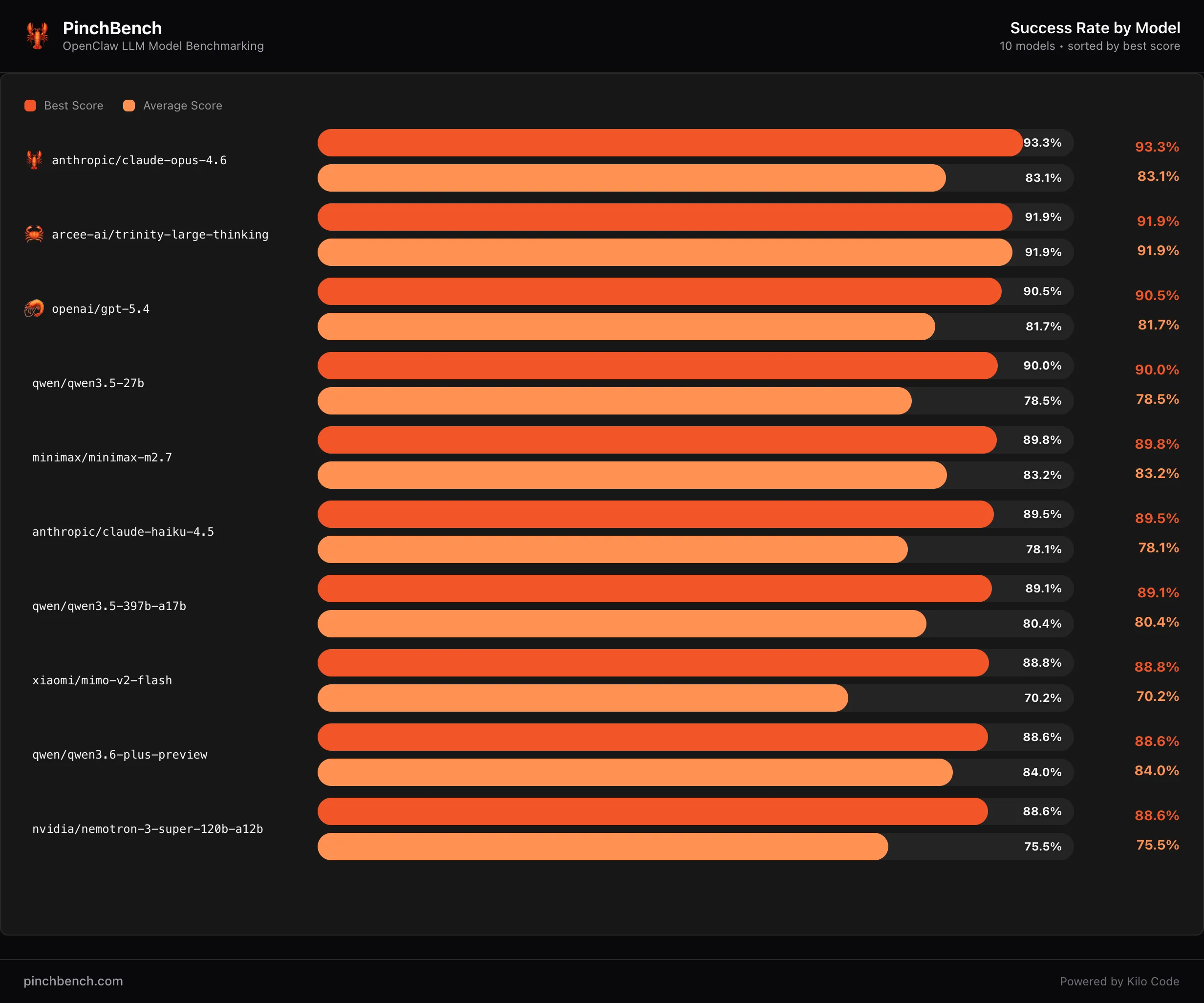
Arcee AI Releases Trinity Large Thinking: An Apache 2.0 Open Reasoning Model for Long-Horizon Agents and Tool Use
The landscape of open-source artificial intelligence has shifted from purely generative models toward systems capable of complex, multi-step reasoning. While proprietary reasoning models have dominated the conversation, Arcee AI has released Trinity Large Thinking. This release is an open-weight reasoning model distributed under the Apache 2.0 license, positioning it as a transparent alternative for developers [ ] The post Arcee AI Releases Trinity Large Thinking: An Apache 2.0 Open Reasoning Model for Long-Horizon Agents and Tool Use appeared first on MarkTechPost .

Migrating from Ralph Loops to duckflux
If you've been running coding agent tasks inside Ralph Loops , you already understand the core insight: iteration beats perfection. You've seen what happens when you hand a well-written prompt to an AI agent and let it grind until the job is done. This guide shows how to take that same philosophy and express it as a declarative, reproducible workflow in duckflux. You gain structure, observability, and composability without giving up the power of iterative automation. What are Ralph Loops? Ralph Wiggum is an iterative AI development methodology built on a deceptively simple idea: feed a prompt to a coding agent in a loop until the task is complete. Named after the Simpsons character (who stumbles forward until he accidentally succeeds), the technique treats failures as data points and bets

What is Algorithmic Trading, and Why is it the Silent Force Behind Today's Market Volatility?
What is Algorithmic Trading, and Why is it the Silent Force Behind Today's Market Volatility? Algorithmic trading is a method of executing orders using automated, pre-programmed trading instructions that account for variables such as time, price, and volume. It is the silent force behind today's market volatility because these algorithms, often powered by AI, can react to market events and execute trades at speeds far beyond human capability, creating rapid price swings and influencing liquidity across global exchanges. This phenomenon is particularly relevant NOW as markets grapple with inflation, interest rate hikes, and geopolitical tensions, making algorithmic reactions a significant factor in daily market movements. Understanding Algorithmic Trading: The Core Idea At its heart, algori
Knowledge Map
Connected Articles — Knowledge Graph
This article is connected to other articles through shared AI topics and tags.
More in Releases
Arcee AI Releases Trinity Large Thinking: An Apache 2.0 Open Reasoning Model for Long-Horizon Agents and Tool Use
The landscape of open-source artificial intelligence has shifted from purely generative models toward systems capable of complex, multi-step reasoning. While proprietary reasoning models have dominated the conversation, Arcee AI has released Trinity Large Thinking. This release is an open-weight reasoning model distributed under the Apache 2.0 license, positioning it as a transparent alternative for developers [ ] The post Arcee AI Releases Trinity Large Thinking: An Apache 2.0 Open Reasoning Model for Long-Horizon Agents and Tool Use appeared first on MarkTechPost .
Microsoft and Google release new AI models on the same day: capabilities in speech, image, and local open-source solutions fully deployed. - 富途牛牛
Microsoft and Google release new AI models on the same day: capabilities in speech, image, and local open-source solutions fully deployed. 富途牛牛
Discussion
Sign in to join the discussion
No comments yet — be the first to share your thoughts!