
1.13.0
What's Changed Features Add RuntimeState RootModel for unified state serialization Enhance event listener with new telemetry spans for skill and memory events Add A2UI extension with v0.8/v0.9 support, schemas, and docs Emit token usage data in LLMCallCompletedEvent Auto-update deployment test repo during release Improve enterprise release resilience and UX Bug Fixes Add tool repository credentials to crewai install Add tool repository credentials to uv build in tool publish Pass fingerprint metadata via config instead of tool args Handle GPT-5.x models not supporting the stop API parameter Add GPT-5 and o-series to multimodal vision prefixes Bust uv cache for freshly published packages in enterprise release Cap lancedb below 0.30.1 for Windows compatibility Fix RBAC permission levels to m
What's Changed
Features
-
Add RuntimeState RootModel for unified state serialization
-
Enhance event listener with new telemetry spans for skill and memory events
-
Add A2UI extension with v0.8/v0.9 support, schemas, and docs
-
Emit token usage data in LLMCallCompletedEvent
-
Auto-update deployment test repo during release
-
Improve enterprise release resilience and UX
Bug Fixes
-
Add tool repository credentials to crewai install
-
Add tool repository credentials to uv build in tool publish
-
Pass fingerprint metadata via config instead of tool args
-
Handle GPT-5.x models not supporting the stop API parameter
-
Add GPT-5 and o-series to multimodal vision prefixes
-
Bust uv cache for freshly published packages in enterprise release
-
Cap lancedb below 0.30.1 for Windows compatibility
-
Fix RBAC permission levels to match actual UI options
-
Fix inaccuracies in agent-capabilities across all languages
Documentation
-
Add coding agent skills demo video to getting started pages
-
Add comprehensive SSO configuration guide
-
Add comprehensive RBAC permissions matrix and deployment guide
-
Update changelog and version for v1.13.0
Performance
- Reduce framework overhead with lazy event bus, skip tracing when disabled
Refactoring
-
Convert Flow to Pydantic BaseModel
-
Convert LLM classes to Pydantic BaseModel
-
Replace InstanceOf[T] with plain type annotations
-
Remove unused third_party LLM directory
Contributors
@alex-clawd, @dependabot[bot], @greysonlalonde, @iris-clawd, @joaomdmoura, @lorenzejay, @lucasgomide, @thiagomoretto
Sign in to highlight and annotate this article

Conversation starters
Daily AI Digest
Get the top 5 AI stories delivered to your inbox every morning.
More about
modelreleaseversion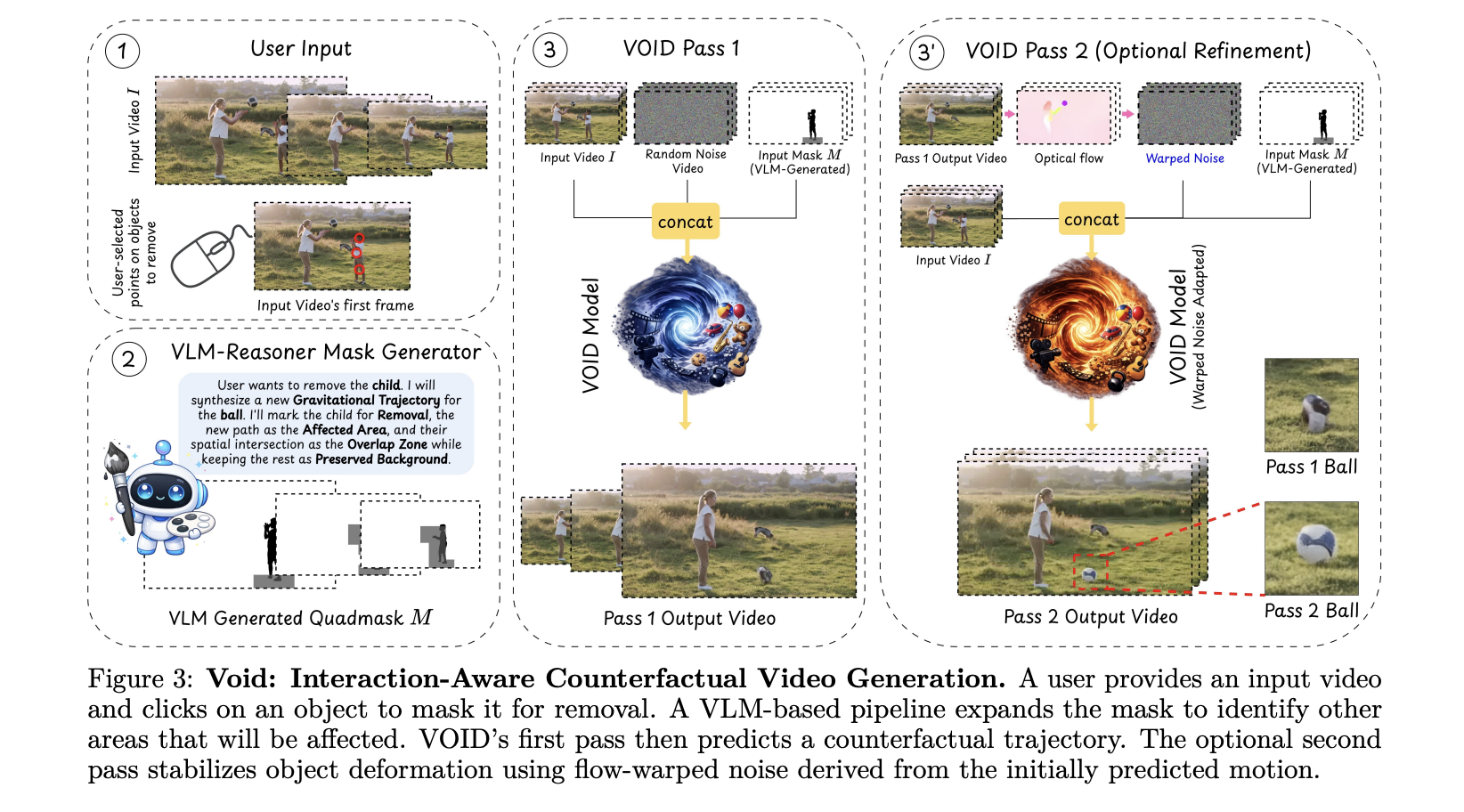
Netflix AI Team Just Open-Sourced VOID: an AI Model That Erases Objects From Videos — Physics and All
Video editing has always had a dirty secret: removing an object from footage is easy; making the scene look like it was never there is brutally hard. Take out a person holding a guitar, and you re left with a floating instrument that defies gravity. Hollywood VFX teams spend weeks fixing exactly this kind of problem. [ ] The post Netflix AI Team Just Open-Sourced VOID: an AI Model That Erases Objects From Videos — Physics and All appeared first on MarkTechPost .

Sharing Two Open-Source Projects for Local AI & Secure LLM Access 🚀
Hey everyone! I’m finally jumping into the dev.to community. To kick things off, I wanted to share two tools I’ve been developing at the University of Jaén that tackle two common headaches in the AI space: running out of VRAM, and keeping your API chats truly private. 🦥 Quansloth: TurboQuant Local AI Server The Problem: Standard LLM inference hits a "Memory Wall" with long documents. As context grows, your GPU runs out of memory (OOM) and crashes. The Solution: Quansloth is a fully private, air-gapped AI server that brings elite KV cache compression to consumer hardware. By bridging a Gradio Python frontend with a highly optimized llama.cpp CUDA backend, it prevents GPU crashes and lets you run massive contexts on a budget. Key Features: 75% VRAM Savings: Based on Google's TurboQuant (ICL
Knowledge Map
Connected Articles — Knowledge Graph
This article is connected to other articles through shared AI topics and tags.
More in Releases


TigerFS Mounts PostgreSQL Databases as a Filesystem for Developers and AI Agents
TigerFS is a new experimental filesystem that mounts a database as a directory and stores files directly in PostgreSQL. The open source project exposes database data through a standard filesystem interface, allowing developers and AI agents to interact with it using common Unix tools such as ls, cat, find, and grep, rather than via APIs or SDKs. By Renato Losio
Day 61 of #100DaysOfCode — Python Refresher Part 1
When I started my #100DaysOfCode journey, I began with frontend development using React, then moved into backend development with Node.js and Express. After that, I explored databases to understand how data is stored and managed, followed by building full-stack applications with Next.js. It is now time to start learning Python, not from scratch, but as a refresher to strengthen my fundamentals and expand my backend skillset. Learning Python strengthens my core programming skills and offers a new perspective beyond JavaScript. It aligns with backend development, data handling, and automation, allowing me to build on my existing knowledge and become a more versatile developer. Today, for Day 61, I focused on revisiting the core building blocks of Python. Core Syntax Variables Data Types Vari
OpenClaw 2026.3.31: Task Flows, Locked-Down Installs, and the Security Release Your Agent Needed
OpenClaw 2026.3.31 dropped yesterday, and this one's different. Where the last few releases added capabilities — new channels, new models, new tools — this release is about control . Specifically: controlling what your agent installs, what your nodes can access, and how background work is tracked. If you run agents in production, this is the update you've been waiting for. Task Flows: Your Agent's Work Finally Has a Paper Trail This is the headline feature and it's been a long time coming. Background tasks — sub-agents, cron jobs, ACP sessions, CLI background runs — were all tracked separately. Different systems, different lifecycle management, different ways things could silently break. Not anymore. Everything now lives under one SQLite-backed ledger . You can run openclaw flows list , op
Discussion
Sign in to join the discussion
No comments yet — be the first to share your thoughts!